Hermès Sellier vs Retourne: Construction, Leather Behaviour & Long-Term Wear
How seam placement changes everything — the structural mechanics of sellier and retourne construction, and what each means for leather tannage, patina, and long-term wear.
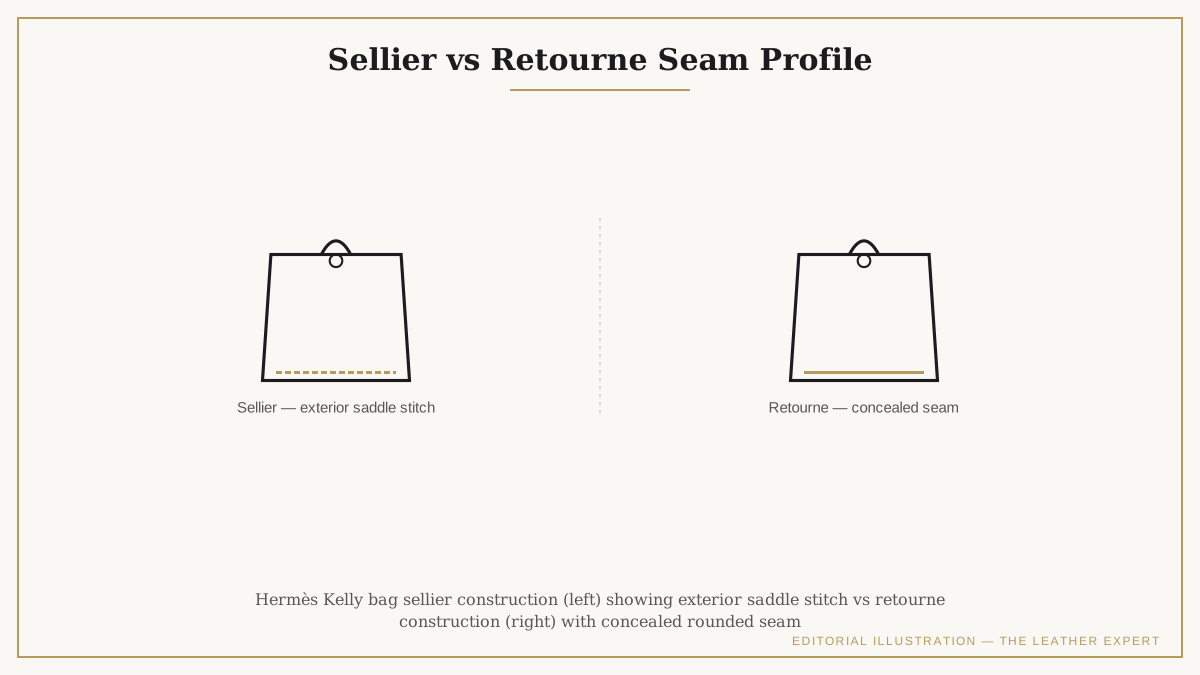
The sellier vs retourne distinction is a construction specification with measurable consequences for leather behaviour. In sellier construction, the seam allowance is stitched on the exterior and trimmed flush — placing the stitching under direct mechanical stress from the bag’s contents and the environment. This produces the precise geometric silhouette collectors recognise, but it also concentrates wear at the stitch line. In retourne construction, the bag is assembled inside-out and turned — concealing the seam and distributing mechanical stress differently across the leather panel.
This hub covers sellier and retourne through a structural and leather-behaviour lens — how each construction method affects the leather at the seam zone, how each ages under regular use, and what a buyer who understands tannage should know about which construction suits which leather grade. The choice between sellier and retourne is not aesthetic. It is material.
2
Core construction methods: sellier (exterior seam) and retourne (concealed seam)
18°
Approximate saddle stitch angle on authentic Hermès sellier construction
40+
Hours of hand-stitching in a single Kelly bag — sellier or retourne
Sellier vs Retourne: The Core Structural Mechanics
Every Hermès bag is built on one of two fundamental seam philosophies — and understanding the mechanics behind each is the prerequisite to understanding why certain leathers belong in certain constructions. The distinction is not merely visual. It is a decision about where mechanical stress will live in the bag’s structure, and how that stress will be transferred to the leather over time.
In sellier construction, the leather panels are joined with the seam allowance on the outside of the bag. The saddle stitch — placed by two needles working simultaneously through a single thread in opposite directions — runs along the exterior edge of the bag body, creating a visible stitch line that defines the bag’s perimeter. This exterior seam is trimmed flush after stitching and the edge is glazed, producing the clean angular profile that distinguishes a Kelly sellier from its retourne counterpart. Because the stitch is on the exterior, it is in direct contact with environmental abrasion, moisture, and mechanical stress from contents pressing outward against the bag walls.
In retourne construction, the panels are assembled inside-out — the leather faces inward during stitching — and the completed bag body is then turned right-side-out through the top opening. This turns the seam allowance to the interior, producing a rounded, softer edge profile on the exterior. The stitching is concealed inside the bag, removing it from direct environmental contact. The mechanical stress of contents pressing against the bag walls is distributed across the curved leather surface at the seam zone rather than concentrated at a visible stitch line.
“The seam is not a detail. It is the structural spine of the bag. Where the seam sits determines where the leather ages first, how it ages, and which tannage is capable of surviving that ageing gracefully.”
- Sellier: exterior seam, angular profile, exterior stitch visible — stress concentrated at stitch line
- Retourne: interior seam, rounded profile, stitch concealed — stress distributed across curved seam zone
- Both constructions use the same saddle stitch technique — the seam placement differs, not the stitch quality
- Sellier requires leather that can sustain point-load stress at the stitch line without cracking
- Retourne requires leather with sufficient temper to survive the turning process without creasing permanently
Sellier Construction: Mechanics, Leather Demands & Ageing Profile
Sellier construction is the older and more technically demanding of the two methods. It is the construction used in the Kelly sellier, and it requires leathers with specific structural properties to perform correctly over time. The exterior saddle stitch creates a perimeter seam under sustained tension — the bag’s rigid internal blocking holds the panels in compression against the stitch, meaning the leather immediately adjacent to the stitch line is under constant low-level mechanical stress even when the bag is empty.
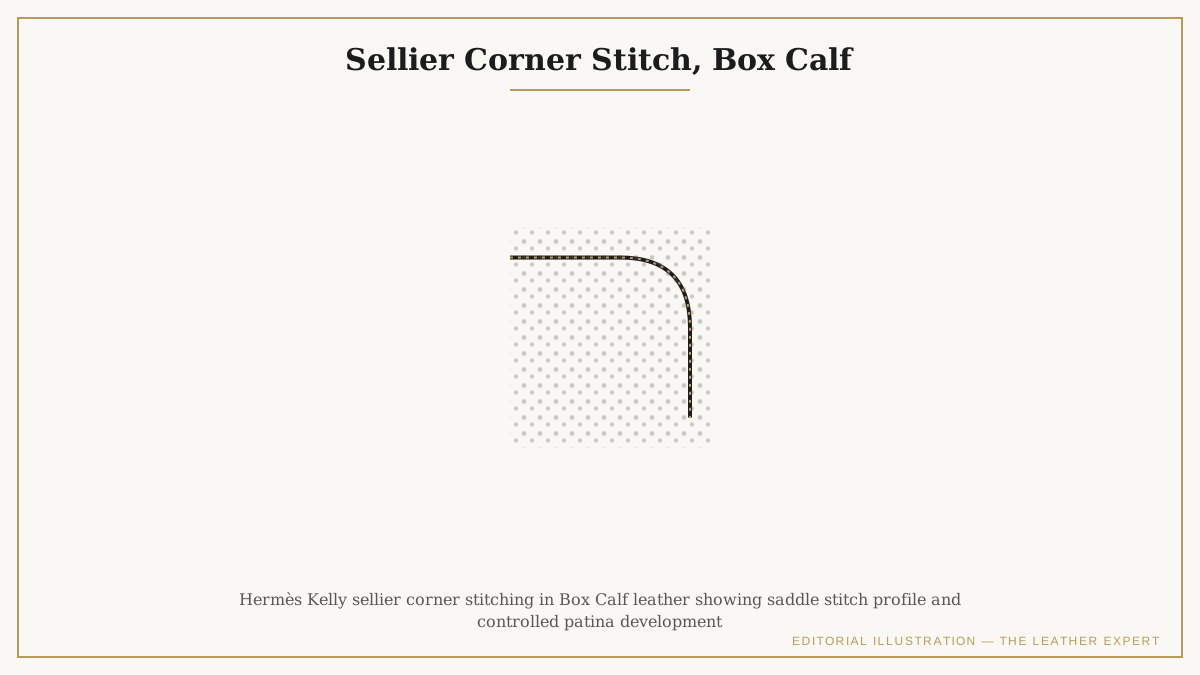
Corner stitching in sellier construction is the highest-stress zone in the entire bag. At each corner, the stitch line makes a near-90-degree turn, concentrating load at a single point where two seam directions meet. On authentic Hermès bags, this corner stitch is executed with a precision that distributes this load as evenly as possible — but the physics of the corner seam mean that corner patina develops faster than anywhere else on a sellier bag. For collectors, this is not a flaw. It is a chronological record of use, and a well-aged sellier corner in Box Calf is one of the most beautiful ageing outcomes in the entire Hermès catalogue.
Leather Expert Note
Box Calf is the historically correct leather for Kelly sellier construction for a structural reason, not a stylistic one. Its fine grain — produced by the tight fibril packing of young calf hide — and vegetable tannage give it the specific combination of stiffness and suppleness that sellier construction demands. It is stiff enough to resist angular stress at the exterior stitch line; supple enough to develop a deep, even patina at the corner seam zone rather than cracking under cyclical compression. No other production leather in the Hermès range combines these properties to the same degree.
- Highest-stress zone: corner stitching — examine this area closely on pre-owned sellier pieces
- Best leathers for sellier: Box Calf (optimal), Epsom (functional), Crocodilian (premium)
- Avoid in sellier construction: Togo, Clemence, Fjord — insufficient fibril density for exterior seam stress
- Authentic sellier patina: deepest at corner stitching, progressing along stitch line toward base
- Authentication note: counterfeit sellier bags show stitching irregularities at corners — authentic Hermès is consistent
Retourne Construction: Assembly Logic, Leather Behaviour & Wear Profile
Retourne construction begins with a counterintuitive assembly sequence: the leather panels are stitched with the grain sides facing inward and the flesh sides facing out. The completed bag body — assembled inside-out — is then turned right-side-out through the top opening, reversing the panel orientation and bringing the grain side to the exterior. This turning process is one of the most technically demanding steps in bag production: the leather must have sufficient temper to survive the turning tension without permanent creasing, and the internal seam allowance must be trimmed precisely to avoid creating visible bulk at the rounded edge.
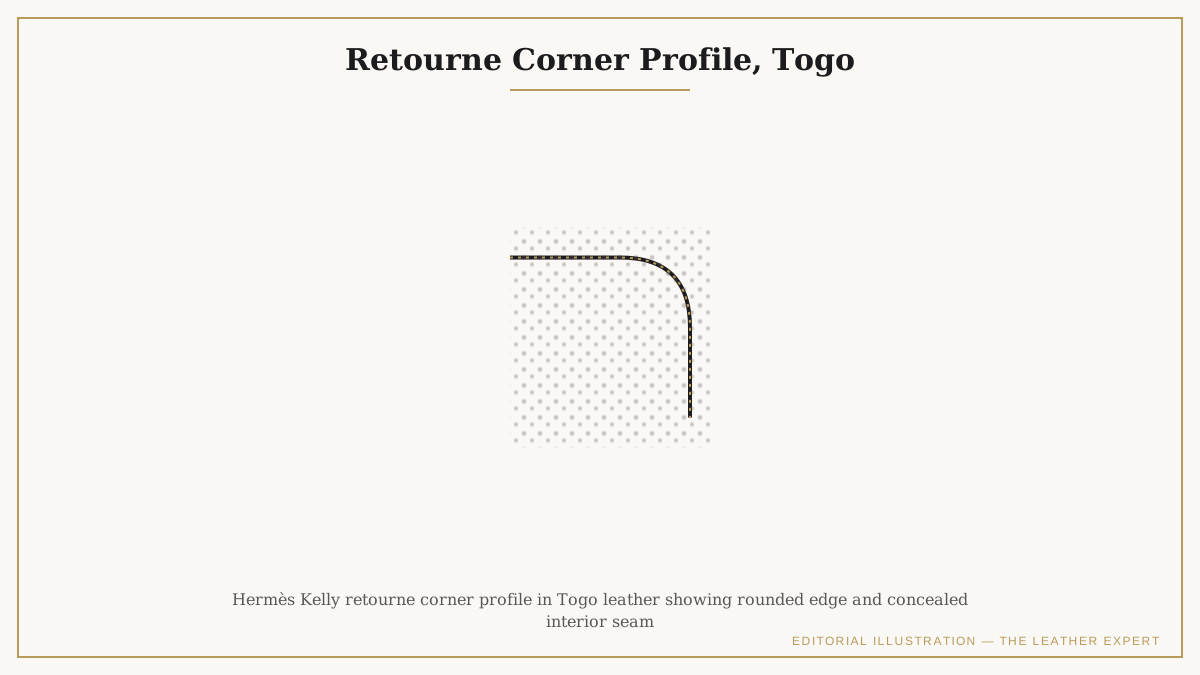
The result of this process is a seam profile that is fundamentally different from sellier. The rounded exterior edge of a retourne bag is not a surface finish — it is the structural consequence of the interior seam allowance. The leather at the edge is curved around the seam rather than trimmed flush to it, producing the characteristic softer corner profile that distinguishes the retourne Kelly from its sellier counterpart. Because the seam is internal, the mechanical stress of contents pressing outward against the bag walls is distributed across the entire curved leather surface at the seam zone — a fundamentally different load distribution than the point-load stress at the exterior stitch line of a sellier bag.
- Assembly sequence: panels stitched inside-out, then turned right-side-out through top opening
- Edge profile: rounded — a structural consequence of interior seam allowance, not a finish treatment
- Stress distribution: load distributed across curved leather surface at seam zone — more forgiving than sellier
- Best leathers for retourne: Togo, Clemence, Veau Swift — supple enough to survive the turning process
- Retourne silhouette: softens slightly over years of use — corners become more rounded, body develops gentle drape
- Maintenance: lower-maintenance than sellier — interior seam is not exposed to environmental abrasion
Tannage Compatibility: Which Leathers Suit Which Construction
The relationship between tannage type and construction method is the most practically important aspect of the sellier vs retourne decision for buyers and collectors. Tannage determines the leather’s fibril density, temper, and surface finish — all of which directly affect how the leather responds to the specific mechanical demands of each construction type. Getting this pairing wrong produces accelerated wear patterns, premature cracking at seam zones, or permanent deformation during production. Getting it right produces a bag that ages precisely in line with its structural logic.
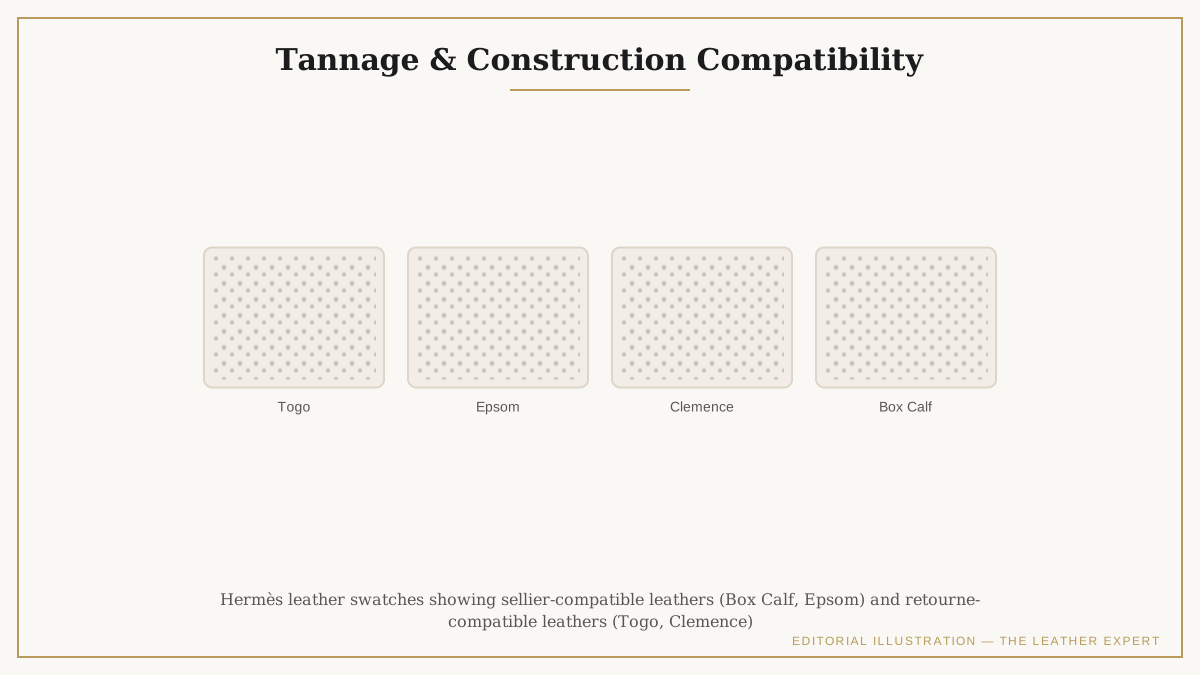
For sellier construction, the primary requirement is a leather with sufficient fibril density to resist the point-load stress of the exterior stitch line without cracking, and enough surface hardness to develop controlled patina at the corner seam zone rather than compressing or deforming. Vegetable-tanned leathers with tight grain structures meet both requirements: Box Calf, with its fine calf grain and vegetable tannage, is the benchmark. Epsom, despite being chrome-tanned, meets the fibril density requirement through its cross-hatch embossing process, which compresses the grain surface to a consistent hardness that resists exterior seam stress. Exotic skins — particularly crocodilian — perform exceptionally in sellier construction because their scale structure provides natural rigidity at the seam zone.
For retourne construction, the primary requirement shifts from fibril density to temper and turning tolerance. The leather must be supple enough to survive the turning process without permanent creasing, and flexible enough to distribute stress across the curved seam zone rather than concentrating it at a single point. Togo and Clemence — both chrome-tanned with pebbled grain and relatively loose fibril structure — are the dominant retourne leathers precisely because their natural elasticity accommodates both the turning process and the ongoing stress distribution of regular use. Veau Swift, with its smooth surface and finer grain, also performs well in retourne construction and develops a distinctive surface sheen at the corner zone over time.
For buyers approaching the pre-owned or bespoke market, understanding this tannage-construction relationship provides an additional authentication layer. See the full Hermès leathers and materials guide for detailed fibril density and tannage analysis across every major production leather.
| Factor | Sellier | Retourne | Buyer Implication |
|---|---|---|---|
| Seam Placement | Exterior — visible saddle stitch along bag perimeter | Interior — concealed after turning process | Sellier shows stitch; retourne shows smooth rounded edge |
| Edge Profile | Angular — trimmed flush and glazed | Rounded — leather curved around interior seam | Sellier is architectural; retourne is organic |
| Stress Zone | Point-load at exterior stitch line and corners | Distributed across curved seam zone | Sellier requires denser leather; retourne is more forgiving |
| Best Leathers | Box Calf, Epsom, Crocodilian | Togo, Clemence, Veau Swift | Match leather to construction — not interchangeable |
| Patina Profile | Deep corner patina, stitch line develops lustre early | Soft overall sheen, corner rounding, body drape develops | Sellier patinas dramatically; retourne ages subtly |
| Shape Retention | Holds angular silhouette precisely over time | Softens slightly — corners round, body develops gentle drape | Sellier for precision; retourne for organic character |
| Maintenance | Monitor exterior stitch line and corner zones | Lower maintenance — interior seam protected from environment | Retourne is more forgiving for daily use |
| Price Differential | Typically higher — more technically demanding production | Lower — but not by a significant margin in most leathers | Sellier commands premium for construction complexity |
The Construction Is the Brief. Choose Accordingly.
The sellier vs retourne decision is not a matter of preference — it is a matter of matching construction to intended use and leather to construction. Sellier in Box Calf is one of the great material achievements in bag production: the exterior seam concentrates stress at precisely the zone where the leather is best equipped to handle it, and the resulting corner patina over years of careful use is irreplaceable. But sellier in Togo or Clemence is a structural mismatch — those leathers lack the fibril density to resist exterior seam stress and will show accelerated wear at the stitch line within a few years of regular use.
Retourne in Togo or Clemence is the correct daily-use solution: the interior seam removes the stitching from environmental exposure, the rounded edge distributes stress across a larger leather surface, and the natural elasticity of pebbled chrome-tanned hides accommodates years of loading and unloading without the corner cracking risk of a mismatched sellier build.
For collectors approaching the pre-owned market, construction knowledge is also authentication knowledge. The full article on sellier vs retourne leather behaviour covers the specific wear patterns that distinguish authentic ageing from counterfeit irregularity. Authentic Hermès bags age structurally — the wear appears precisely where the construction logic predicts it will. Counterfeits age generically.
Bottom Line: Sellier for collectors who prize geometric precision and dramatic patina. Retourne for buyers who carry daily and want a bag that ages forgivingly. Either choice is correct — but only when the leather matches the construction.
Popular Searches
Most searched Hermès construction and leather pairing topics
🔥 Most Searched
Sellier vs Retourne Kelly: Leather Behaviour
How sellier and retourne construction change leather behaviour at the seam zone — the full structural analysis with authentic wear pattern documentation.
★ Expert Reference
Hermès Leathers & Materials Guide
The companion reference — fibril density, tannage type, and temper analysis for every major Hermès production leather, with construction compatibility ratings.
⬆ Trending
Hermès Bag Styles Guide
Birkin, Kelly, Constance, Lindy, Evelyne — each silhouette’s construction logic and the leather grades best suited to its structural demands.
◆ Authentication
Hermès Authentication Hub
The central authentication reference — saddle stitch angle, blind stamp location, foil stamping depth, and construction-specific wear patterns used in forensic verification.
⬆ Rising
Hermès Saddle Stitch Angle: Authentication Guide
The measurable difference between authentic Hermès saddle stitching and machine stitching — the angle specification and how to read it on any Hermès bag.
🔥 Most Searched
Hermès Colors Reference Hub
How tannage affects colorway stability, patina development, and long-term color shift — the leather science behind Hermès color selection by construction type.
Frequently Asked Questions
In sellier construction, the seam allowance is stitched on the exterior of the bag and trimmed flush — the saddle-stitched edges are visible on the outside, placing the stitching under direct mechanical stress. This produces the precise geometric silhouette collectors recognise but concentrates wear at the stitch line. In retourne construction, the bag is assembled inside-out and turned — concealing the seam and distributing mechanical stress differently across the leather panel, producing softer, rounder edges and a more relaxed silhouette over time.
Box Calf is the historically correct leather for Kelly sellier construction. Its fine, tight grain and vegetable tannage allow it to sustain the angular stress of exterior seams without cracking, while developing a deep, controlled patina at the corner stitching over decades. Epsom also performs well in sellier construction due to its compressed cross-hatch grain that resists corner abrasion. Avoid soft, pebbled leathers like Togo or Clemence in sellier construction — their fibril density is insufficient to resist the point-load stress of exterior stitching over time. See our full Hermès leathers guide for detailed tannage comparisons.
Sellier construction holds its shape more precisely over time — the exterior seam and rigid frame maintain the angular trapezoid silhouette under sustained compression. Retourne construction allows the leather more movement at the seam zone, which means the silhouette softens slightly over years of use — the corners become more rounded and the body develops a slight drape. Neither is a defect. Sellier is the choice for collectors who prize geometric precision; retourne is the choice for buyers who prefer a bag that softens naturally into use.
Retourne construction is generally more forgiving in maintenance terms. The concealed seam means the primary wear zone — the stitch line — is not exposed to environmental abrasion, moisture, or surface contact. Sellier construction requires more careful monitoring of the exterior stitching: the leather immediately adjacent to the stitch line is the first area to show patina and minor surface compression under regular use. For buyers who carry their bags daily, retourne in a robust tannage like Togo or Clemence is the lower-maintenance choice. For the full care protocol by leather type, see our care and storage guide.