Buying Hermès Without the Wait: Leather Knowledge & Boutique Strategy
A buyer who can discuss tannage and articulate why they want Barenia over Epsom for a specific use case is a buyer an SA remembers. Here is why that distinction matters — and how to use it.
A buyer who can discuss tannage, distinguish Togo from Clemence by grain density at a glance, and articulate why they want Barenia over Epsom for a specific use case is a buyer an SA remembers. Leather knowledge is not just collector expertise — it is a boutique relationship tool. An SA who sees a client with genuine material knowledge understands they are dealing with a serious collector, not a status buyer. That distinction matters in quota allocation.
This hub covers the Hermès acquisition process through a leather knowledge and boutique strategy lens — how material expertise translates to better boutique conversations, more credible wish list discussions, and a stronger position when a quota bag becomes available. The goal is not to game the system. It is to be the buyer that the system works for.
3
Core signals that distinguish a serious collector from a status buyer in SA conversations
2
Key topics to always discuss: use pattern and leather rationale — never resale or quota
1
Boutique — build depth in one location before diversifying across multiple stores
Leather Knowledge as a Boutique Relationship Tool
The Hermès boutique operates under a social and commercial logic that is different from most luxury retail environments. SAs are not order-takers — they are relationship managers with discretionary authority over how quota allocations are distributed among their client book. The client who has invested in understanding Hermès’s materials and construction is the client who signals long-term commitment to the brand rather than short-term desire for a specific asset.
Leather knowledge functions as a credential in this environment — not because SAs administer tests, but because the language of material knowledge is unmistakable. A client who says “I prefer Togo in the Birkin 30 because the grain’s elasticity suits daily carry better than Epsom’s compressed surface” has communicated three things simultaneously: they know the leathers by name, they know the structural difference between them, and they have a reasoned preference based on use. This is the language of a collector. It is not the language of a buyer who has read a waitlist guide.
“Leather knowledge is not just collector expertise — it is a boutique relationship tool. An SA who sees a client with genuine material knowledge understands they are dealing with a serious collector, not a status buyer.”
- Material knowledge signals long-term brand commitment — SAs read this as collector intent, not aspirational purchasing
- Specific leather preference with a rationale is more credible than a specific model preference without one
- Knowing production leather names (Togo, Clemence, Barenia) is the baseline — knowing why they differ is the differentiator
- Demonstrating knowledge of construction (sellier vs retourne) signals you understand what you are asking for
- Leather expertise cannot be faked in conversation — an SA who works with these materials daily will recognise depth or its absence
What to Say — and What Not to Say — When Discussing Leather with Your SA
The language you use in boutique conversations is a more important signal than your purchase history. An SA who hears material-specific reasoning will engage differently than one who hears a wish list recitation. The following examples illustrate the difference between language that signals status aspiration and language that signals collector knowledge.
Topic: Leather Preference for a Birkin
✗ Status buyer: “I want a Birkin 30 in gold Togo — that’s the most popular combination.”
✓ Collector: “I carry daily under significant load, so I’m looking for a Birkin 30 in Togo — the grain’s elasticity handles gusset flex better than Epsom over time, and I want a leather that conditions well rather than one I have to baby.”
Topic: Expressing a Wish List Preference
✗ Status buyer: “I’ve been waiting so long for a quota bag. I’ll take anything in a Birkin or Kelly.”
✓ Collector: “I’ve been building toward a Kelly 28 sellier in Box Calf — I want the sellier construction specifically because I value the corner patina character over time, and Box Calf is the only leather I’d consider for that construction.”
Topic: Responding to a Suggested Alternative
✗ Status buyer: “Oh, I’d take it in any colour — I just want the bag.”
✓ Collector: “I’m open to colourways that suit the leather — with Box Calf I’d want something that will develop patina depth rather than a colour that shows the gloss ageing. I’d love to see what’s available in neutrals or deep tones.”
- Always lead with use pattern — daily carry, occasional use, travel — before stating leather preference
- State your leather rationale in structural terms — grain elasticity, fibril density, patina character
- Never mention resale value, investment potential, or quota strategy in any form
- Never say you will accept any leather or any colour — this signals status aspiration, not collector preference
- Reference past Hermès purchases naturally — not as a spend signal, but as a use history that informs your preference
- Ask questions that demonstrate knowledge — “Does the current Togo production run heavier than previous seasons?” signals familiarity
How Demonstrating Tannage and Grain Knowledge Signals Collector Seriousness
The specific vocabulary of leather science is the most reliable signal of genuine collector knowledge in a boutique environment. Terms like tannage, fibril density, temper, pellicule, and patina progression are not in the casual luxury buyer’s vocabulary — they are in the collector’s vocabulary. Using them correctly and contextually — not as a recitation, but as natural parts of a material preference conversation — signals a level of engagement with the product that SAs recognise and respond to.
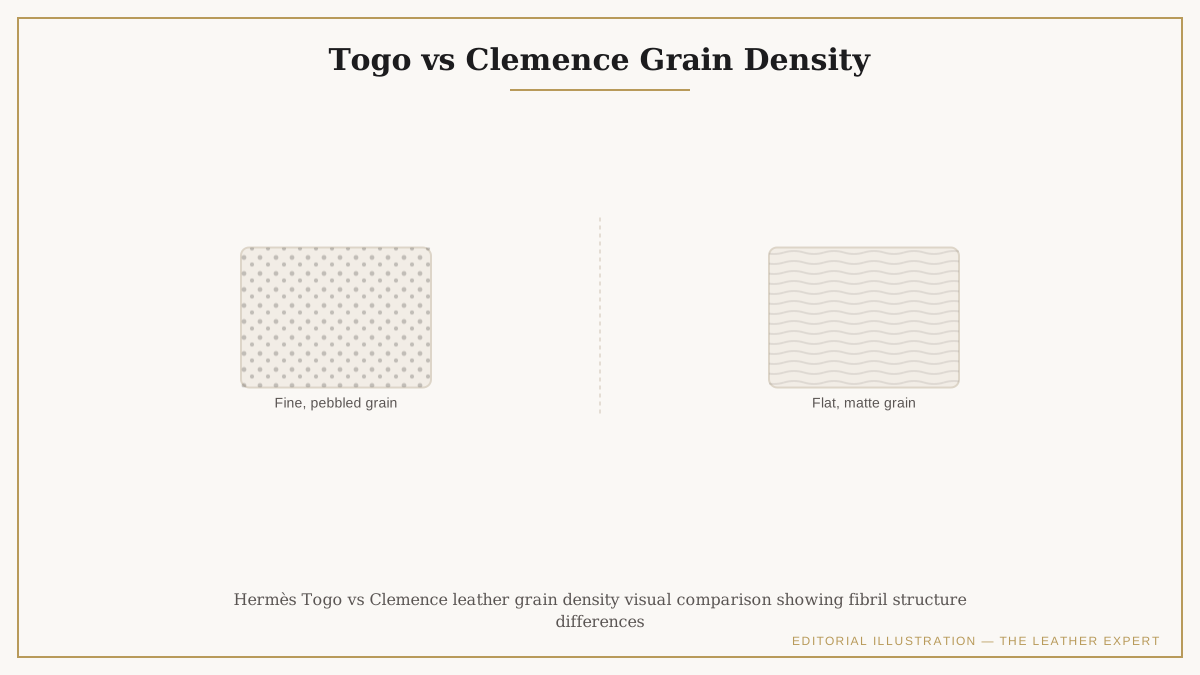
The practical test of leather knowledge in a boutique conversation is specificity. Anyone can say they prefer Togo. A collector can explain why: “Togo’s chrome tannage gives it the fibril elasticity to handle gusset flex without cracking — Clemence is heavier and handles humidity better, but the weight becomes a factor in the 30 and 35 sizes.” This level of specificity cannot be learned from a quick online search — it requires genuine engagement with the material science behind the leathers. And it is precisely this level of engagement that distinguishes a collector client from a status buyer in an SA’s assessment.
Leather Expert Note — Building Your Material Vocabulary
The fastest route to genuine leather knowledge is the Hermès leathers and materials guide — which covers every major production leather with fibril density, tannage type, temper, and construction compatibility. Read it once for orientation, then revisit specific leathers as you encounter them. The goal is not to memorise specifications — it is to develop a genuine sense of why each leather is different and how that difference manifests in use. That understanding translates naturally into the kind of specific, reasoned language that registers as collector knowledge in a boutique conversation.
Building the Boutique Relationship: Consistency, Depth and the Long View
The Hermès boutique relationship is a long-term investment in its own right. A client who visits consistently, purchases across product categories, engages knowledgeably with the leathers and materials, and treats each SA interaction as a professional consultation rather than a purchasing attempt is the client who builds the relationship that eventually produces quota access.
Consistency matters more than frequency. Monthly visits that demonstrate genuine engagement with the product range are more valuable than weekly visits without purchase intent. Purchases across product categories — silk, small leather goods, ready-to-wear — demonstrate brand commitment rather than single-category aspiration. And patience — the willingness to build the relationship over months and years rather than attempting to accelerate quota access — is the quality that SAs most reliably reward with their discretionary allocation decisions.
- Visit consistently — monthly engagement with genuine product interest is more valuable than frequent aspirational visits
- Purchase across categories — silk, small leather goods, homeware signal brand commitment, not single-item aspiration
- Build depth in one boutique before diversifying — a strong relationship with one SA is more valuable than thin relationships across multiple locations
- Treat every interaction as a consultation — bring genuine questions about leathers, construction, and seasonal availability
- Never express urgency or timeline pressure — patience is the quality that SAs most reliably reward
- After a quota offer: express considered preference, not immediate acceptance of any option — this maintains your collector positioning
| Situation | Status Buyer Language | Collector Language | What the SA Reads |
|---|---|---|---|
| Leather Preference | “I want Togo — it’s the most popular.” | “I prefer Togo for daily carry — the grain elasticity suits gusset flex better than Epsom over time.” | Collector: use-pattern rationale, material knowledge |
| Wish List | “I’ve been waiting so long — I’ll take anything.” | “I’m building toward a Kelly 28 sellier in Box Calf — the construction and leather are specific choices for me.” | Collector: specific preference with structural rationale |
| Colour Discussion | “Any colour is fine — I just want the bag.” | “For Box Calf I’d want something that develops patina depth — neutrals or deep tones suit the leather’s character best.” | Collector: leather-informed colour reasoning |
| Alternative Offer | “Is there anything else available? I’ll take whatever you have.” | “What leathers are currently in production for the Kelly? I’d be interested if Box Calf or Barenia is available.” | Collector: informed question, specific preference maintained |
| Expressing Knowledge | “I’ve done a lot of research online.” | “I’ve been examining the difference between Togo and Clemence for this construction — the weight differential matters for the size I’m considering.” | Collector: hands-on material engagement, not research |
| Resale / Investment | “These bags hold their value so well — it’s a great investment.” | [Do not raise this topic under any circumstances] | Never mention resale — it signals non-collector intent immediately |
The Boutique Advantage Is Built on Knowledge, Not Strategy.
The most common mistake buyers make in the Hermès boutique is treating the SA relationship as a strategy to be optimised rather than a professional relationship to be built. Strategies are transparent — SAs who work with serious collectors daily can identify them immediately. Genuine knowledge is not transparent — it is the natural output of genuine engagement with the materials and construction that make Hermès what it is.
Leather knowledge gives you a boutique advantage not because it tricks an SA into treating you differently, but because it makes you genuinely different. A client who asks why the current Togo production feels slightly heavier than previous seasons is asking a question that only someone who has handled the leather carefully would think to ask. That question registers as collector engagement — and collector engagement is what SAs are looking to reward with their discretionary allocation decisions.
The leather knowledge in this hub — the leathers guide, the styles guide, the construction guide — is the foundation of that genuine knowledge. Read it not as a script, but as an education. The boutique conversation that follows will take care of itself.
Bottom Line: Know the leathers. Know the construction. Know why you want what you want. Then have the conversation — not as a buyer running a strategy, but as a collector with a reasoned preference.
Popular Searches
Most searched Hermès boutique strategy and leather knowledge topics
🔥 Most Searched
How Leather Knowledge Gives Buyers a Boutique Advantage
The full analysis of how material expertise translates into SA relationship quality — with specific language examples and the signals that distinguish collector clients.
★ Foundation Reference
Hermès Leathers & Materials Guide
The essential leather knowledge base — every production leather analysed by fibril density, tannage, temper, and construction compatibility. Read this first.
⬆ Trending
Hermès Bag Styles Guide
Birkin, Kelly, Constance, Lindy, Evelyne — each silhouette’s construction logic and the leather grades best suited to its structural demands.
◆ Construction
Sellier vs Retourne: Construction Guide
Understanding sellier and retourne construction is essential for credible Kelly wish list conversations — this guide provides the structural rationale.
⬆ Rising
Hermès Colors Reference Hub
How tannage affects colorway stability and patina development — the leather science behind choosing a colour that suits the specific leather you want.
🔥 Most Searched
Hermès Investment Guide
Leather condition grades, resale differentials, and which leathers hold condition most reliably — for buyers who want to understand the full ownership value picture.
Frequently Asked Questions
A buyer who can discuss tannage, distinguish Togo from Clemence by grain density, and articulate why they want Barenia over Epsom for a specific use case is a buyer an SA remembers. Leather knowledge signals collector seriousness rather than status aspiration — and that distinction matters in quota allocation. For the full analysis, see our article on how leather knowledge gives Hermès buyers a boutique advantage.
Speak in construction and material terms, not in style or colour terms. Lead with your use pattern, then state your leather rationale in structural terms — grain elasticity, construction compatibility, patina character. Never mention resale value, waitlist strategy, or quota bags. The conversation should feel like a collector’s consultation — a discussion of why your material preference suits your specific use case, not a purchasing request for a specific model.
Spending history across the Hermès product range — ready-to-wear, silk, homeware, small leather goods — is a documented factor in boutique relationship building. However, spending history alone does not determine quota allocation. Relationship quality, purchase history consistency, and demonstrated brand knowledge all contribute. A buyer with moderate but consistent spending and genuine leather expertise will typically be better positioned than a buyer with higher but less consistent spending and no demonstrated product knowledge.
Boutique purchase is the only way to guarantee authenticity, CITES documentation for exotic skins, and full receipt documentation — all of which affect resale value. Secondary market purchases offer access to discontinued colourways and leathers no longer in boutique production rotation. For investment-focused buyers, boutique purchase is preferable for new production. For secondary market purchases, ensure you complete full authentication before buying — see the Hermès authentication hub for the complete forensic protocol.