
Hermes Blind Stamp Location Changes in 2026
A forensic update on where the craftsperson blind stamp now appears on 2026 production Birkin and Kelly bags — and what the impression depth, edge definition, and fibril response mean for authentication.
The Hermès blind stamp — the impressed letter or symbol identifying the individual craftsperson who assembled the bag — has been one of the most reliable forensic authentication markers in the secondary market for decades. Its location, impression depth, and the specific way it interacts with the surrounding fibril structure of the leather all carry diagnostic information that authentication specialists read with precision. What makes the blind stamp particularly valuable as an authentication tool in 2026 is that its precise location has shifted in recent production batches — and counterfeits have not yet adapted. Knowing where the stamp now appears on current production, and what its correct impression characteristics look like at the grain level, gives buyers a material advantage in the secondary market assessment of recently produced pieces.
This article maps the 2026 blind stamp location changes on both the Birkin and Kelly, explains the material science of how an authentic heated-die impression interacts with different Hermès leathers, and provides a systematic inspection protocol for reading the blind stamp as part of a complete authentication assessment.
What the Hermès Blind Stamp Is and Why It Is a Forensic Authentication Marker
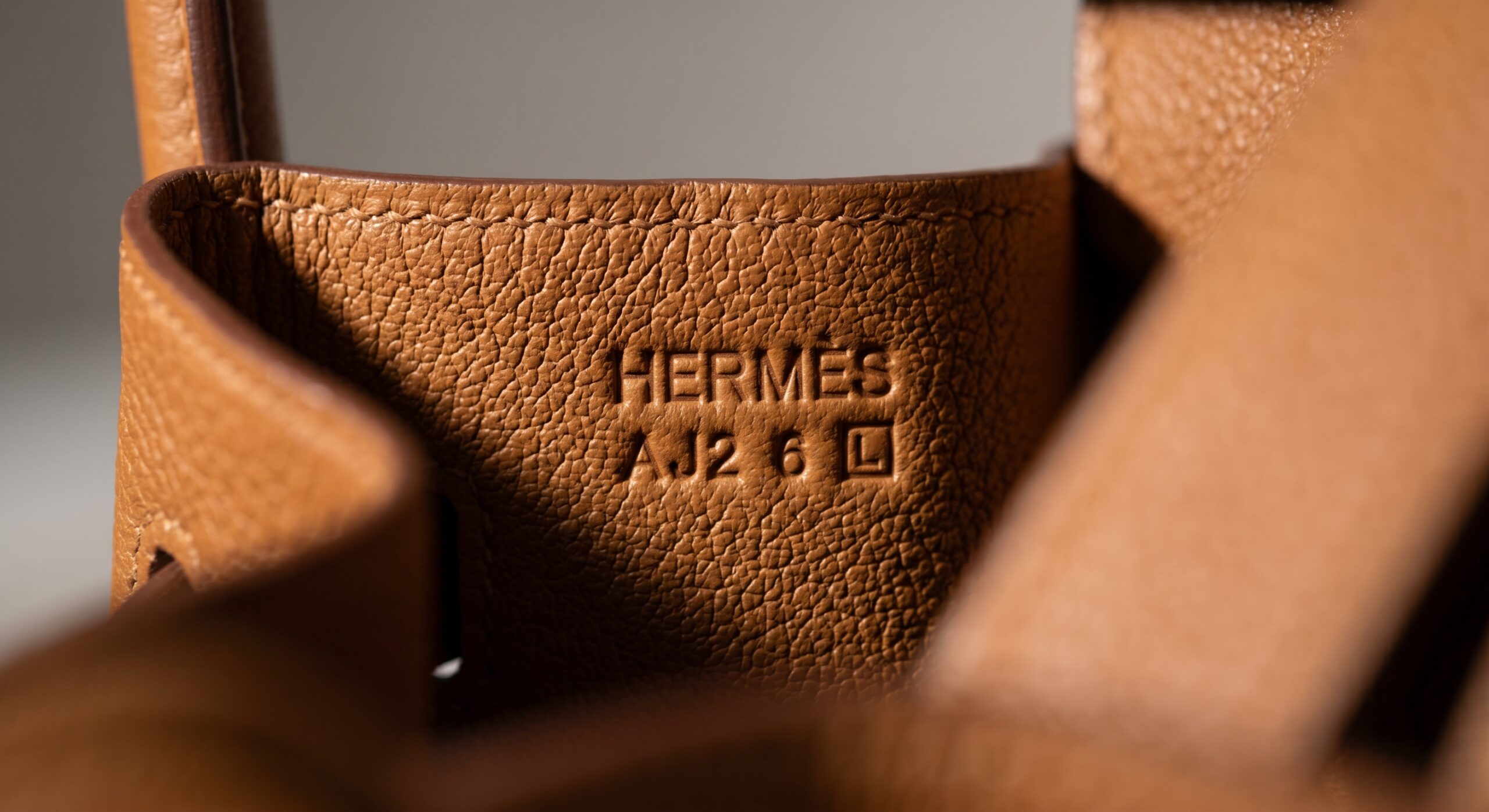
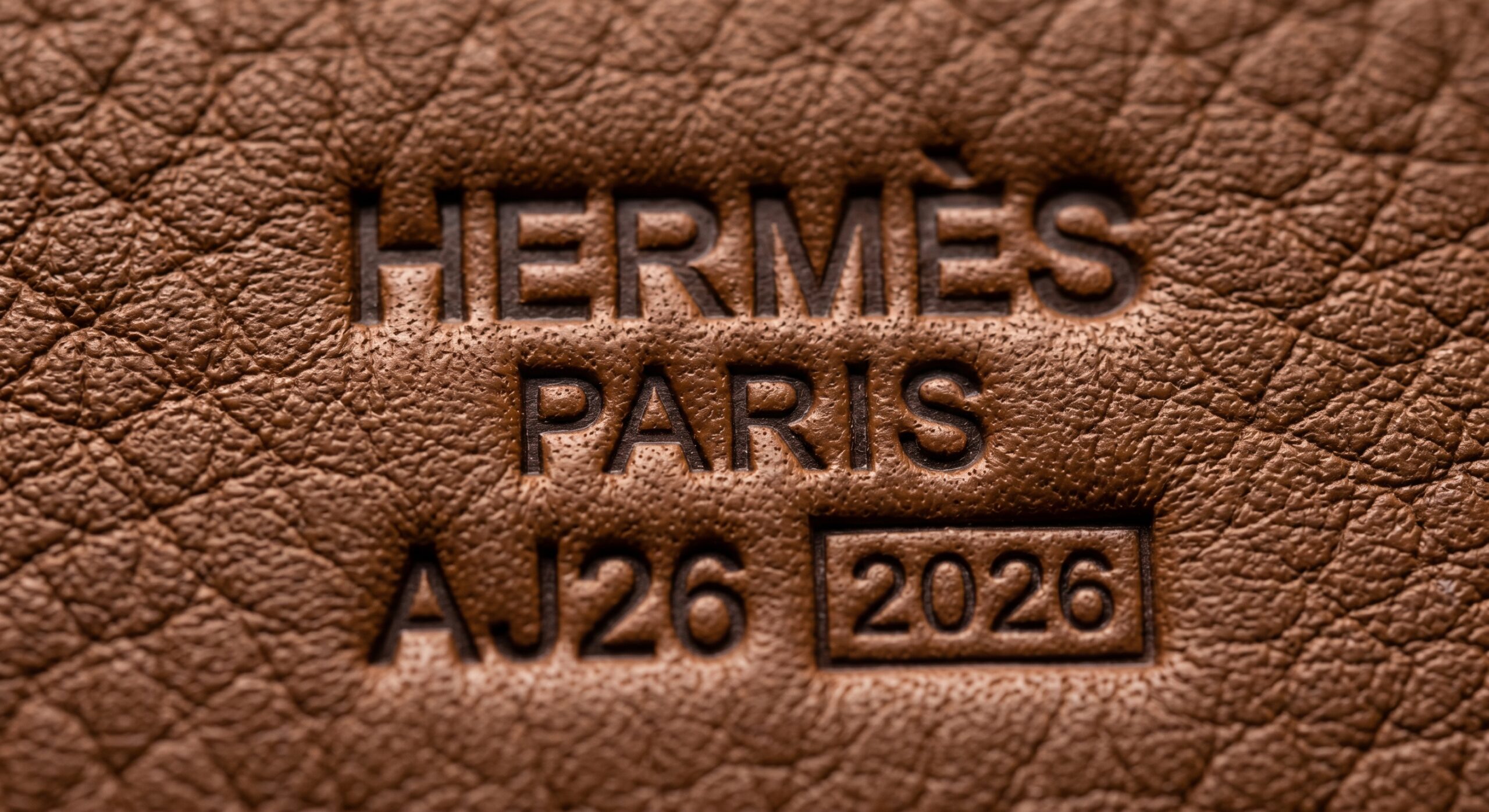
The term blind stamp in Hermès authentication refers specifically to the craftsperson identifier — the impressed letter, symbol, or combination that identifies the individual artisan who assembled the bag. It is called "blind" because it is impressed directly into the leather surface without ink or colour: visible under oblique light as a clean indentation, invisible to casual viewing from a straight-on angle. This is distinct from the foil-stamped "HERMÈS PARIS MADE IN FRANCE" text on the exterior, and distinct from the date letter stamp (a letter within a geometric shape — circle, square, triangle — that indicates production year). All three marks are forensically significant, but they appear in different locations and carry different authentication information.
The blind stamp's authentication value derives from three factors: its precise location within a defined zone that changes in specific ways across production years; the impression characteristics that result from a heated metal die applied with consistent hand pressure; and the leather's fibril response to that impression — a response that differs measurably between a hot die pressed into authentic full-grain leather and a cold or mechanical impression pressed into the corrected-grain leather used in counterfeit production. Understanding all three factors together provides a layered authentication signal that is substantially more reliable than location alone. For the full authentication framework, the Authentication Guide hub covers all stamp types alongside stitching, hardware, and edge glazing markers.
"The blind stamp's location is the first thing a specialist looks for — but the impression depth and fibril response are what confirm it. Location without material quality tells only half the story."
2026 Location Changes: Where the Blind Stamp Now Appears on Birkin and Kelly
The craftsperson blind stamp on Hermès bags appears inside the bag, on the interior leather panel — but its precise position within that panel has shifted across production years in ways that specialist authenticators track carefully. The 2026 production run has shown a consistent repositioning relative to recent prior years that is significant for authentication of newly purchased secondary market pieces.
On the Birkin, the blind stamp has historically appeared on the interior front panel — the leather surface facing you when you open the bag's top flap — positioned slightly left of centre and approximately one-third of the way down from the top edge of that panel. In 2026 production pieces, the stamp position has moved to a more centred horizontal position, while the vertical position has shifted marginally lower — approximately 40% of the way down from the top edge rather than one-third. This is a subtle change, but it is consistent across multiple 2026 production examples and sufficiently distinct from the prior position that an authenticator with comparative reference can identify it. A counterfeit produced in 2024 or 2025 to replicate the prior location pattern will now display the stamp in a position inconsistent with 2026 production.
On the Kelly, the blind stamp appears on the interior leather beneath the front flap — accessible when the bag is open and the flap is raised. The 2026 position on the Kelly has similarly shifted toward the centre of the panel, and the stamp now appears at a slightly lower position relative to the base of the flap seam than in prior years. The date letter stamp, which appears adjacent to the brand stamp text on the exterior of the bag, remains in its established position.
- Birkin 2026 position: centred horizontally on interior front panel; approximately 40% down from top edge — shifted from the prior slightly-left-of-centre, one-third-down position
- Kelly 2026 position: centred on interior under-flap panel; slightly lower relative to the flap seam base than prior years — consistent across sellier and retourne constructions
- Date letter stamp: unaffected by the 2026 position change — continues to appear adjacent to the brand text stamping on the exterior, near the base of the front panel
- Exotic skin models (crocodile, ostrich): the blind stamp position on exotic skins follows the same general zone as bovine leather but may be placed to avoid scale disruption — the centering shift is consistent but the precise distance from panel edges varies by scale pattern at the stamped zone
- Size variation: in smaller formats (Birkin 25, Kelly 25), the stamp is proportionally scaled but appears in the same relative position within the panel; do not compare absolute distances from edges without accounting for bag size
- Linings: the blind stamp is always impressed into the leather interior panel, never into the fabric lining — any stamp appearing on the fabric lining material is an immediate authentication failure regardless of all other factors
Reading Authentic Impression Depth and Fibril Response Across Different Hermès Leathers
Location alone is insufficient for blind stamp authentication — a correctly positioned stamp with incorrect impression characteristics is still a counterfeit indicator. The material quality of the impression is where the deepest forensic information resides, and it varies predictably across different Hermès leather types in ways that allow comparative assessment.
An authentic Hermès blind stamp is applied using a heated metal die pressed into the leather with consistent hand pressure. The heat serves two functions: it temporarily softens the leather's fibril network at the impression point, allowing the die to compress the surface to a clean, well-defined depth; and it slightly hardens the compressed zone as the heat dissipates, setting the impression permanently. The result is a stamp with the following characteristics: clean, sharp edges where the die boundary meets the unimpressed leather; a compressed but intact grain surface within the impression area; and a subtle, consistent depth that is legible under oblique light without being so deep that it threatens the leather's structural integrity.
How Leather Type Changes the Appearance of an Authentic Stamp
The same heated die produces visibly different impression results on different Hermès leathers — a fact that specialist authenticators understand and that counterfeit producers often fail to account for. On Epsom, whose compressed fibril surface offers high resistance to the die, authentic stamps appear crisper and slightly shallower than on open-grain leathers — the cross-hatch embossing is visibly compressed within the stamp boundary, and the edge definition is particularly sharp. On Togo, the pebbled grain compresses more readily, producing a slightly deeper impression in which the pebble texture within the stamp area is flattened to a smooth, matte surface distinctly different from the surrounding raised grain. On Barenia Faubourg, the vegetable-tanned fibril network responds most dramatically to heat: the impression produces a darkened zone at the stamp boundary as the tannins at the compressed fibril edges oxidise from the die heat — a subtle but consistent authenticity marker on this leather type that counterfeits universally fail to replicate.
The counterfeit failure modes at the impression level are consistent across the tier spectrum. Cold-die impressions — the most common counterfeit method — lack the heated fibril softening that allows clean compression: instead, the fibrils are physically displaced rather than compressed, producing ragged or torn edges at the impression boundary rather than clean, crisp definition. Laser-etched impressions, used by higher-tier counterfeit operations, produce sharp edges but a distinctly different surface texture within the etched area — the fibrils are ablated rather than compressed, leaving a smooth, slightly glazed surface that is visually and texturally distinct from the matte, compressed-pebble surface of an authentic Togo stamp or the sharpened cross-hatch of an authentic Epsom stamp. Under ×10 magnification with oblique light, this difference is immediately legible and requires no specialist training once you have seen an authentic impression for comparison.
For the complementary foil stamping authentication markers — covering the "HERMÈS PARIS MADE IN FRANCE" text and date letter stamp depth and spacing — see our detailed piece at Hermès Foil Stamping Depth and Spacing: How to Read the Mark. For zipper pull authentication as a parallel hardware marker, see Hermès Zipper Pull Alignment and Weight: Full Authentication Guide.
Using Blind Stamp Knowledge in Secondary Market Authentication: A Field Protocol
The blind stamp inspection integrates into a complete authentication assessment as the third layer after hardware pearling and saddle stitch verification — each layer builds on and cross-references the others. A piece that passes hardware and stitching inspection but fails on blind stamp location or impression quality requires the same caution as a piece that fails on the first layer.
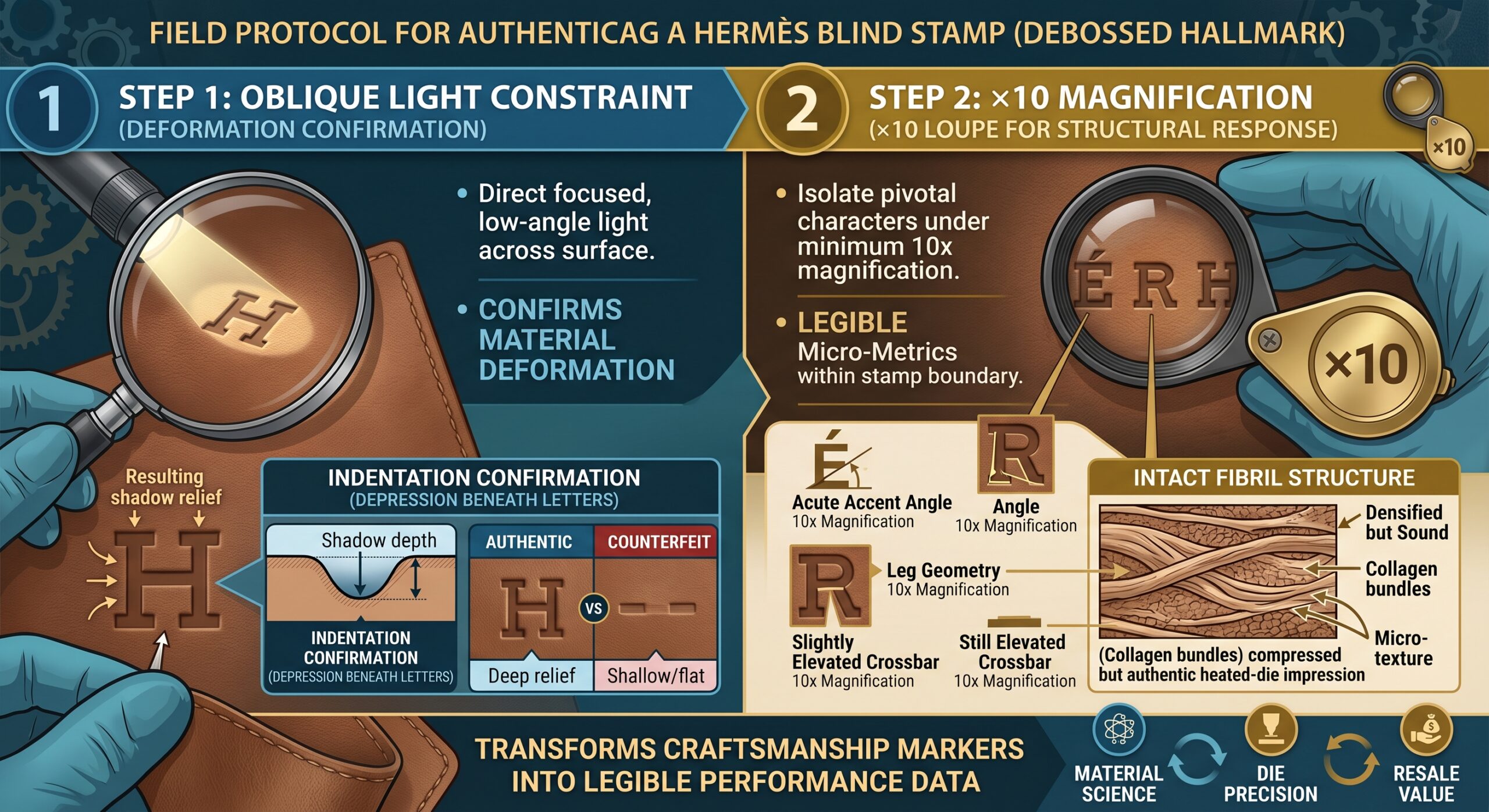
The field protocol for blind stamp assessment has four steps that can be completed in under two minutes. Step one: open the bag and locate the stamp using oblique light — hold a phone torch at a low angle to the interior panel surface and move it slowly until the indentation catches the light. A stamp that is completely invisible under oblique light is either too shallow (counterfeit concern) or has been pressed into a zone with a lining overlay (incorrect placement concern). Step two: verify the position against the 2026 location reference for the model in question — the centred, slightly lower position described in Section 2. For secondary market pieces from prior years, position should be assessed against the appropriate year's reference rather than the 2026 position.
Step three: assess impression quality under ×10 magnification. The three questions to answer are: are the impression edges clean and sharp (yes: authentic indicator; no: counterfeit indicator)? Is the grain or fibril surface within the stamp boundary compressed but intact (yes: authentic; ablated or torn: counterfeit)? Does the impression depth appear consistent across the full stamp area (yes: authentic; uneven, shallower on one side: pressure inconsistency that suggests mechanical rather than hand application)? Step four: cross-reference with the saddle stitch angle and hardware assessment already completed — a piece that fails at least two of three layers should be treated with strong suspicion regardless of any individual marker that passes. Browse the full authentication category at Authentication.
| Leather | Authentic Stamp Appearance | Key Distinguishing Feature | Counterfeit Failure Mode |
|---|---|---|---|
| Togo | Pebble texture flattened to smooth matte within stamp boundary; clean perimeter where pebble resumes | The smooth/pebbled boundary is the most visually legible authentic marker on Togo — crisp line between zones | Cold die displaces rather than flattens pebbles; perimeter boundary is ragged rather than clean |
| Epsom | Cross-hatch embossing compressed within stamp; sharpest edge definition of any standard leather due to firm surface | The cross-hatch within the stamp appears slightly more compressed/flatter than surrounding embossing | Laser etching removes cross-hatch material rather than compressing it — different visual texture within boundary |
| Clemence | Larger pebble flattened to matte zone; slightly deeper impression than Togo due to softer fibril structure | Deeper impression is correct and expected — do not interpret greater depth as over-stamping | Cold die creates displacement around stamp edges — pebbles pushed aside rather than compressed flat |
| Barenia Faubourg | Smooth surface compressed to slightly deeper matte; subtle tannin darkening at stamp boundary edges from die heat | Tannin-oxidation boundary darkening is Barenia-specific and present on all authentic pieces — unique to vegetable tannage | No boundary darkening on counterfeit Barenia stamp — chrome-tanned corrected-grain fakes cannot replicate tannin response |
| Swift | Smooth matte impression in semi-matte surface; clean edges; slight polish difference between stamp zone and surrounding finish | The finish sheen differential between stamp zone and surround is readable under angled light | Cold die creates micro-tears in thin Swift finish layer visible under magnification as frayed boundary |
| Box Calf | High-gloss surface disrupted to matte within stamp; most visually dramatic contrast of any standard leather due to gloss differential | The gloss-to-matte contrast at the stamp boundary is the most immediately legible authentic marker on Box Calf | Laser produces over-sharp ablated zone; cold die produces irregular gloss disruption without clean matte compression |
The 2026 Position Shift Is a Temporary Counterfeit Blind Spot — Use It While It Lasts, but Never Rely on Location Alone
The 2026 blind stamp repositioning on both the Birkin and Kelly provides a window of authentication advantage that is real but temporary. Counterfeit producers will eventually identify and adapt to the new position — as they have adapted to every previous location change. The window for using position alone to exclude currently circulating fakes is meaningful but finite, and buyers should not treat it as a permanent solution.
What remains permanently reliable is impression quality assessment: the heated-die compression characteristics, the leather-specific fibril response, and the Barenia-specific tannin boundary darkening are properties of the authentic process that counterfeits cannot replicate through cold die, laser etching, or mechanical pressing at any tier. These material markers do not change with each production year — they are encoded in the physics of the authentic application method itself. Learning to read them transforms blind stamp inspection from a location-dependent check into a material-science assessment that remains valid regardless of when the bag was produced.
Bottom Line: The 2026 position shift in the blind stamp provides a current counterfeit exclusion advantage — use it for newly produced pieces — but build your authentication practice on impression quality assessment, which remains valid across all production years and cannot be replicated by any current counterfeit method.
Popular Searches
Explore our most searched Hermès blind stamp and authentication combinations
The most counterfeited Birkin — the 2026 centred stamp position is now the primary location marker for 2025–2026 production Togo Gold authentication on the secondary market.
⬆ TrendingThe two distinct stamps on a Kelly — blind stamp under the flap and date letter adjacent to brand text — are frequently confused by new buyers; understanding their separation is the first authentication step.
★ Collector FavouriteThe Barenia-specific tannin oxidation boundary around the blind stamp is the most unique leather-type authentication marker in the range — invisible on any counterfeit regardless of production tier.
◆ Ultra RareBox Calf's gloss-to-matte stamp boundary is the most visually dramatic authentic impression marker — the high-contrast zone is impossible to replicate with laser or cold-die methods at any production tier.
⬆ Rising DemandClemence's deeper stamp impression depth is expected and correct — buyers unfamiliar with leather-specific impression variation sometimes incorrectly flag authentic Clemence stamps as over-impressed.
🔥 Most SearchedThe retourne Kelly's under-flap interior provides particularly clean stamp access — the 2026 centred position is easy to verify on this construction because the leather panel is not obscured by structural elements.
Frequently Asked Questions
As of 2026, the craftsperson blind stamp on Birkin models appears on the interior front panel, positioned centrally and approximately 40% down from the top edge — a shift from the prior slightly-left-of-centre, one-third-down position. On Kelly models it appears on the interior under-flap panel, also shifted toward centre and slightly lower relative to the flap seam base than in prior years. Crucially, the stamp's impression depth and edge definition remain the primary authentication markers regardless of precise position. See the full authentication guide at the Authentication Guide hub.
The blind stamp letter or symbol identifies the individual craftsperson who assembled the bag. Hermès assigns each artisan a unique identifier — historically a single letter, now extended to symbols and two-character combinations. The stamp is impressed directly into the leather using a heated metal die, creating the characteristic indented mark with compressed fibrils at its edges. The blind stamp does not indicate the production year — the date letter stamp (a letter within a geometric shape) performs that function, and they appear in different locations. For foil stamp and date letter context see Hermès Foil Stamping Depth and Spacing.
Authentic Hermès blind stamp impressions sit at a depth visible as a clear, clean indentation under oblique light, without piercing or tearing the fibril layer. Impression edges are sharp and well-defined — the result of a heated die applied with consistent pressure — and the fibril structure within the impressed area is compressed rather than cut. Depth varies by leather type: Epsom accepts a shallower impression that remains legible; Clemence requires slightly more depth due to its softer fibril structure. A stamp that is too shallow or shows ragged edges is an authentication concern. See saddle stitch authentication at Hermès Authentic Saddle Stitch Angle vs Machine Stitching.
High-tier counterfeit operations do attempt to replicate the blind stamp, with some producing impressions that pass casual inspection. Consistent failures include: impression depth too shallow or too uniform; edge definition too clean or ragged (lacking the micro-fibril compression of a heated die); and incorrect fibril response within the impressed area. Real impressions show compressed but intact fibrils; counterfeits show either uncompressed surface or fibril tearing. The Barenia-specific tannin oxidation boundary is unreplicable by any current method. For zipper pull authentication as a complementary marker, see Hermès Zipper Pull Alignment and Weight.
