
Hermès Keychain and Charm Authentication: Common Counterfeit Tells
Bag charms and keychains are small, low-cost entry points into the brand, and precisely because of that, they are among the most heavily counterfeited Hermès accessories.
Hermès bag charms and keychains occupy an unusual position in the counterfeit market. Their low price point relative to bags makes them an accessible target for counterfeit production, and their small size means many buyers apply far less scrutiny than they would to a bag purchase — a combination that makes charms and keychains one of the most heavily counterfeited categories of Hermès accessories, despite their modest cost.
This guide adapts the forensic approach from our broader authentication guides — craftsman stamps and hardware pearling — specifically to charms, keyrings, and bag accessories.
Why Charms Are Heavily Counterfeited
Charms and keychains sell at a fraction of a bag's price, which means the barrier to counterfeit production is correspondingly lower — a convincing fake charm requires far less investment in materials and tooling than a convincing fake bag. At the same time, buyers frequently purchase charms as casual, low-stakes additions to an existing collection, applying less diligence than they would before a major purchase.
This combination of low production cost and low buyer scrutiny is precisely what makes charms and keychains disproportionately represented among counterfeit Hermès goods relative to their share of genuine sales. Marketplace dynamics reinforce this further: charms are commonly sold individually and casually, often through channels with far less seller vetting than dedicated luxury resale platforms, which lowers the practical risk of consequences for a counterfeit seller compared to attempting to pass off a fake bag through a more scrutinized channel.
There is also a gifting dimension worth understanding. Charms are frequently purchased as gifts precisely because their lower price point makes them accessible, and gift purchases are statistically associated with lower buyer diligence across luxury categories generally — the giver is often optimizing for presentation and occasion rather than conducting the kind of forensic check they might apply to a purchase for themselves.
Low price does not mean low counterfeiting risk — for charms and keychains, it's often the opposite.
Leather Quality on Small Charms
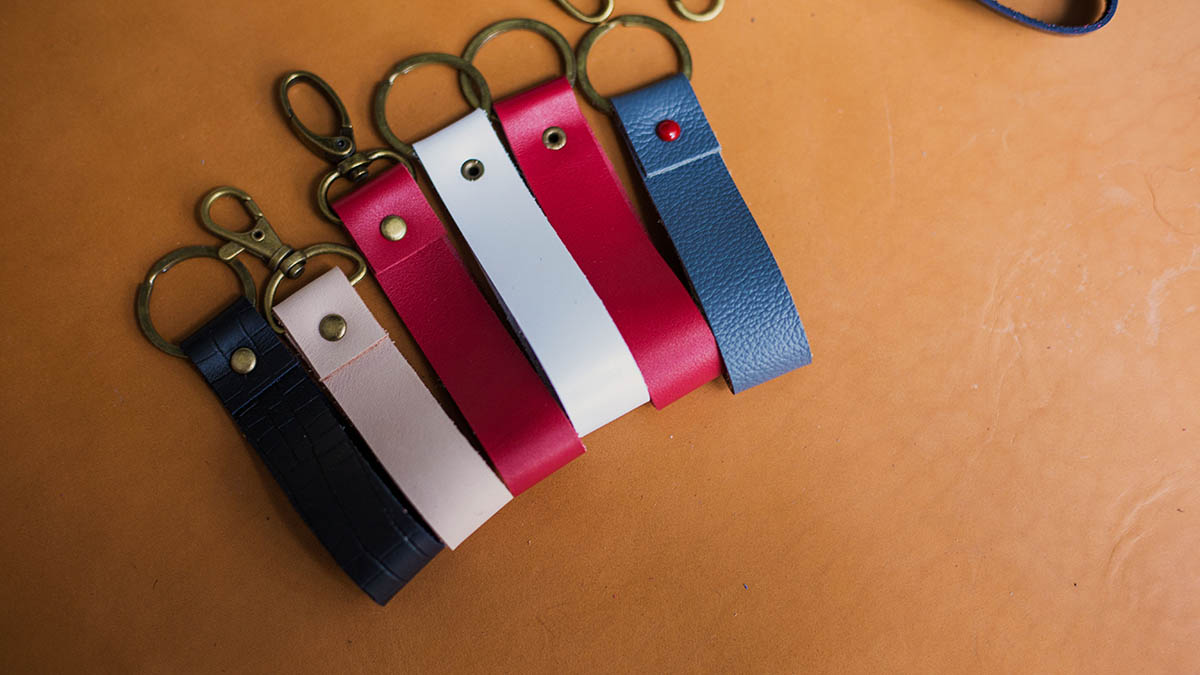
Genuine Hermès leather charms use offcuts or small pieces from the same leather stock used across the house's bags, meaning the grain, color consistency, and finish quality should match what you'd expect from a full-size bag in that same leather. Counterfeit charms frequently use lower-grade leather that looks superficially similar in photographs but lacks the same grain definition and consistency under close inspection.
Stitching on charms follows the same saddle stitch convention as bags, just at an even smaller scale than wallets. Any inconsistency in thread angle or spacing is highly visible given how few stitches a small charm typically has.
Braided or twisted leather charm designs deserve particular attention, since these introduce an additional construction variable beyond flat leather panels. Genuine braided work maintains consistent strand tension and spacing along the entire length, while lower-quality reproductions often show visible tension variance, particularly toward the ends where the braid terminates into the hardware attachment point.
Hardware Rings and Clasps
The metal ring or clasp connecting a charm to a bag is a frequently overlooked authentication point. Genuine hardware rings show the same finish quality and precise machining as larger bag hardware — a clean, consistent plating with no visible seams, and a mechanism that opens and closes with confident, precise action rather than a loose or gritty engagement.
Split rings and lobster clasps used on charms should also show plating that matches the bag hardware family they're designed to complement — palladium, gold, rose gold, or Permabrass. A charm sold as a coordinating accessory to a specific bag colorway should carry hardware in the same finish family as that bag's own hardware, and any mismatch here is worth treating as seriously as a mismatch on the bag itself.
Clasp Mechanisms Reveal Manufacturing Investment
A charm's clasp mechanism is small enough that many counterfeit operations don't invest in matching Hermès's actual hardware supplier, instead using generic jewelry-grade clasps. Even when the charm's leather looks reasonably convincing, a generic clasp is often the giveaway.
Stamps on Charms and Keychains
Larger leather charms typically carry a small blind stamp, following the same letterform and depth conventions covered in our craftsman stamp guide. Given the limited surface area, stamps on charms are sometimes positioned less predictably than on bags, so treat depth consistency and correct letterform as more reliable signals than exact placement.
Not every charm carries a stamp — some smaller or novelty designs may not follow the standard convention — so absence of a stamp alone is not necessarily disqualifying, but presence of an incorrect or poorly executed stamp is a meaningful concern.
Packaging and Presentation Signals
Because charms are smaller, lower-cost items, packaging and presentation details carry relatively more diagnostic weight than they might for a bag purchase, where the item itself dominates scrutiny. Genuine Hermès packaging for small accessories follows consistent branding, box construction, and included documentation standards. Packaging that looks generic, uses incorrect fonts or colors, or lacks expected inclusions is a legitimate signal worth factoring into the overall assessment, alongside the physical item itself.
This is particularly relevant for buyers purchasing charms as gifts, where original packaging often matters as much to the recipient's experience as the item itself. A genuine Hermès box has a specific weight, finish, and closure mechanism that generic reproduction boxes rarely replicate convincingly under close inspection, even when the printed branding looks reasonably accurate at a glance.
A Practical Inspection Method
- Examine leather grain and color consistency against known genuine examples in the same leather type.
- Check stitching for consistent saddle stitch angle and spacing, accounting for the very small scale involved.
- Test the hardware ring or clasp for confident, precise mechanical engagement and consistent plating finish.
- Look for a blind stamp where applicable, focusing on depth and letterform quality over exact placement.
- Assess packaging and documentation against known genuine standards for that accessory category.
- Cross-reference against our broader authentication guides for markers that apply across accessory categories.
The Leather Expert's Verdict
Charms and keychains deserve more authentication scrutiny than their price point might suggest, precisely because low cost and casual purchasing habits make them an attractive target for counterfeit production. The hardware ring or clasp is an especially efficient check, since it's a detail counterfeiters frequently underinvest in even when the leather itself looks reasonably convincing. For the complete set of forensic markers this approach draws from, see our Authentication Hub.
Proportionally to genuine sales, charms and keychains are disproportionately represented among counterfeits, driven by their lower production cost and the lighter scrutiny buyers typically apply to lower-priced purchases.
Not always. Some smaller or novelty designs may not follow the standard blind stamp convention, so absence alone isn't necessarily disqualifying, but an incorrect or poorly executed stamp where one is present is a meaningful concern.
The hardware ring or clasp mechanism. Many counterfeit operations underinvest in this small component even when the leather itself is reasonably convincing, making it an efficient and reliable check.
Yes, more than it might for a bag. Because the item itself is smaller and lower-cost, packaging and documentation details carry relatively more diagnostic weight in the overall assessment.
Yes. The lower price point doesn't reduce counterfeiting risk, and in some ways increases it, so the same forensic approach in our Authentication Hub remains worthwhile.
