Hermès Care & Storage Guide: Leather Science, Conditioning & Protection by Tannage Type
Leather care is a chemistry question before it is a product question. What works on Barenia will damage Epsom. Here is the science behind getting it right.
Leather care is a chemistry question before it is a product question. The conditioner that works on Barenia — a vegetable-tanned leather with an open fibril structure that absorbs product readily — will over-condition Epsom, whose tight fibril matrix cannot absorb product at the same rate and risks surface bloom. Corner wear on Epsom is a mechanical abrasion problem at the fibril level, not a surface stain — which is why colour-matched touch-up products address the symptom but not the structural cause.
This hub covers Hermès bag care through a materials science lens — what is happening at the fibril level when leather sustains damage, what each repair or conditioning approach actually does chemically, and which products have been tested and ranked against specific Hermès leather grades. Every care protocol in this guide is tannage-specific — because the tannage determines the chemistry, and the chemistry determines what works.
2
Primary tannage types that require completely different care chemistry: vegetable and chrome
3
Primary care errors that cause grade drops: wrong conditioner, incorrect storage, heat exposure
0
Products that restore embossed grain once corner wear has removed it from Epsom — prevention only
Leather Care as Chemistry: Why Tannage Determines Everything
The tannage method used to stabilise a hide determines its fibril structure, its surface finish, and critically — its relationship to moisture, conditioning products, and environmental stress. Understanding tannage is the prerequisite to understanding care, because every meaningful care decision flows from the answer to one question: how was this leather stabilised, and what does that mean for how it absorbs, resists, and responds to external products and conditions?
Vegetable-tanned leathers — Barenia, Box Calf in its traditional form — have an open fibril structure that absorbs conditioning products and moisture readily. This is what makes them capable of developing a deep, living patina over time: the fibril structure is actively responsive to its environment. It is also what makes them vulnerable: an open fibril structure absorbs moisture from rain or humidity as readily as it absorbs conditioning product, and the wrong conditioner can penetrate too deeply, altering the leather’s internal chemistry and producing surface bloom or permanent darkening.
Chrome-tanned leathers — Togo, Clemence, Epsom, Veau Swift — have a more chemically stable fibril structure that resists moisture and absorbs conditioning product more slowly. This stability is what makes them better daily-use leathers from a maintenance perspective. But it also means that heavy application of conditioning products designed for vegetable-tanned hides will sit on the surface rather than penetrating, producing the white haze of surface bloom on leathers like Epsom whose embossed grain provides no surface porosity for product absorption.
“The conditioner that works on Barenia will damage Epsom. The storage protocol that preserves Togo will deform Clemence. Leather care is not generic — it is the specific application of chemistry to a specific material.”
- Vegetable-tanned (Barenia, traditional Box Calf): open fibril structure, high absorption, patina-developing, moisture-sensitive
- Chrome-tanned (Togo, Clemence, Epsom, Veau Swift): stable fibril structure, lower absorption, moisture-resistant, bloom risk with over-conditioning
- Never apply a vegetable-tanned leather conditioner to a chrome-tanned leather — absorption rates are incompatible
- Always test any new product on a hidden area (interior base panel) before applying to the exterior surface
- Less is more with all conditioners — under-conditioning is recoverable; over-conditioning causes surface bloom that is very difficult to reverse
Corner Wear on Epsom: The Fibril Mechanics and What Actually Works
Corner wear on Epsom leather is one of the most commonly misunderstood care issues in the Hermès owner community. It is consistently treated as a surface stain or a colour loss problem — which leads buyers to colour-matched touch-up pens and surface dyes that address the visual symptom without resolving the structural cause. Understanding what is actually happening at the fibril level when Epsom corners wear changes the entire approach to both prevention and response.
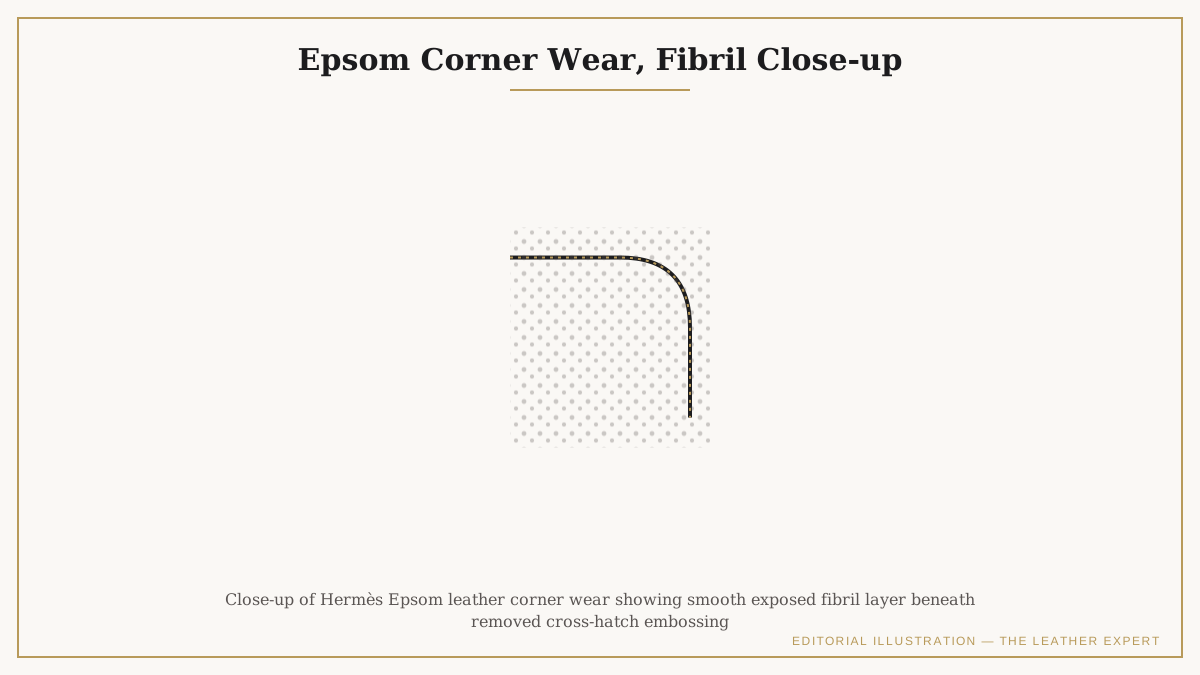
Epsom’s characteristic cross-hatch grain is not the natural grain of the hide — it is an embossed pattern created by pressing the leather surface under a heated plate with a cross-hatch texture. This process compresses the surface fibrils into the embossed pattern and sets the pattern through heat. When the corner of an Epsom bag contacts a hard surface repeatedly — as it does every time the bag is set down — the mechanical abrasion at the contact point physically removes the compressed embossed fibrils from the surface, exposing the smooth base fibril layer beneath. This is not a colour problem. It is a structural removal of embossed material.
⚠ What Does NOT Work on Epsom Corner Wear
Colour-matched touch-up pens address the colour differential but not the structural loss of embossing — the result is a smooth, coloured area that looks different from the surrounding embossed surface under any raking light. Surface dyes penetrate the exposed fibril layer but cannot replicate the embossed texture. Re-embossing is theoretically possible by a specialist leather restorer with the correct heated plate, but it is expensive, carries risk, and the result is rarely indistinguishable from the original. Prevention — corner protectors during storage, avoiding hard surface set-down contact, correct stuffing — is the only strategy that consistently works.
- Epsom corner wear = structural fibril removal, not surface staining — requires prevention, not product treatment
- Prevention: use a bag insert or feet protectors when setting the bag on hard surfaces
- Storage: always store Epsom bags stuffed and upright — corner contact with shelf surfaces causes the same abrasion as use
- If corner wear has occurred: a specialist leather restorer can attempt re-embossing — not a DIY repair
- Touch-up products: acknowledge they address colour only, not texture — useful for visual improvement before resale, not for structural repair
- Full corner wear prevention and repair analysis: corner wear on Hermès Epsom leather
Water Damage on Barenia: Absorption Mechanism, Prevention & Repair
Barenia is Hermès’s most prestigious and most demanding production leather. Its vegetable tannage and open fibril structure give it the capacity for the deepest, most characterful patina of any leather in the Hermès range — and also make it the most vulnerable to water damage of any major production leather. Understanding the absorption mechanism behind Barenia’s water sensitivity is the foundation of both prevention and response.
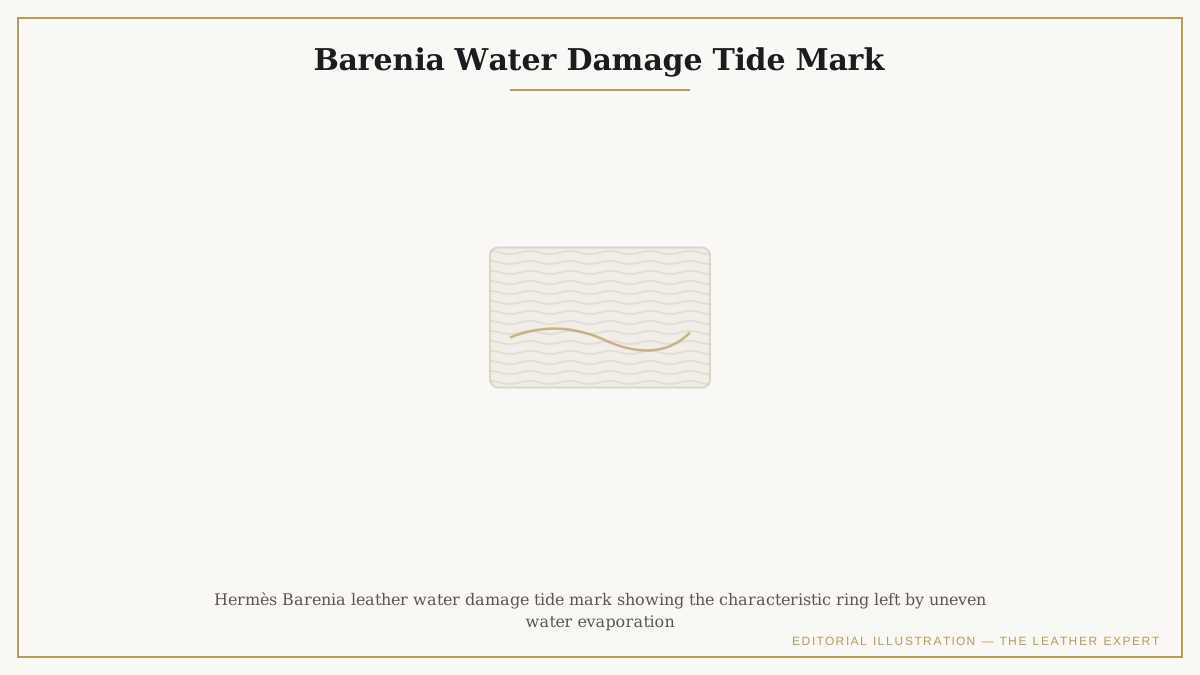
When water contacts Barenia’s surface, it penetrates the open fibril structure through capillary action — the same mechanism that allows conditioning products and skin oils to penetrate and develop the leather’s pellicule. The water swells the fibres it contacts, temporarily disrupting the even fibril alignment that produces Barenia’s characteristic smooth surface. As the water evaporates, it retreats unevenly through the fibril structure — evaporating faster at the edges of the wet area than at the centre — and this uneven retreat leaves a tide mark where the fibril disruption boundary is visible as a colour or texture differential. On dark Barenia this tide mark may be subtle; on natural or fauve Barenia it is immediately visible.
- Prevention first: keep Barenia away from rain, humidity, and any liquid contact — no exceptions
- If wet: blot immediately with a clean dry cloth — do NOT rub, which spreads the water into the surrounding fibril structure
- Drying: allow to dry naturally at room temperature away from direct sunlight, radiators, or any heat source
- Heat drying: causes irreversible fibril hardening — the leather will feel stiff and develop surface cracking
- Once fully dry: condition with a vegetable-tanned leather conditioner — restores surface oils disrupted by the water
- Tide mark treatment: some specialist restorers can reduce tide marks through controlled re-wetting and even drying — not a DIY repair
- Full treatment guide: Barenia leather water damage prevention and repair
Best Leather Conditioners by Tannage Type: Ranked Against Fibril Chemistry
The conditioner market for luxury leather goods is saturated with products that make broad claims without specifying the tannage types they are appropriate for. For Hermès leathers — which span the full range from open vegetable-tanned hides to compressed chrome-tanned embossed surfaces — tannage-specific product selection is not optional. Using the wrong product is actively harmful.
For vegetable-tanned leathers (Barenia, traditional Box Calf): the ideal conditioner is water-based or lanolin-based, with a low penetration rate that allows the product to work with the fibril structure rather than overwhelming it. Avoid wax-based products on Barenia — they seal the surface rather than conditioning the fibril structure, which prevents the patina development that makes Barenia valuable. Apply sparingly with a soft cloth, allow to absorb fully before buffing.
For chrome-tanned pebbled leathers (Togo, Clemence): a light cream conditioner is appropriate — lighter in viscosity than vegetable-tanned conditioners because the chrome-tanned fibril structure absorbs more slowly. Apply less frequently than you would for vegetable-tanned leathers. Togo and Clemence are self-maintaining to a significant degree — their chrome tannage resists drying better than vegetable-tanned hides, and over-conditioning is a more common error than under-conditioning.
For Epsom and embossed chrome-tanned leathers: conditioning should be minimal — the compressed fibril surface has very low absorption capacity, and any product applied will tend to sit on the surface rather than penetrating. A very light application of a cream designed for smooth chrome-tanned leather, applied infrequently, is the appropriate protocol. Never use a product designed for vegetable-tanned leather on Epsom.
Leather Expert Note — Conditioning Frequency by Leather Type
Barenia: condition 2–3 times per year under regular use, or immediately after any water contact once fully dry. Box Calf: condition 2–4 times per year depending on use intensity and climate. Togo and Clemence: condition once or twice per year — more frequently in very dry climates. Epsom: condition once per year maximum, very sparingly. For the ranked conditioner review against fibril chemistry, see best leather conditioners for Hermès Barenia — ranked and reviewed.
Correct Storage Protocol: Stuffing, Positioning and Climate Control
Storage errors are the most common cause of condition grade drops on Hermès bags that are not in regular rotation. A bag stored incorrectly for six months can sustain fold creases, structural deformation, surface pressure marks, and humidity damage that would take years of regular use to produce. The storage protocol is not complex — but it must be applied consistently.
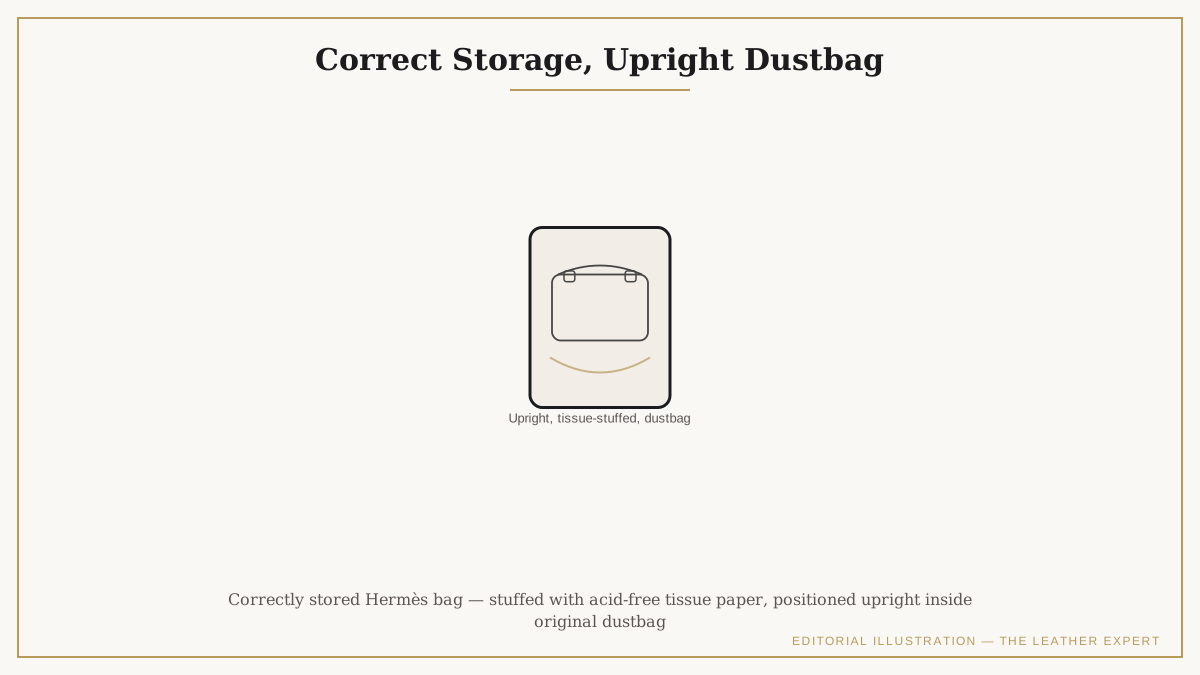
- Stuffing: use acid-free tissue paper or a dedicated bag insert — fill firmly enough to maintain structural shape without over-stretching
- Position: store upright at all times — never on its side, never stacked under other items, never hanging by handles
- Dustbag: always store inside the original Hermès dustbag — protects against dust, light, and ambient humidity fluctuation
- Never store in plastic — leather needs to breathe; plastic traps moisture and accelerates mould and mildew risk
- Climate: store in a stable, cool, dry environment — avoid attics, garages, and anywhere with temperature extremes or humidity fluctuation
- Humidity control: add a food-grade silica gel sachet inside the dustbag for long-term storage — refresh every 3–6 months
- Sunlight: direct sunlight causes irreversible colour fade and fibril degradation — store away from windows and light sources
- Contents: remove all contents including bag organisers before long-term storage — sustained internal pressure causes lining impressions
| Leather | Tannage | Conditioner Type | Frequency | Primary Risk | Key Avoid |
|---|---|---|---|---|---|
| Barenia | Vegetable | Water or lanolin-based, low penetration rate | 2–3× per year + after water contact | Water tide marks, surface darkening from over-conditioning | Wax products, heat drying, direct rain exposure |
| Box Calf | Vegetable | Light cream for smooth vegetable-tanned leather | 2–4× per year | Surface scratches, handling marks visible on smooth finish | Heavy product application, wax buildup, abrasive contact |
| Togo | Chrome | Light cream conditioner — chrome-tanned formula | 1–2× per year | Handle darkening, gusset fold compression over time | Vegetable-tanned conditioners, over-conditioning causing bloom |
| Clemence | Chrome | Light cream conditioner — chrome-tanned formula | 1–2× per year | Base panel slouch, longitudinal body crease from improper storage | Under-stuffing during storage, heavy loading causing permanent slouch |
| Epsom | Chrome (embossed) | Very light smooth leather cream — minimal application | Once per year maximum | Corner wear (embossing removal), surface bloom from over-conditioning | Vegetable-tanned conditioners, any product with high penetration rate |
| Veau Swift | Chrome | Light cream for smooth chrome-tanned leather | 2× per year | Scratch visibility on smooth surface, handling marks | Heavy application, abrasive cloths, over-conditioning |
Care Is Chemistry. Know Your Tannage Before You Open a Product.
The single most important principle in Hermès leather care is this: identify the tannage before selecting a care product. Vegetable-tanned and chrome-tanned leathers have fundamentally different fibril structures, different absorption rates, and different relationships to conditioning products. A care routine designed for one tannage type applied to the other is not just ineffective — it is actively damaging.
Corner wear on Epsom cannot be conditioned away. Water tide marks on Barenia cannot be polished out. These are structural and chemical events at the fibril level, and they require either prevention — which is always the better strategy — or specialist intervention that goes beyond any consumer product. The care protocols in this guide represent the correct approach for each leather type. Apply them consistently and your bags will maintain their condition grade through years of use and storage.
Storage is not an afterthought. A bag in incorrect storage for six months can sustain more condition damage than a year of careful daily use. Stuff correctly, store upright, use the dustbag, control the climate. These are not complicated requirements — but they must be applied without exception to every bag in your collection, every time it goes back on the shelf.
Bottom Line: Know the tannage. Apply the correct product at the correct frequency. Store correctly every time. That is the complete care protocol — and it is sufficient to maintain any Hermès leather at B+ or better condition through decades of ownership.
Popular Searches
Most searched Hermès care and storage topics
🔥 Most Searched
How to Fix Corner Wear on Hermès Epsom Leather
The fibril mechanics of Epsom corner wear, why touch-up products don’t work structurally, and what actually prevents the grade drop from occurring.
★ Expert Reference
Water Damage on Hermès Barenia: Prevention & Repair
The absorption mechanism behind Barenia’s water sensitivity, immediate response protocol, and specialist repair options for tide marks and hardening.
⬆ Trending
Best Leather Conditioners for Hermès Barenia: Ranked
Conditioners tested and ranked against Barenia’s vegetable-tanned fibril chemistry — with application protocol and frequency recommendations.
◆ Foundation Reference
Hermès Leathers & Materials Guide
Every major Hermès production leather analysed by tannage, fibril density, and care requirements — the reference that makes all care decisions make sense.
⬆ Rising
Hermès Investment Guide
How leather condition grades translate to resale price differentials — the financial case for applying correct care protocols to every bag in your collection.
🔥 Most Searched
Hermès Authentication Hub
The forensic authentication reference — for buyers evaluating pre-owned pieces where care history is unknown and leather condition requires independent assessment.
Frequently Asked Questions
Corner wear on Epsom is a structural removal of the embossed cross-hatch pattern at the fibril level — not a surface stain. No conditioning product restores the embossed pattern once it has been physically abraded away. Colour-matched touch-up products address the visual colour differential only, leaving a smooth area that contrasts with surrounding embossed texture under raking light. Prevention is the only reliable strategy: corner protectors, avoiding hard surface contact, and correct stuffed upright storage. For specialist re-embossing options, see corner wear on Hermès Epsom leather.
Water penetrates Barenia’s open vegetable-tanned fibril structure through capillary action, swelling the contacted fibres. As the water evaporates unevenly, it leaves a tide mark where the fibril disruption boundary is visible. If Barenia gets wet: blot immediately with a clean dry cloth (do not rub), allow to dry naturally at room temperature away from all heat sources, then condition once fully dry with a vegetable-tanned leather conditioner. Heat drying causes irreversible fibril hardening. For the full repair protocol, see Barenia leather water damage prevention and repair.
No — and this is one of the most consequential care errors Hermès owners make. Togo’s chrome-tanned pebbled fibril structure absorbs conditioner more slowly than vegetable-tanned leathers, and Epsom’s compressed embossed surface has even lower absorption capacity. A conditioner designed for Barenia’s open fibril structure will over-condition both, causing surface bloom on Epsom. Use a light cream conditioner formulated for chrome-tanned leather on both Togo and Epsom, applied less frequently and more sparingly than you would for vegetable-tanned hides.
Stuff with acid-free tissue paper to maintain structural shape. Store upright — never on its side or stacked. Keep inside the original dustbag in a cool, dry, climate-stable environment away from direct sunlight. Never store in plastic — leather needs to breathe. Add a food-grade silica gel sachet inside the dustbag for humidity control in long-term storage. Remove all contents including organisers before long-term storage to prevent lining pressure marks. Refresh silica gel sachets every 3–6 months.