
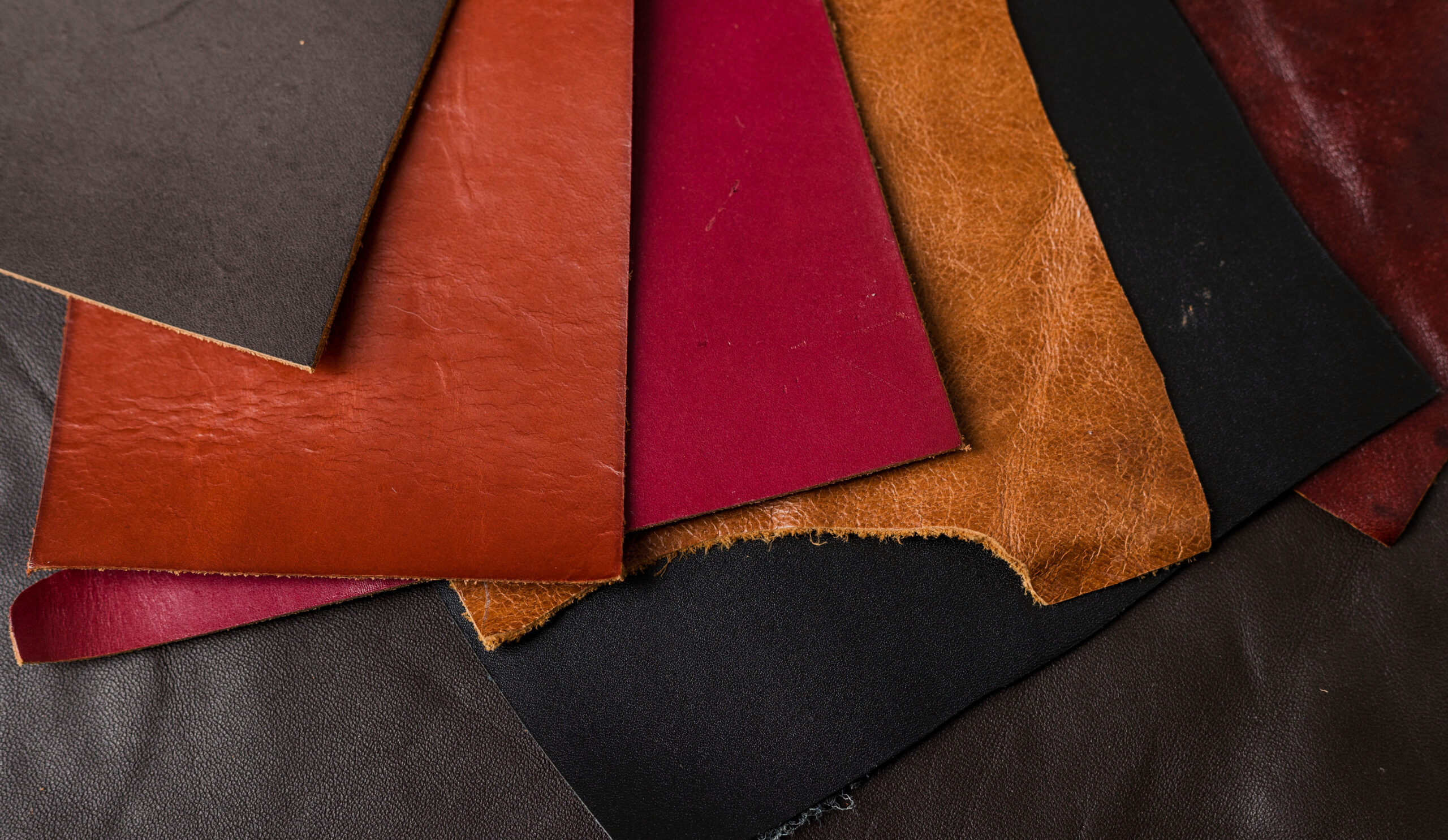
How Hermes Togo Leather Changes Color Over Time: A Patina Guide
A material-science analysis of Togo's patina mechanics — from early surface oxidation to the deepened tonality that develops over years of carry.
Hermes Togo leather patina is not a side effect of ownership — it is a material event encoded in the leather's structure from the day it left the tannery. Within the first twelve months of active carry, Togo's pebbled grain surface begins a series of predictable tonal shifts driven by UV oxidation, skin-oil absorption into the upper fibril layer, and the slow compaction of the drummed surface texture. Understanding these changes at the material level transforms what might appear to be uneven fading or handle darkening into a legible record of the leather's life — and a quality signal that authentication specialists read fluently.
Togo is not a vegetable-tanned leather. It is chrome-tanned, which fundamentally changes how its color evolves compared to Barenia or the rare natural-tanned leathers in the Hermès archive. This guide maps the mechanics of Togo's color change across four distinct stages, examines how specific Hermès color families respond differently to patina forces, and gives you a practical framework for managing — or accelerating — the development you want.
Togo's Material Composition and Why It Patinas Differently from Other Hermès Leathers
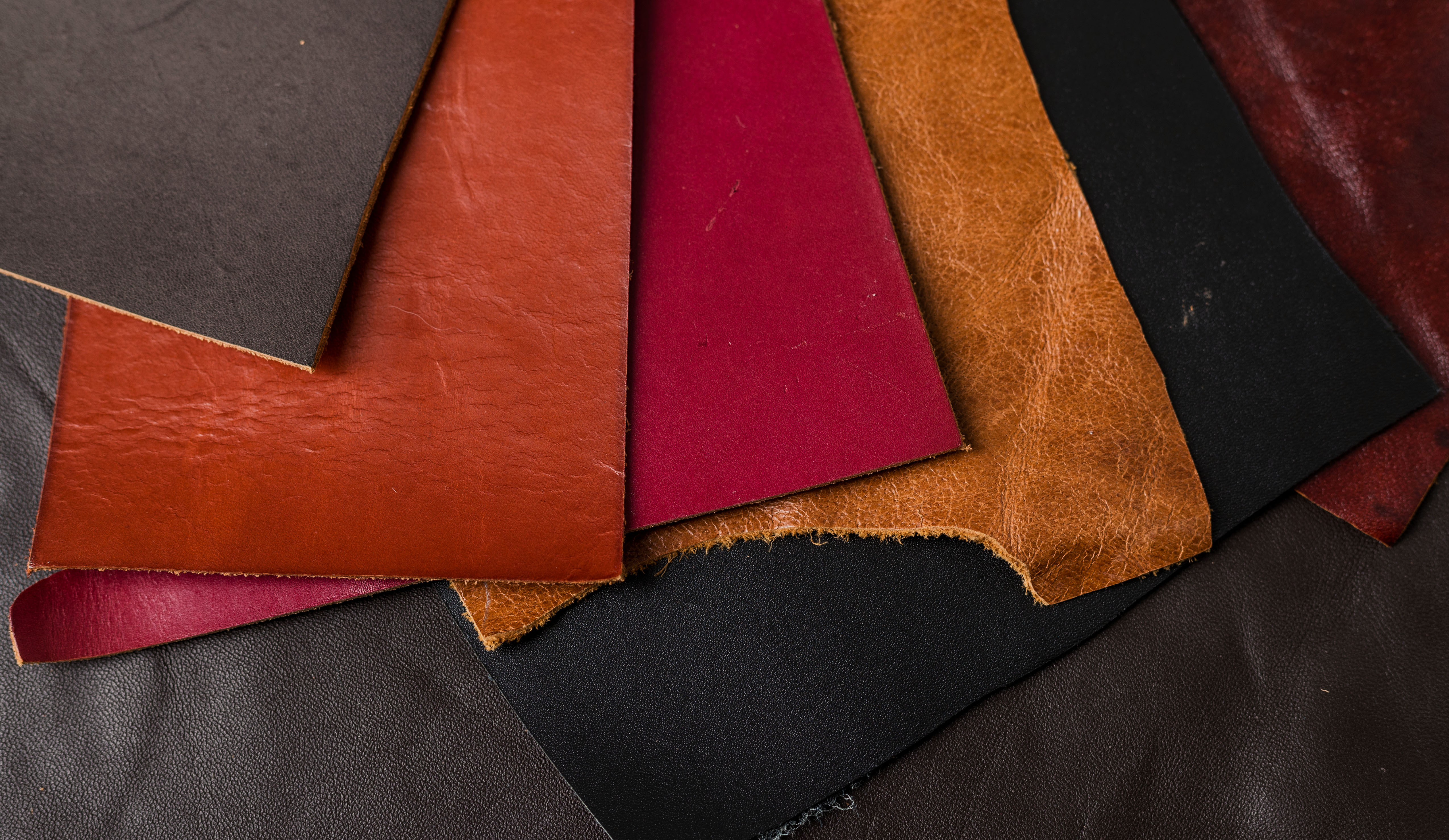
Togo leather originates from the flank of young bull hide — a zone of the hide with a naturally coarser grain pattern and a slightly looser fibril structure than the back or shoulder. The characteristic pebbled texture is produced during a drum-tumbling finish applied after chrome tannage: the hide is tumbled in a rotating drum, which causes the grain to contract and pebble while simultaneously softening the leather's temper toward a slightly supple hand. This tumbling process also opens the surface micro-texture, creating the fine valleys between each pebble peak where oils and surface residue will accumulate over time.
Because Togo uses chrome tannage rather than the vegetable tannage that drives Barenia's deep patina, the mechanism of color change is surface-dominant rather than fibril-deep. Chrome-tanned leathers do not contain the plant-derived tannin molecules that oxidise and darken progressively when exposed to light and oxygen — the process responsible for the rich amber progression in vegetable-tanned hides. Instead, Togo's color shift is driven by three primary forces: UV oxidation of the applied pigment and finish layer, accumulation of skin oils and external lipids in the pebbled surface valleys, and gradual compaction of the raised grain peaks under handling pressure.
For the full reference on how Hermès colors behave across all leather types, the Colors Reference Hub maps tonal progression across the major leather families.
"Togo patinas from the outside in. The finish layer changes first, then the grain valleys fill, then the compacted peaks take on a different light quality entirely. Each stage is legible if you know what to look for."
The Four Stages of Togo Patina Development
Togo's color evolution follows a consistent sequence regardless of the specific Hermès color applied, though the visibility of each stage varies significantly between pale and deep tones. The following stages are based on active carry — a bag used three or more times per week under normal light and humidity conditions.
Months 0–6: Surface Finish Oxidation
The topcoat applied over the pigment layer begins its initial UV oxidation response. In pale colors (Craie, Nata, Rose Sakura), a very faint warm tonal shift is detectable under natural light — not yet visible in photographs but perceptible against an unworn leather swatch. The pebbled grain surface remains visually unchanged; the shift is entirely within the finish layer above the grain.
Months 6–18: Handle-Zone Oil Absorption
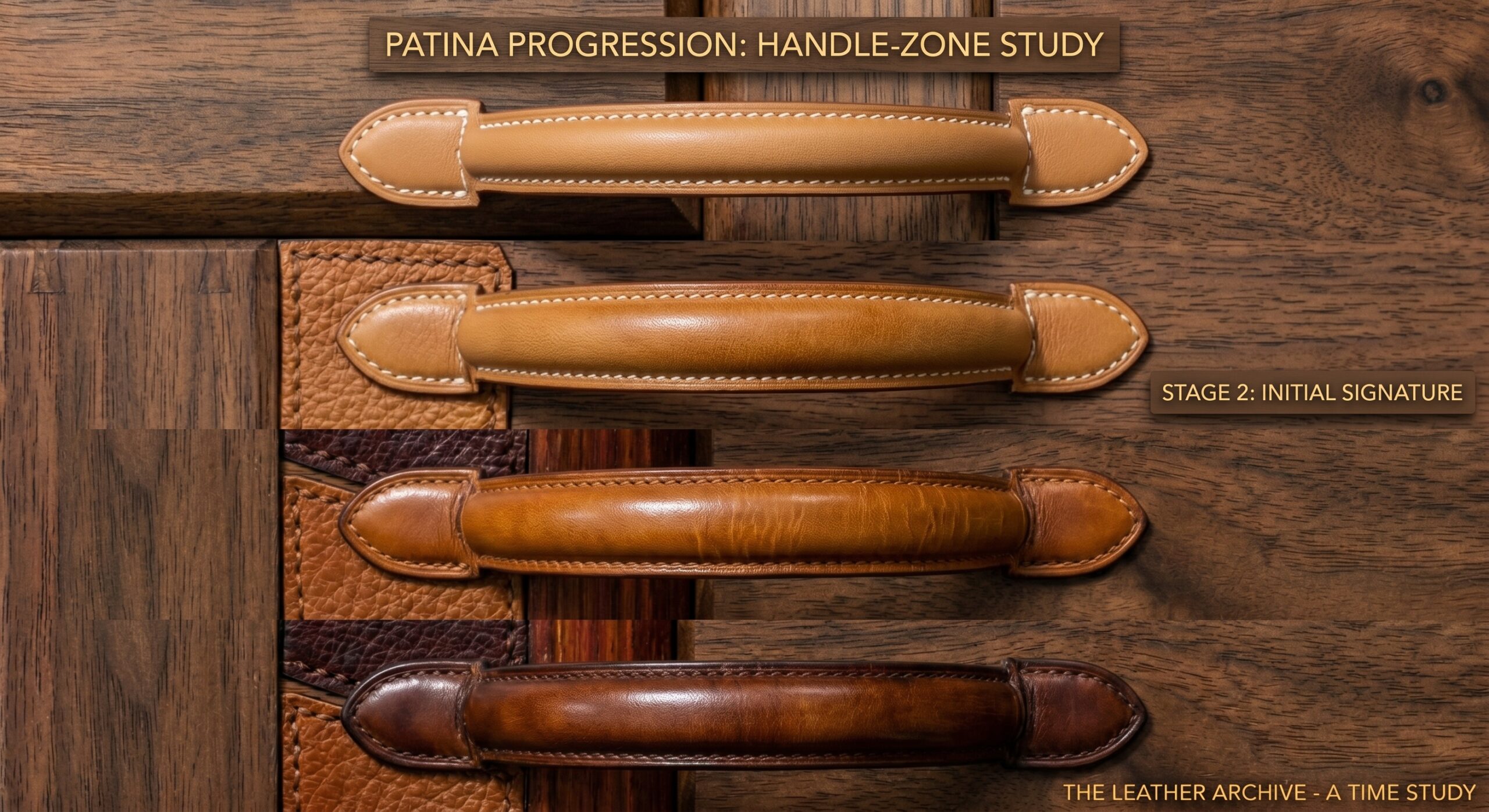
Skin oils from repeated handle contact begin penetrating the finish layer and entering the shallow fibril zone beneath the grain surface. The handle attachment zones and any areas of regular arm contact show a localised tonal deepening — most visible in pale and warm mid-tones. This is the stage most owners first notice and often mistake for soiling. It is not: it is the first authentic patina signature of a carried piece.
Years 1–3: Grain Valley Accumulation and Peak Compaction
The micro-valleys between Togo's pebble peaks begin to accumulate a thin layer of oils, ambient particulates, and finish residue. Simultaneously, the grain peaks themselves compact slightly under regular handling pressure, reducing the textural relief and creating a subtly smoother surface compared to new leather. This stage produces what collectors describe as a "broken-in" quality — the leather moves differently, and the colour appears richer and more dimensional in angled light.
Years 3+: Settled Tonal Identity
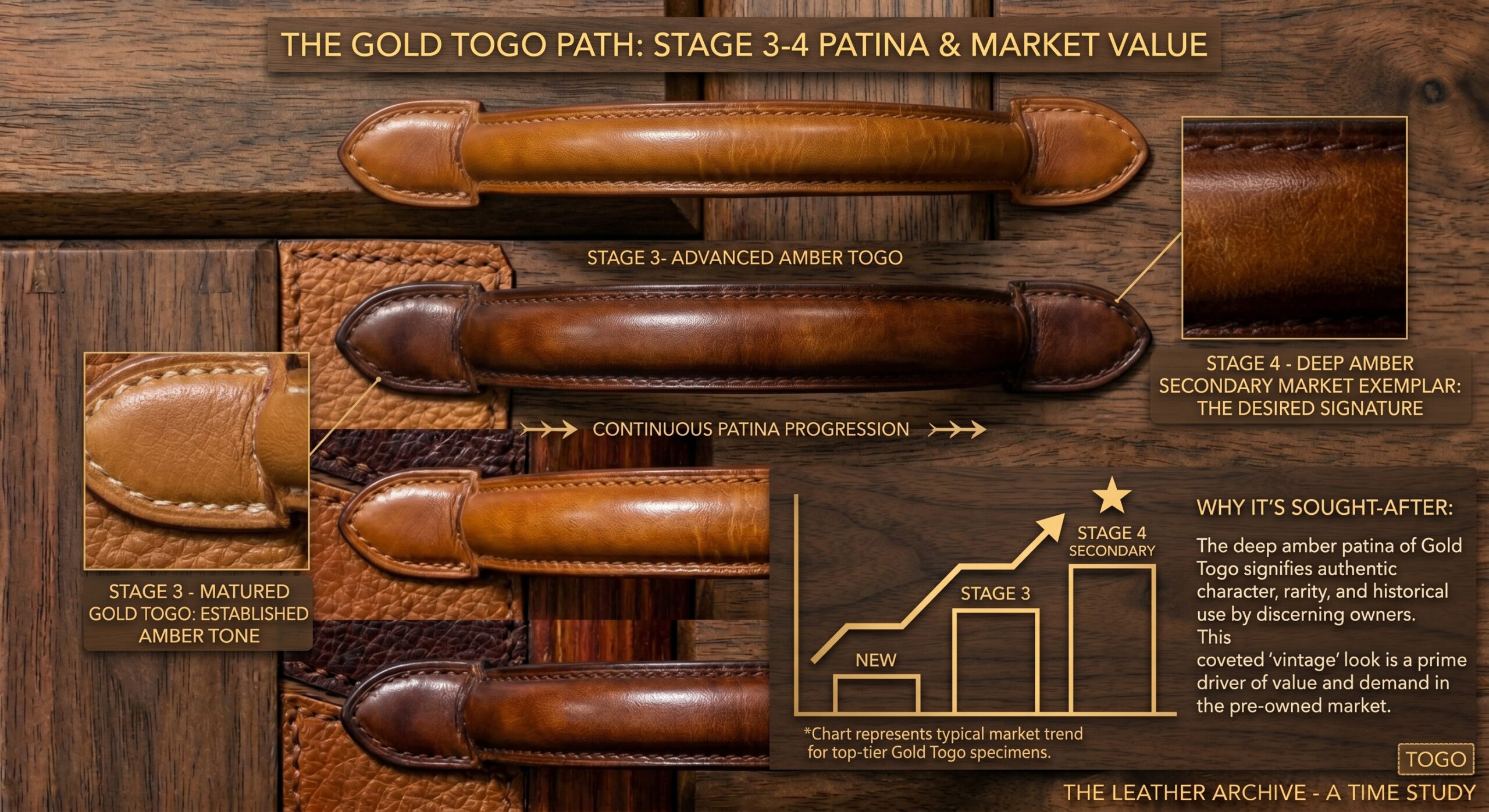
By three years of active carry, Togo's surface has reached a stable tonal equilibrium. The color is now a composite of the original pigment, the oxidised finish layer, and the accumulated oils in the fibril zone — richer, more complex, and distinctly personal to the individual bag. In warm mid-tones like Gold and Noisette, this stage produces a honeyed amber depth that is impossible to replicate artificially. In cool colors like Blue Agate or Etain, it manifests as a subtly muted sophistication that reads as aged refinement.
How Different Togo Colors Respond to Patina Forces
Not all Togo colors age equally — and the divergence is chemically significant, not merely aesthetic. The base pigment chemistry, finish layer opacity, and the visual contrast between the original tone and the patina-modified tone all determine how dramatically a given color appears to change over time.
Pale and neutral tones occupy one end of the spectrum. Craie — Hermès' chalk white — is among the most patina-sensitive Togo colors in production. Its near-white base provides maximum contrast for any tonal shift: the warm yellowing of UV oxidation is immediately visible against the original cool white, and handle-zone darkening reads clearly against the pale body. Buyers who choose Craie Togo specifically for its pristine appearance should understand that this pristinity is a Stage 1 property, not a permanent state. By Stage 2, a Craie Togo Birkin will have developed visible warm undertones at the contact zones — which many collectors consider the beginning of its most beautiful period.
Why Warm Mid-Tones Develop the Most Desirable Togo Patina
Colors in the Gold, Fauve, Noisette, and Caramel range occupy a tonal position that works with Togo's natural patina mechanics rather than against them. The original pigment is already in the amber-warm register, so the UV oxidation and oil-absorption effects deepen and enrich rather than shift or clash. The result at Stage 3–4 is a complexity that appears lit from within — a quality that single-tone dye applications cannot reproduce. This is why aged Gold Togo pieces command strong secondary market premiums even when they show clear patina.
Deep colors — Noir, Vert Foncé, Bleu Indigo — develop patina that is largely invisible to casual observation but detectable by specialists. The tonal shift is masked by the depth of the original pigment, but the surface quality changes measurably: the finish layer develops a micro-sheen at contact zones that reads as a slight gloss increase under raking light. In authentication contexts, this sheen pattern is one of the ways a genuinely aged piece is distinguished from a freshly produced bag — fakes cannot replicate the graduated sheen distribution that authentic multi-year carry produces.
Cool pastels — Rose Sakura, Bleu Brume, Glycine — present a different patina challenge. UV oxidation tends to warm these tones over time, shifting them toward yellow-pink or grey-beige. Owners who want to preserve the original cool tonality should prioritise UV-protective storage more rigorously than owners of warm-tone pieces. Our companion article on Togo vs Clemence leather behaviour explores how the two leathers' different fibril densities also affect how they respond to the same environmental conditions.
- Pale tones (Craie, Nata, Rose Sakura) — highest patina visibility; UV oxidation produces warm shift detectable within 6–9 months of active carry
- Warm mid-tones (Gold, Fauve, Noisette) — most desirable patina trajectory; deepens and enriches original tone rather than shifting it chromatically
- Cool mid-tones (Etain, Gris Perle, Bleu Lin) — UV oxidation tends to neutralise cool undertones; storage discipline matters more with these colors
- Deep tones (Noir, Vert Foncé) — patina is surface-quality change rather than tonal shift; manifests as graduated contact-zone sheen only visible under angled light
- Cool pastels (Glycine, Rose Sakura, Bleu Brume) — most vulnerable to unwanted warm shift from UV; UV-protective storage has the greatest impact on this color group
Managing Togo Patina: What to Do, What to Avoid, and When to Intervene
Patina management on Togo leather is less about prevention and more about direction. The color changes described above are inherent to the material — but their rate, evenness, and ultimate character are substantially within the owner's control. The three key variables are conditioning frequency, UV exposure management, and handling discipline in the early months.
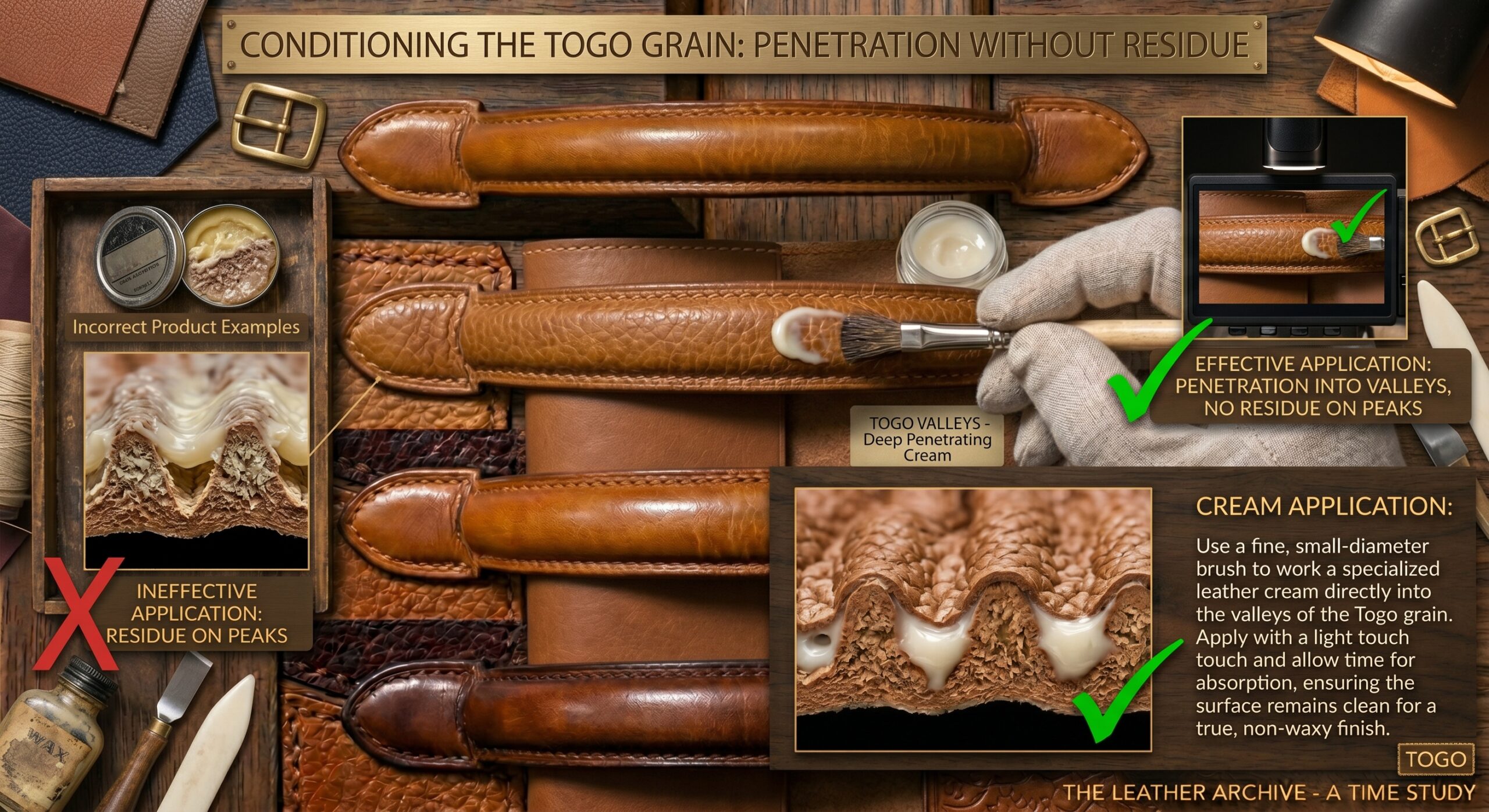
Conditioning is the most consequential intervention. A pH-neutral, colorless leather cream applied to Togo every three to four months of active use replenishes the surface lipids that otherwise draw skin oils unevenly into the fibril layer. Uneven oil absorption is the primary cause of blotchy or patchy patina — the irregular darkening that looks like damage rather than aging. Consistent conditioning creates a more uniform lipid baseline across the leather surface, so subsequent oil absorption from handling distributes more evenly. Avoid wax-based conditioners on Togo: the pebbled grain surface traps wax residue in the valleys, creating a chalky buildup that dulls the natural surface quality. Our detailed article on Barenia Faubourg patina progression provides a useful counterpoint — showing how a vegetable-tanned leather managed under similar principles produces a dramatically different but equally intentional result.
UV exposure discipline matters most in the first twelve months. During Stage 1, when the finish layer is still in its original oxidation-naive state, consistent UV exposure — particularly near windows or in outdoor carry — will accelerate the surface oxidation rate and produce an uneven warm shift if the bag receives light from one direction only. Store Togo in its dust bag when not in use, away from direct light, and rotate the bag's orientation if it sits near a light source. After Stage 2, the finish layer has established its oxidation baseline and tonal changes slow considerably.
For a full overview of how the leather science category covers care, conditioning, and patina across all Hermès leather types, explore the Leather Science category archive. For ostrich leather, which develops a very different kind of handle darkening driven by its unique follicle structure, our piece on why Hermès ostrich handles darken provides a parallel analysis.
| Color Group | Patina Visibility | Primary Change Driver | Management Priority |
|---|---|---|---|
| Pale / Neutral (Craie, Nata) | High — visible within 6–9 months | UV oxidation + handle oil absorption | Consistent conditioning; UV storage from day one |
| Warm Mid-Tone (Gold, Fauve, Noisette) | Medium — enhancing rather than alarming | Oil absorption deepening base tone | Allow natural development; condition to ensure evenness |
| Cool Mid-Tone (Etain, Gris Perle) | Medium — warm shift can read as tonal muddying | UV oxidation neutralising cool undertones | UV-protective storage; condition regularly |
| Deep / Dark (Noir, Vert Foncé) | Low — surface-quality change only | Contact-zone sheen development | Minimal intervention needed; clean with damp cloth only |
| Cool Pastel (Rose Sakura, Glycine) | High — warm shift is chromatic change | UV oxidation warming cool pigment | Most rigorous UV protection of any Togo color group |
| Saturated Warm (Rouge H, Vermillion) | Medium — deepens and saturates | UV oxidation deepening red pigment | Condition to maintain evenness; monitor for uneven darkening |
Togo's Patina Is a Design Outcome, Not a Degradation Process — but Color Choice Determines What You Live With
Togo leather's color change over time is structurally inevitable and materially interesting — but it is not uniform across the color range. Warm mid-tones like Gold and Fauve produce a patina trajectory that enhances the original aesthetic, deepening toward a richness that adds secondary market value. Pale and cool-pastel tones produce a patina that requires more management discipline if the original tonality is to be preserved.
The key insight is this: Togo's patina is surface-driven, not fibril-deep. Unlike Barenia, which transforms from the inside out through tannin migration, Togo changes from the outside in — through finish oxidation, grain-valley accumulation, and oil absorption into the shallow fibril layer. This means the rate and character of change are genuinely responsive to owner care habits in a way that deeper-tanning leathers are not.
Bottom Line: Choose your Togo color with its patina trajectory in mind — warm tones age toward richness, pale tones toward warmth, and cool pastels require the most active UV management to preserve their original character.
Popular Searches
Explore our most searched Togo color and patina combinations
The most sought-after Togo patina trajectory — Gold's warm base deepens into a honeyed amber over years, with increasing richness at every stage.
⬆ TrendingCraie's pristine chalk-white surface makes every patina stage visible — a color that rewards close attention and careful UV management from the first carry.
★ Collector FavouriteFauve's cognac undertones build into one of the deepest warm patina expressions available in chrome-tanned Hermès leather — a collector-grade aging profile.
◆ Ultra RareGlycine's violet-lilac requires the most rigorous UV discipline of any Togo color — its unique chromatic position makes warm shift particularly noticeable and difficult to manage retroactively.
⬆ Rising DemandEtain's blue-grey coolness shifts subtly warmer over time — buyers who want the original slate tone should prioritise UV storage from day one.
🔥 Most SearchedRouge H's deep bordeaux deepens further with age — the UV oxidation that muddles cool tones only enriches this saturated red, producing a complex dark-wine patina.
Frequently Asked Questions
No. Togo is chrome-tanned, which means it lacks the vegetable tannins that drive Barenia's deep, oil-fed patina progression. Togo's color change is driven by surface oil accumulation and UV oxidation rather than tannin migration through the fibril structure. The result is a subtler, more even tonal shift rather than Barenia's dramatic darkening at contact zones. For a month-by-month Barenia comparison, see Hermès Barenia Faubourg Patina Progression.
Pale and mid-tone colors reveal patina development most clearly because the tonal shift has a larger contrast range to work with. Craie, Nata, and Rose Sakura show handle-contact darkening within months of regular use. Deep colors — Noir, Vert Foncé — develop patina that is largely invisible to the eye but detectable under angled light as a slight surface sheen increase. Warm mid-tones like Gold and Fauve show the most desirable patina: a deepened amber richness that collectors actively seek. Learn more at the Colors Reference Hub.
Patina-driven color change is not reversible and should not be treated as damage. The tonal shift represents structural changes to the leather's surface finish and accumulated oils in the fibril layer — processes that cannot be chemically reversed without stripping the finish entirely, which would cause irreversible damage. UV bleaching in pale Togo colors is also permanent. What can be managed is the rate of change: consistent conditioning with a pH-neutral, colorless cream slows oil migration irregularities, and UV-protective storage reduces oxidative lightening.
This is the most common and expected patina pattern in Togo leather. The handle attachment zones and areas that contact your hand or arm most frequently receive the highest concentration of skin oils, body heat, and friction — three factors that accelerate finish-layer oxidation and promote oil absorption into the upper fibril layer. This localised darkening is a quality signal on authentic pieces: it should be gradual and even within the contact zone. Uneven blotching may indicate moisture damage rather than patina. For full care guidance, browse the Leather Science category.
