
Hermes Barenia Faubourg Patina Progression: Month-by-Month Guide
The most comprehensive forensic mapping of Barenia Faubourg's patina journey — from the first carry to the settled amber depth of Year 3 and beyond.
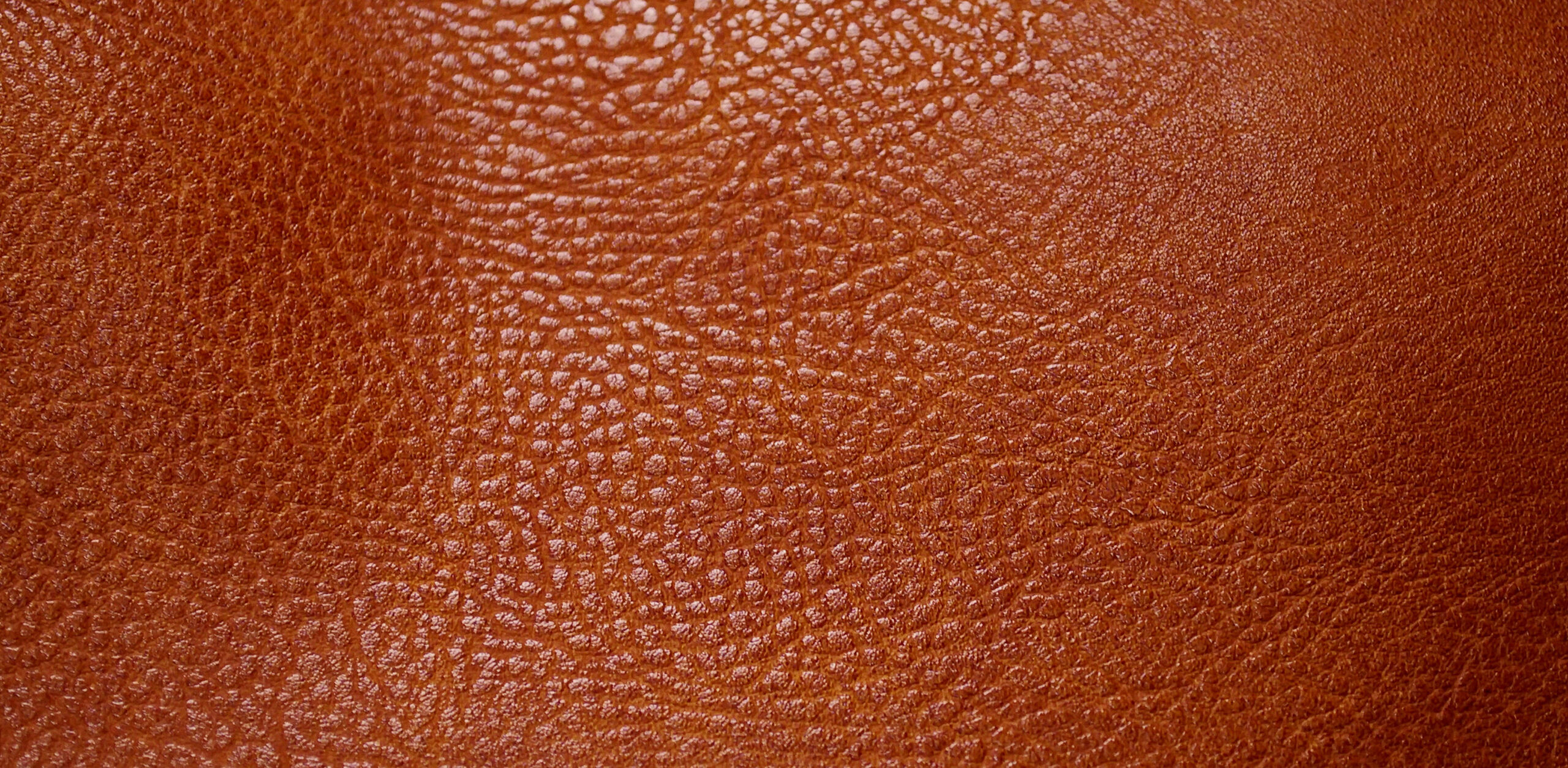
No leather in the Hermès range generates more questions — and more anxiety — during its early ownership months than Barenia Faubourg patina progression. The natural, undyed caramel tone that makes Barenia so compelling at purchase is also the most sensitive surface in the standard catalogue: within weeks of first carry, the leather begins an irreversible transformation driven by vegetable tannage, fibril-level oil absorption, and the slow formation of a pellicule across the grain face. What owners experience as alarming handle darkening, blotchy contact zones, or apparent soiling is almost always the correct, expected chemistry of a properly tanning leather doing exactly what its material composition specifies.
This guide maps Barenia Faubourg's patina progression month by month through the first eighteen months of active carry, then year by year through the settled depth phase that begins around Month 24. Understanding each stage in material terms transforms ownership anxiety into informed observation — and gives you the practical tools to direct the patina rather than simply witness it.
Why Barenia Faubourg Patinas Unlike Any Other Hermès Leather in the Standard Range
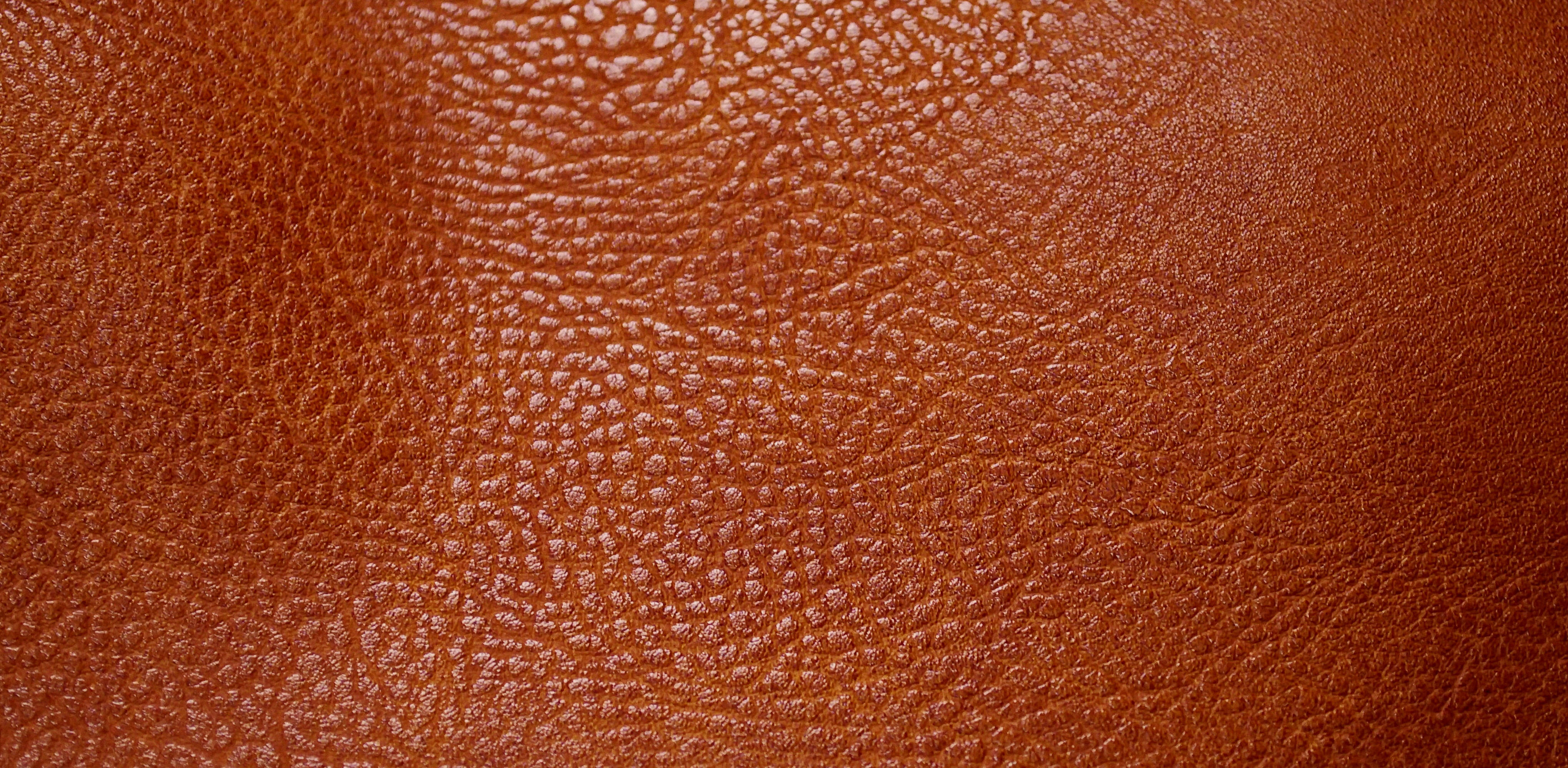
The material distinction that separates Barenia Faubourg from every other leather in the standard Hermès bag range is its tannage. Where Togo, Clemence, Swift, and Epsom are all chrome-tanned — a process that uses chromium salts to stabilise the hide's collagen structure rapidly and uniformly — Barenia Faubourg is vegetable-tanned: stabilised using plant-derived tannins derived from sources including oak bark and mimosa extract, in a process that takes weeks rather than hours.
This tannage difference has profound consequences for how the leather responds to light, heat, oils, and time. Vegetable tannins are chemically reactive organic molecules that remain active within the fibril structure long after tanning is complete. When exposed to UV light, they oxidise — darkening and enriching in colour. When contacted by skin oils, they form bonds with the lipid molecules that penetrate the fibril network, accelerating localised tonal deepening. And when the tannin molecules migrate through the fibril structure toward the surface over time — driven by environmental conditions and mechanical use — they accumulate at the grain face in the gradually thickening film known as the pellicule.
Barenia's natural, undyed caramel colour — the hide's own tone rather than an applied pigment — means there is no opaque finish layer masking these tannin reactions from the surface. The chemistry is visible from the first carry, and it progresses at a rate that many owners find startling until they understand what they are observing. The Leathers & Materials Guide covers the full comparative tannage context across the Hermès range.
"Barenia doesn't age like other Hermès leathers. It transforms. Every week of carry is recorded in the tannin chemistry, and there is no pause button — only the pace you set through how you carry and condition it."
Month-by-Month Patina Progression: Months 1 Through 18
The following timeline assumes active carry — three or more uses per week — under normal indoor and outdoor light conditions, in a temperate climate. Tropical or high-UV environments will accelerate the timeline; cooler, lower-light environments will slow it. Conditioning frequency is noted where it influences the rate.
First Carry: Immediate UV Response Begins
The moment Barenia Faubourg is exposed to daylight, tannin oxidation begins at the surface. By the end of the first carry, the areas that received direct light exposure — particularly the top handle and any panels facing upward — will be microscopically darker than areas kept in shade. This is not yet visible to the naked eye but is detectable by comparing the bag against a colour-matched swatch. The leather at this stage still has the slightly raw, almost matte quality of new vegetable-tanned hide. The grain surface is open and fully receptive to oil absorption.
First Visible Darkening at Handle Contact Zones
By Month 2 of active daily carry, most Barenia pieces will show the first clearly visible patina: a slight deepening of the caramel tone at handle contact zones and anywhere the leather regularly contacts warm skin. The tannin molecules at these points have absorbed skin oils and received repeated heat input, accelerating their oxidation rate ahead of the less-contacted body panels. This zone differential is the correct, expected pattern. Blotchy or uneven darkening at this stage is usually the result of irregular oil exposure — one area drying out while another receives repeated conditioning — rather than a material defect.
Body Panel Tonal Shift Becomes Perceptible
The broader body panels — front face, back face — begin their tonal shift in earnest around Month 4. The entire surface deepens from the original honey-caramel toward a warmer amber register. UV exposure across the panel face drives even tonal deepening; areas shaded by carry position or storage will lag slightly. At this stage, the differential between the handle zones (darkest) and the central body panel (lighter) is at its maximum ratio — a gradient that will narrow as the body panels continue their slower deepening.
Six-Month Mark: Surface Sheen Increases, Pellicule Begins
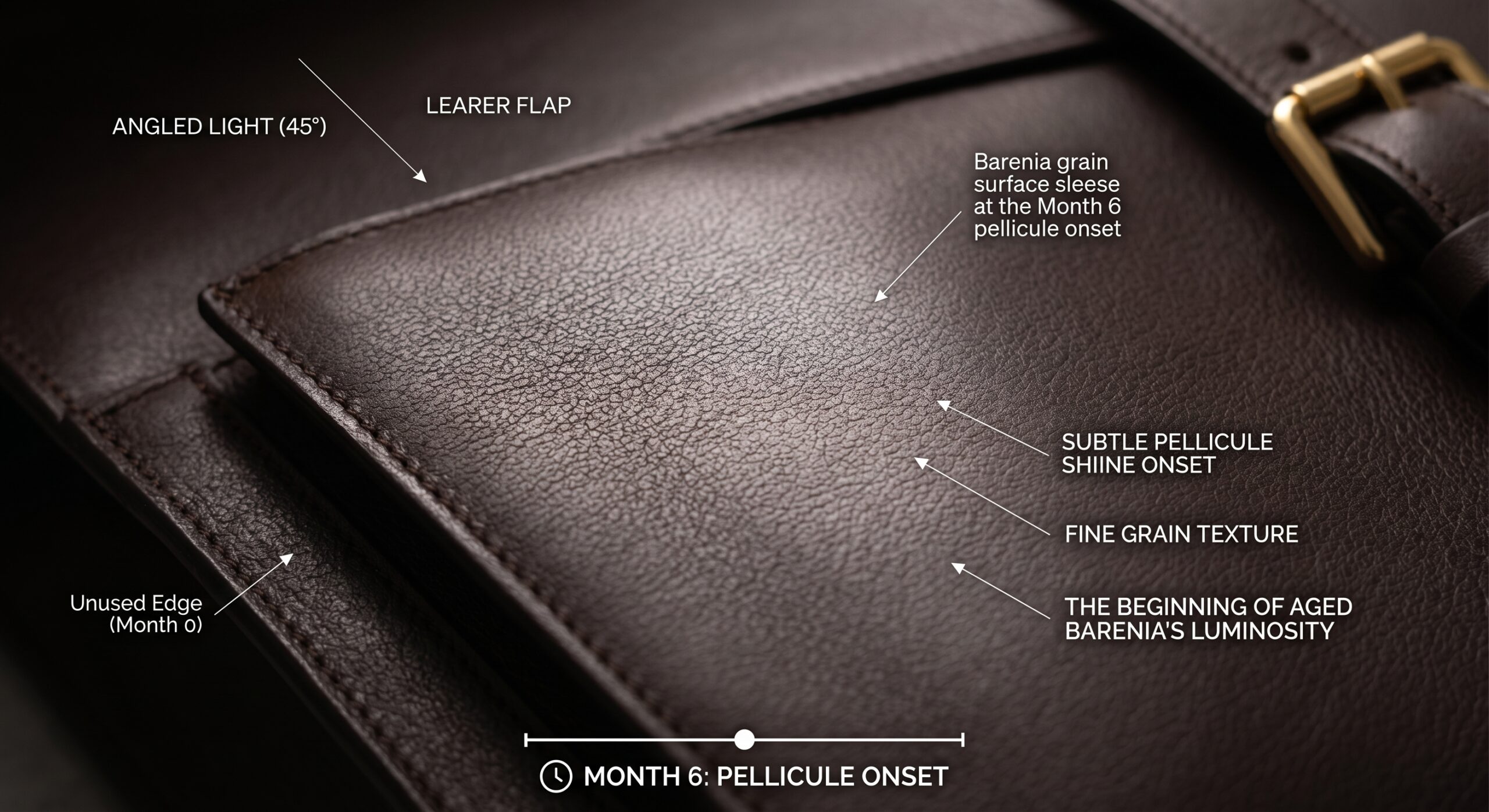
Around Month 6, most actively carried Barenia pieces begin showing the first signs of pellicule formation: a slight increase in surface sheen that is most visible under angled natural light. The grain face appears marginally smoother and more reflective than at purchase — not because the grain texture has changed, but because the tannin molecules accumulating at the surface are beginning to form a coherent film that catches and redirects light. This is one of the most exciting moments in Barenia ownership, and one that owners frequently mistake for surface soiling or over-conditioning. It is neither.
Amber Depth Establishes; Zone Differential Narrows
By Month 9, the piece has shifted decisively from its original caramel toward a medium amber. The handle zone differential is still present but has narrowed as the body panels catch up. The leather now has a perceptibly richer, deeper quality than it did at purchase — the first stage at which most new observers would describe the bag as "beautifully aged" rather than "just used." The pellicule is developing consistently across the grain face, and the surface has an increasingly complex response to light: slightly different in direct sun versus shade, warm versus cool light.
One Year: Personal Patina Signature Established
At twelve months of active carry, a Barenia Faubourg piece has established a patina that is genuinely personal — specific to the owner's carry habits, climate, and conditioning practice. Two pieces purchased on the same day and carried by two different people will by this point have developed detectably different patina profiles. The handle zones have deepened to a cognac or dark amber in actively handled pieces. The body panels are in the medium amber range. The pellicule is consistently present across most of the grain surface. The leather has the quality that makes aged Barenia collectible: a depth and luminosity that is impossible to replicate artificially.
Eighteen Months: Full Grain Surface Pellicule Coverage
By Month 18, the pellicule has typically achieved full coverage of the grain surface on actively carried pieces — visible as a consistent, even sheen that catches light uniformly across the bag. The overall tone has deepened further toward a rich amber-cognac, and the tonal differential between handle zones and body panels has narrowed substantially. This is the stage at which the patina chemistry begins to slow: the tannin molecules at the surface have largely completed their initial migration and oxidation cycle, and further deepening proceeds at a gentler rate from this point.
Year 2 Onward: Pellicule Formation, Settled Depth, and the Long Arc of Barenia's Maturity
From Month 18 onward, Barenia Faubourg's patina progression shifts character rather than pace. The dramatic month-on-month tonal changes of the first year give way to a slower, more subtle deepening — but what the leather gains in this second phase is complexity rather than speed.
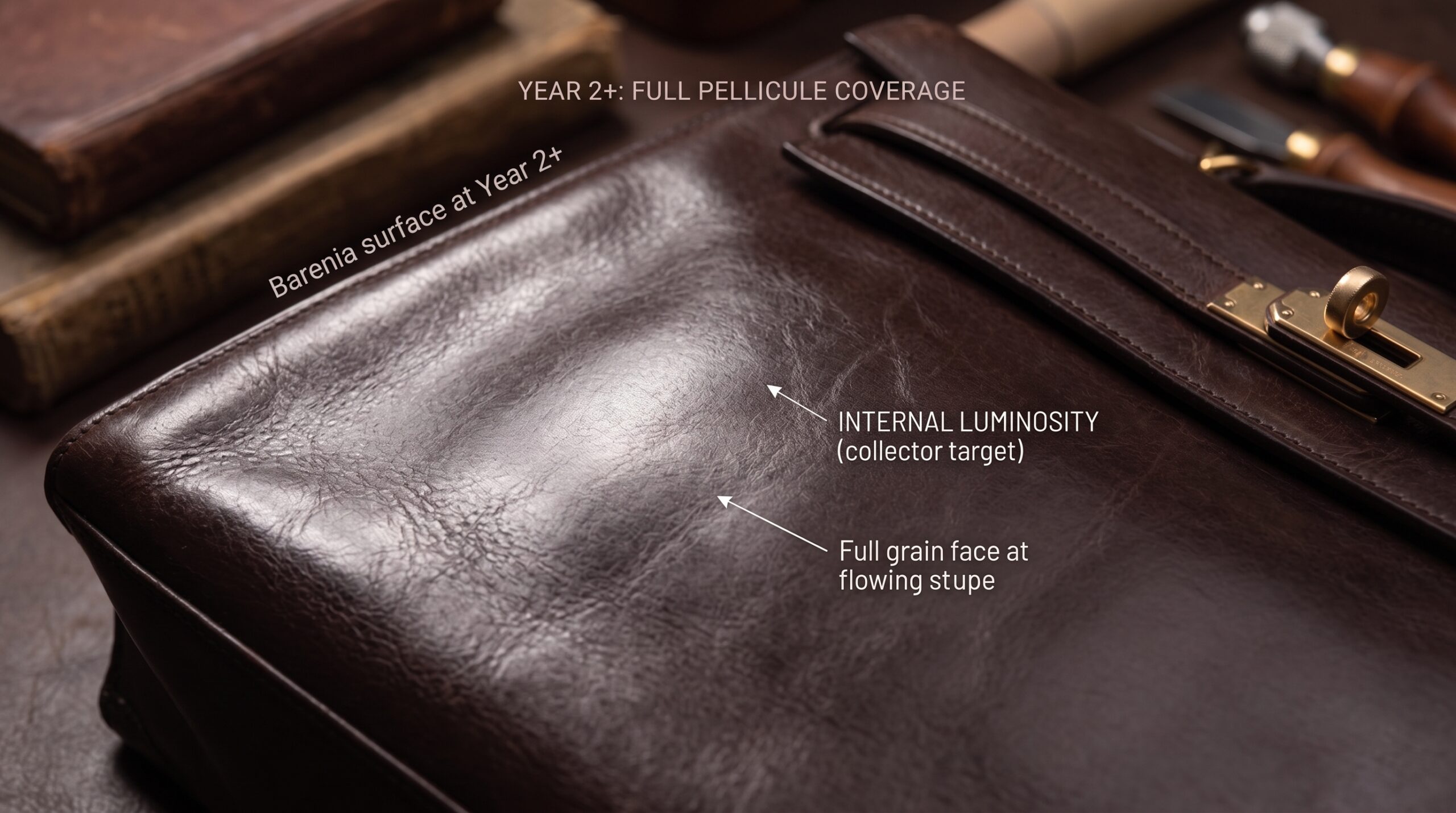
The pellicule, now established across the surface, begins to accumulate additional layers as the tannin migration from the fibril interior continues. Each layer adds a fractional increment of depth and translucency — the same process that, over decades on saddlery and bridle leather, produces the extraordinary honey-amber surfaces that equestrian collectors prize. On a bag carried daily, a two-year-old Barenia piece will show a surface that appears to have internal light — a warm luminosity that is the accumulated result of layered pellicule formation rather than surface shine.
The Pellicule Is Not a Coating — It Is the Leather's Own Chemistry Made Visible
One of the most persistent misunderstandings about Barenia patina is the belief that the pellicule can be applied, accelerated with products, or replicated by any external treatment. It cannot. The pellicule is composed of oxidised tannin molecules that have migrated through the fibril network from the interior of the hide to its surface — a process driven by osmotic pressure, UV energy, and the mechanical opening of fibril pathways through use. Products applied to the surface can nourish the fibrils and support even tannin migration, but they cannot create or replicate the pellicule itself. Treatments claiming to "instantly age" or "simulate patina" on Barenia produce a surface sheen that is compositionally different from the authentic pellicule and does not develop or deepen over time in the same way.
- Year 2 tone: rich amber to light cognac across body panels; deep cognac to dark honey at handle zones — the overall palette has shifted approximately two to three tonal registers from the original caramel
- Pellicule coverage: full across the grain face; depth and uniformity increase with each subsequent month of use and exposure
- Surface character: the grain texture remains fully intact beneath the pellicule — the surface reads as smoother not because the grain has changed but because the film layer fills the micro-valleys between grain peaks
- Tonal differential: handle zones still darkest, but the ratio to body panels has decreased from the Month 2 maximum to approximately 1.3–1.5× by Year 2 — the leather is evening out across its surface
- Scratch behaviour: an aged Barenia piece actually becomes more self-healing for minor surface scratches as the pellicule thickens — the tannin film can be gently redistributed over small scratch sites by careful fingertip pressure
- Water sensitivity: remains high throughout the leather's life — the vegetable tannins remain hygroscopic (moisture-attracting) indefinitely, making water mark prevention a permanent care priority
Managing Barenia Patina: Interventions That Help and Interventions That Harm
Barenia Faubourg rewards an informed, minimal-intervention care approach. The leather's chemistry is largely self-directing — the patina will develop whether or not the owner intervenes — but the evenness, rate, and ultimate character of the patina are meaningfully influenced by three categories of owner action: conditioning, UV management, and water protection.
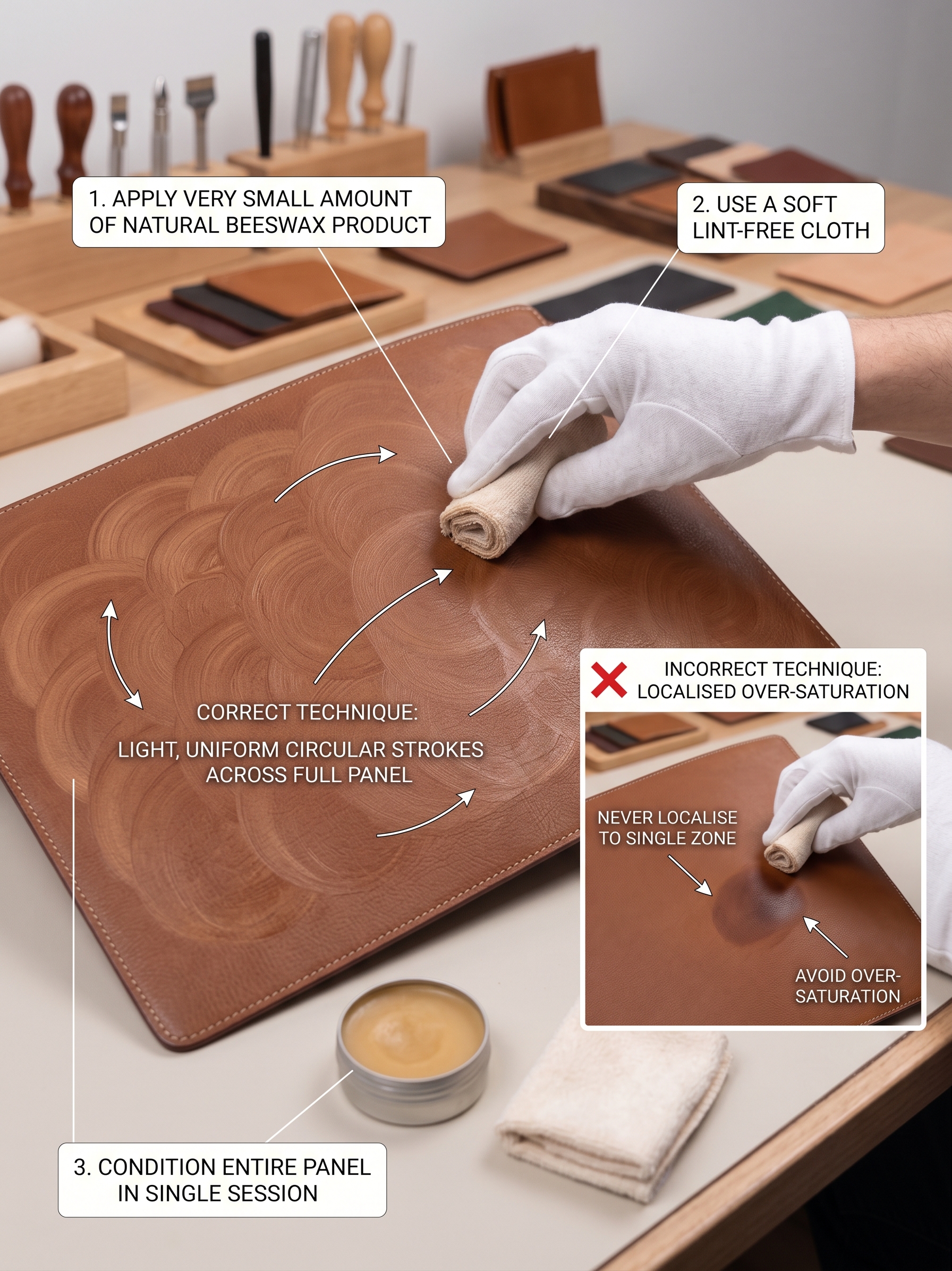
Conditioning is the most important positive intervention. A pH-neutral, natural-origin conditioning cream — or, ideally, a very light application of pure neatsfoot oil or beeswax product formulated for vegetable-tanned leather — applied every six to eight weeks during active daily carry replenishes the surface lipids that migrate into the fibril network during use. Without this replenishment, the fibril network gradually dehydrates, which causes the tannin migration to become uneven: some zones move faster than others, producing the blotchy or streaky patina that owners sometimes mistake for staining. Consistent conditioning is the single most effective intervention for producing an even, beautiful patina progression. Our companion article on the best leather conditioners for Hermès Barenia ranks and reviews the specific products that deliver the best results.
UV management matters most in the first six months, when the tannin oxidation rate is highest and the difference between sun-exposed and shaded zones is at its greatest. Carrying the bag in consistent orientation — so that the same panels receive similar light exposure across each carry — produces a more even patina across the surface. Storing in a dust bag away from windows between carries slows the unattended UV oxidation that would otherwise widen the tonal differential between the top and underside of the bag during storage periods.
Water protection is the one care intervention that never becomes less important: Barenia's vegetable tannins remain hygroscopic throughout the leather's life. A light pre-treatment with a beeswax-based product before carrying in rain or humid conditions provides meaningful resistance. For comprehensive guidance on remediation after water exposure, our piece on water damage on Hermès Barenia leather covers the full prevention and repair protocol. Browse all Barenia and patina content in the Leather Science category.
| Property | Barenia Faubourg | Togo | Swift | Epsom |
|---|---|---|---|---|
| Tannage | Vegetable — plant tannins | Chrome | Chrome | Chrome + embossed |
| Patina mechanism | Tannin migration + pellicule formation — fibril-deep | Oil absorption + UV oxidation — surface-dominant | Oil absorption + friction burnishing — surface | Contact sheen only — compressed surface blocks oil |
| First visible change | 4–8 weeks of active carry | 6–9 months (pale tones); longer for dark | 6–12 months at contact zones | 12–18 months (sheen only) |
| Patina depth at Year 1 | Deep — full tonal shift, pellicule onset | Moderate — tonal deepening at contact zones | Subtle — burnished sheen at contact zones | Minimal — surface sheen increase only |
| Patina reversibility | None — tannin oxidation is permanent | None — UV oxidation and oil absorption permanent | None — surface sheen change permanent | None — contact sheen permanent but minimal |
| Water sensitivity | Very high — tide marks form rapidly | Moderate — spotting possible but less dramatic | Moderate — semi-matte finish susceptible to spotting | Low — compressed surface repels moisture well |
| Care frequency | Every 6–8 weeks during active carry | Every 3–4 months | Every 3–4 months | Twice yearly — minimal conditioning needed |
| Patina desirability | Highest in Hermès range — core of the leather's value proposition | High in warm mid-tones; managed in pale and cool | Moderate — refinement rather than transformation | Low — stability preferred over patina development |
Barenia Faubourg's Patina Is the Most Remarkable Material Journey in the Hermès Catalogue — If You Understand What You Are Watching
No other leather in the standard Hermès range undergoes the depth of transformation that Barenia Faubourg does across its first three years of ownership. The vegetable-tannage chemistry drives a patina process that is fundamentally different from the surface-level changes that chrome-tanned leathers produce — deeper, more personal, and more irreversible. Every month adds a layer of tonal complexity that cannot be purchased, replicated, or rushed.
The owners who are disappointed by Barenia are almost always those who did not understand what they were buying into: a leather whose early months of ownership involve visible, sometimes alarming change that requires informed interpretation rather than reactive intervention. The owners who love it are those who understand that the Month 2 handle darkening, the Month 6 sheen onset, and the Month 12 amber deepening are not problems — they are the leather working exactly as its chemistry intends.
Bottom Line: Barenia Faubourg's patina progression is predictable, chemical, and beautiful — learn the month-by-month sequence before you buy, condition consistently, protect from water, and the leather will reward you with a surface that no other material in the Hermès range can produce.
Popular Searches
Explore our most searched Barenia Faubourg combinations and patina queries
The definitive Barenia Birkin — Gold hardware patinas in sympathy with the leather's warm amber progression, making this combination increasingly cohesive with every month of carry.
★ Collector FavouriteThe retourne construction allows Barenia's supple fibril structure to develop its full patina without rigid constraint — the combination that most closely echoes the leather's saddlery heritage.
◆ Ultra RarePalladium's cool silver against Barenia's warming amber creates an increasingly dramatic contrast as the patina deepens — a rare combination that rewards patient, long-term carry.
⬆ TrendingThe Evelyne's perforated back panel creates an asymmetric patina pattern as the leather ages — sun-exposed and shaded zones develop at different rates, producing a distinctive tonal variation.
⬆ Rising DemandBarenia's moisture sensitivity makes the Garden Party's open-top format a bold choice — but owners who manage water discipline are rewarded with one of the most dramatic patina progressions in the range.
🔥 Most SearchedThe sellier construction frames Barenia's patina progression within rigid panels — the flat body surfaces develop an even, gallery-quality pellicule depth while the flap fold concentrates the deepest amber.
Frequently Asked Questions
Barenia Faubourg begins its patina process immediately upon first carry. The vegetable-tanned fibril structure is highly receptive to skin oils and UV exposure from the outset, and the first visible darkening at handle contact zones typically appears within four to eight weeks of active daily use. The rate accelerates during the first six months as the pellicule begins forming on the surface, then stabilises into a slower, more even deepening. By twelve months of regular carry, most Barenia pieces have established a recognisable patina that is distinctly personal to the owner's carry patterns. See the full leather reference at the Leathers & Materials Guide.
The pellicule is the natural surface film that forms on vegetable-tanned leathers as the tannin molecules migrate toward the surface through the fibril network and oxidise in contact with air and light. On Barenia Faubourg, this process produces a thin, translucent film over the natural grain surface that is responsible for the characteristic depth and richness of aged Barenia — the sense that the leather is lit from within. The pellicule is not a product you apply; it is generated by the leather's own chemistry. It develops most visibly in the first twelve to eighteen months and continues to build throughout the leather's life. For a comparison with chrome-tanned patina see How Hermès Togo Leather Changes Color Over Time.
Water exposure on Barenia Faubourg produces tide marks — darker rings at the edge of the wet zone — because moisture drives tannin molecules and surface oils unevenly through the fibril network, concentrating them at the drying boundary. Minor water spots can often be remediated by immediately and evenly dampening the entire affected panel to remove the concentration gradient, then allowing it to dry flat away from heat. Significant water exposure can permanently alter the patina distribution. Full water damage guidance is available at Water Damage on Hermès Barenia Leather: Prevention & Repair.
Barenia Faubourg is the current production version of the Hermès Barenia leather — introduced as a refinement of the original Barenia formula. The key differences lie in the finishing process: Barenia Faubourg receives a slightly more refined surface treatment that produces a marginally more consistent grain appearance at purchase, while retaining the full vegetable tannage and open-fibril structure that drives the leather's patina development. Original Barenia, now largely discontinued in the standard range, had a slightly rougher surface character at the outset and a somewhat faster initial patina rate. Both leathers develop the same fundamental pellicule chemistry. Explore all Hermès leather types in the Leather Science category.
