Hermès Authentication Hub: Saddle Stitch, Blind Stamp, Hardware & Exotic Scale Matching
Forensic authentication from a materials expert — every physical marker that distinguishes genuine Hermès from counterfeit production, approached with measurable precision.
Hermès authentication is a forensic discipline — and it is one where leather science knowledge provides a significant advantage over visual-only inspection. The saddle stitch angle on an authentic Birkin is not a stylistic choice — it is a production specification measurable in degrees. The blind stamp depth is not consistent across years — it follows a dateable pattern that allows a trained examiner to cross-reference the stamp against the hardware and leather condition. Clochette leather splitting on authentic bags follows a specific grain-stress pattern that counterfeit clochettes do not replicate.
This hub is the central authentication reference for hermesinsightshub.com — covering every physical marker used in forensic bag authentication, from saddle stitch mechanics to exotic scale pattern matching, approached with the precision of a materials expert rather than the checklist of a casual buyer.
6
Primary forensic authentication markers covered in this hub
10x
Minimum magnification recommended for stitch and stamp authentication
45°
Approximate saddle stitch angle on authentic Hermès production
Authentication as a Forensic Discipline: The Materials Expert Approach
Most Hermès authentication guides approach the subject visually — comparing photographs, checking proportions, looking for obvious flaws. This approach is increasingly inadequate. High-quality counterfeit production has reached a level of visual accuracy that makes photograph-based authentication unreliable for non-specialists. The markers that remain reliably diagnostic are the ones that require either physical examination under magnification or knowledge of production specifications that counterfeit manufacturers have not successfully replicated.
The materials expert approach to authentication begins with a different premise: every authentic Hermès bag is the output of a specific production process, and that process leaves measurable traces in the leather, the stitching, the hardware, and the stamp. These traces are not random — they are consistent within production eras and consistent with the mechanical behaviour of the specific materials used. Counterfeits are visually approximated — they are produced to look correct from a normal viewing distance. The authentication markers in this guide are the ones that survive close examination precisely because they are the consequence of production processes that counterfeit manufacturers cannot economically replicate.
“Every authentic Hermès bag carries a forensic record of its production. The stitching, the stamp, the hardware, the leather — each tells you something specific and dateable about when and how the bag was made. Learn to read that record.”
- Visual-only authentication is increasingly unreliable — magnification is required for definitive markers
- Authentic markers are consequences of production processes — not decorative features that can be copied
- Cross-reference multiple markers — no single marker is sufficient for definitive authentication alone
- Leather condition and patina should be consistent with the production year indicated by the blind stamp
- Hardware condition should be consistent with leather condition — mismatches indicate component replacement
Saddle Stitch Angle & Thread: The Measurable Difference
The saddle stitch on authentic Hermès bags is executed by two needles working simultaneously through a single waxed linen thread — one needle passing through the leather from each side. This two-needle technique produces a stitch with a specific diagonal angle relative to the seam edge (approximately 45 degrees) and a characteristic cross-twist in the thread at each stitch point where the two needle passes intersect. This cross-twist is the primary diagnostic marker under magnification — it is the structural consequence of the two-needle technique and is absent from all machine stitching.
Machine stitching on counterfeit bags uses a lockstitch or chain stitch mechanism that places the thread perpendicular to the seam edge without producing the cross-twist. Under a 10x loupe, the difference is unambiguous: authentic saddle stitching shows the diagonal angle, consistent stitch length, and the cross-twist at each stitch point. Machine stitching shows perpendicular placement, mechanically identical stitch intervals, and no cross-twist. Additionally, authentic Hermès saddle stitching uses a waxed linen thread that shows a specific sheen under raking light — synthetic threads used in counterfeit production reflect light differently and appear either too matte or too glossy.
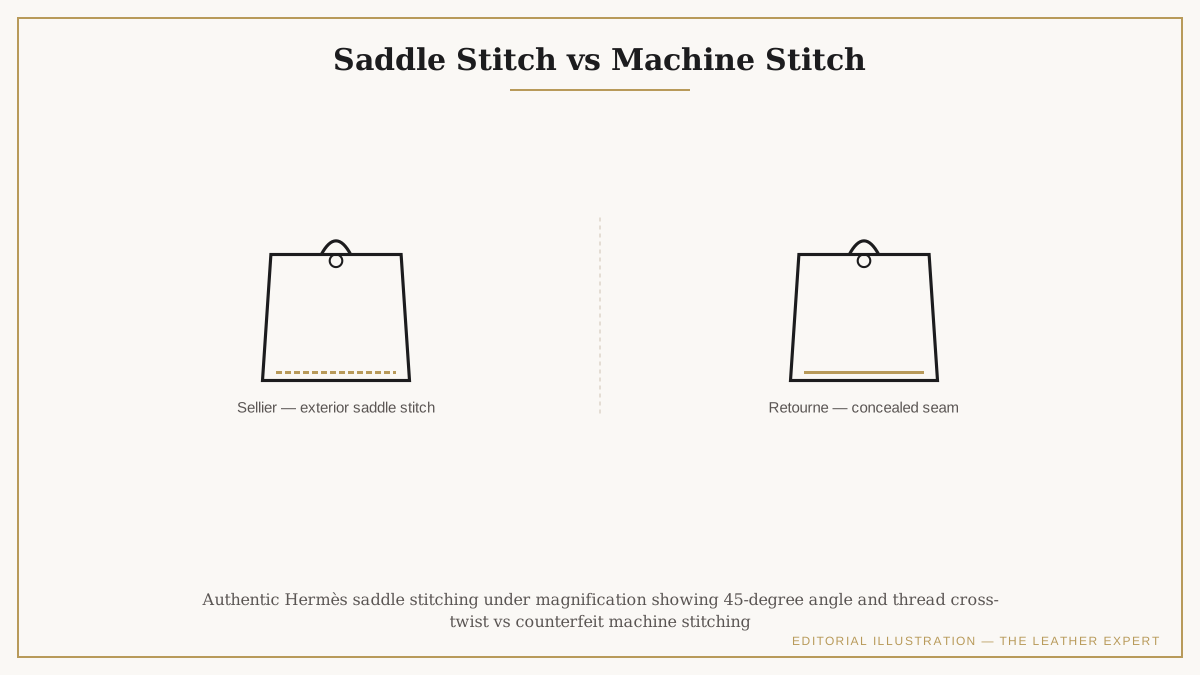
- Stitch angle: approximately 45 degrees relative to seam edge on authentic production
- Thread cross-twist: visible under 10x loupe at each stitch point — absent from all machine stitching
- Thread material: waxed linen — specific sheen under raking light, distinct from synthetic counterfeit threads
- Stitch length: consistent but not mechanically identical — slight natural variation is authentic; perfect uniformity is suspicious
- Corner stitching: authentic Hermès turns corners with consistent angle maintenance — counterfeits often show angle deviation at corners
- For the full saddle stitch analysis: see Hermès saddle stitch angle authentication guide
Blind Stamp: Location Changes by Year & How to Date the Mark
The Hermès blind stamp is a heat-impressed mark on the interior leather that encodes the craftsperson’s identity letter and the production year. The year encoding uses a letter system — a single letter indicating the production year within a cycle — that has changed multiple times in Hermès production history. The specific letter-to-year mapping is well-documented among authentication specialists and allows precise dating of any authentic bag. More importantly, it allows cross-referencing: the production year indicated by the stamp letter should be consistent with the hardware condition, the leather patina, and the physical evidence of use or storage.
The stamp’s location has changed by production era. Earlier Hermès production (pre-1990s) typically places the stamp on the interior base panel leather, often accompanied by the craftsperson’s identifier. More recent production places the stamp on the interior side panel or under the flap, depending on bag model. The stamp itself should show a specific impression depth — deep enough to read clearly but not so deep as to show through to the exterior leather. Counterfeit stamps are either too shallow (printed rather than heat-impressed, which leaves no tactile depth under fingertip examination) or too deep (over-impressed, which creates a visible ridge on the exterior leather face).
Leather Expert Note — Cross-Referencing the Stamp
The blind stamp date is most useful as a cross-reference tool, not as a standalone authentication marker. A stamp indicating 2018 production on a bag showing 2026-level leather patina and hardware wear is a significant authentication concern — either the components have been replaced, or the stamp is counterfeit. Authentic bags show consistent ageing across all components relative to their production date and disclosed use history. For the complete year-letter mapping and stamp location guide, see Hermès blind stamp location changes.
Foil Stamping Depth, Zipper Pull Tolerances & Clochette Splitting Patterns
Foil stamping — the gold or palladium text applied to the exterior leather face of Hermès bags — is a production specification with measurable depth and spacing tolerances. Authentic foil stamping is applied at a consistent pressure that produces characters of uniform depth, with even spacing between letters and consistent margins from the stamping edge. Under raking light, authentic foil stamping shows clean, sharp character edges with no bleeding or halo effect. Counterfeit foil stamping commonly shows one of three failure modes: too shallow (characters appear as surface film without tactile depth), too deep (characters sink into the leather surface, creating a depression visible in cross-light), or uneven spacing (character intervals vary, most visible in the word “HERMÈS” where the accent mark spacing is a reliable indicator).
Zipper pull authentication is covered in detail in the hardware and craftsmanship guide — weight, alignment, engraving depth, and hang angle are the four primary markers. The zipper pull is particularly useful as an authentication marker on bags where other markers require interior access, because it can be examined externally without opening the bag.
Clochette leather splitting follows a grain-specific pattern on authentic Hermès bags. The clochette is produced from the same leather as the bag body — which means it develops the same fibril-level stress response to folding and flex. Togo clochettes develop fine crack lines that follow the grain channels of the pebbled surface. Box Calf clochettes develop surface crazing at the fold line that follows the fibril direction of the smooth leather. Counterfeit clochettes, produced from substitute leathers, split differently — irregular cracking that crosses grain lines, or edge glaze peeling rather than leather splitting. This grain-specific splitting pattern is diagnostic and requires no magnification to assess on pieces with any significant use history.
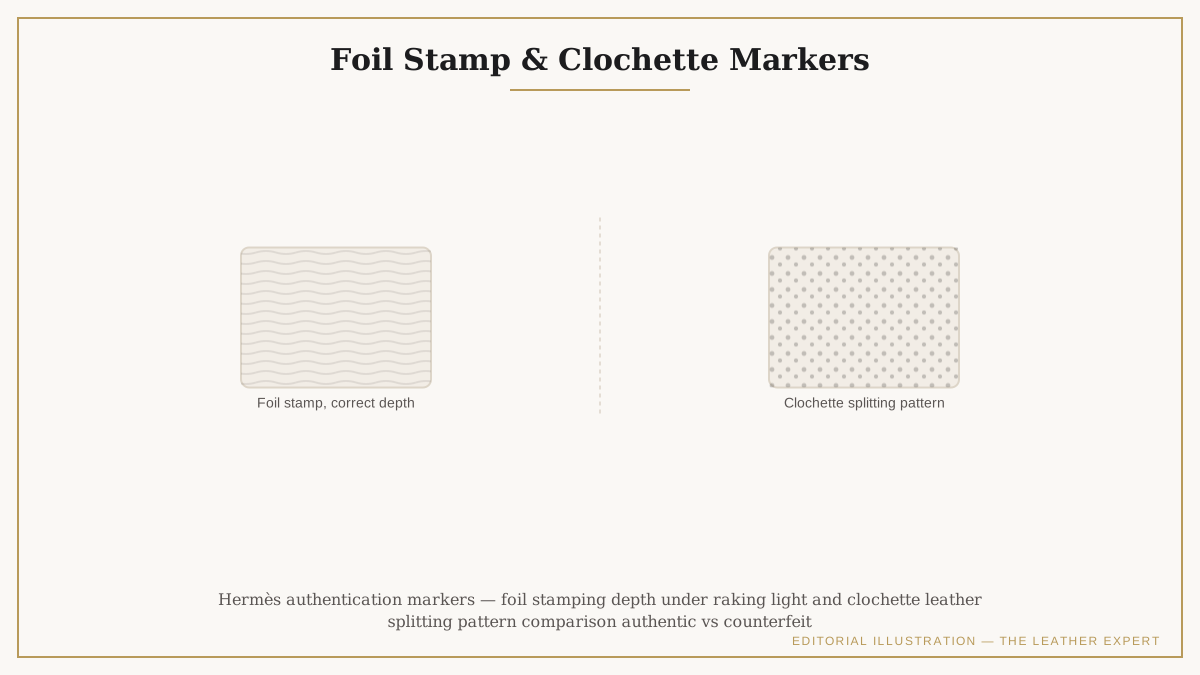
- Foil stamp depth: tactile under fingertip — not a surface film, not a depression visible from exterior
- Foil stamp spacing: consistent character intervals — check HERMÈS accent mark spacing as primary indicator
- Foil stamp edge: clean and sharp under raking light — no bleeding, no halo, no uneven fill
- Clochette material: same leather as bag body — verify grain type matches bag exterior leather
- Clochette split pattern: follows grain lines — Togo along pebble channels, Box Calf along fibril direction
- Counterfeit clochette tell: edge glaze peeling or irregular cross-grain cracking rather than grain-following split
Exotic Scale Pattern Matching: The Symmetry Method
Authentic Hermès exotic skin bags are produced with deliberate scale pattern matching at every visible seam zone. This is not an aesthetic luxury — it is a production specification. Hermès craftspeople select hide panels so that the scale pattern flows continuously across seam lines rather than misaligning at the stitch. On a crocodilian Birkin, the belly scales — which are bilaterally symmetrical — are positioned at the bag’s front face centre, with matching scale rows running outward toward the gusset seams. At the gusset seam itself, the scale pattern on the body panel and the gusset panel are matched so that the rows continue across the seam with minimal interruption.
On a Kelly, the scale pattern matching is most visible at the side seams — where the front and back panels meet — and at the flap seam line. Authentic pieces show the scale rows continuing across these seam zones; the interruption at the actual stitch line is minimised by the craftsperson’s panel selection. Counterfeit exotic skin bags are produced for yield — panels are cut to minimise waste rather than to match scale patterns, producing misaligned scale rows at every seam. This misalignment is visible to the naked eye on any crocodilian or alligator piece and requires no magnification to assess.
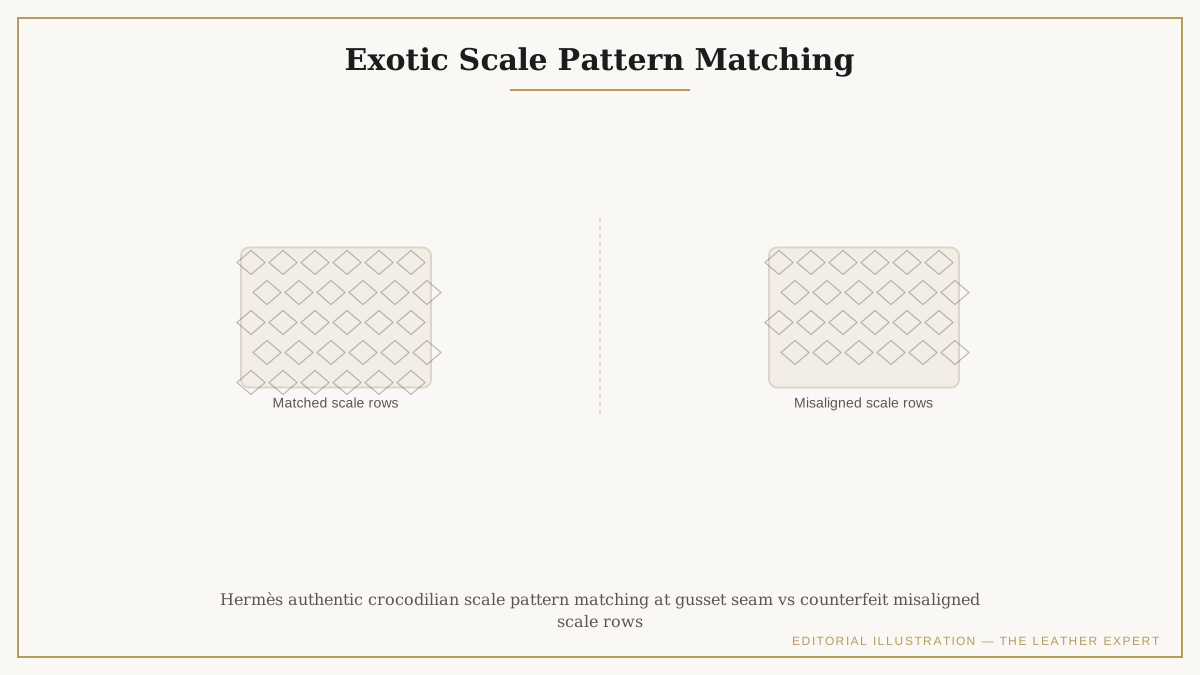
- Belly scales: positioned at bag front face centre on authentic crocodilian — bilaterally symmetrical placement
- Gusset seam matching (Birkin): scale rows continue across body-to-gusset seam with minimal interruption
- Side seam matching (Kelly): scale rows continue across front-to-back panel seam at both sides
- Flap seam matching (Kelly, Constance): scale pattern at flap edge continues from body panel below
- Counterfeit tell: misaligned scale rows at any visible seam — visible to naked eye, no magnification needed
- For the full scale matching method: see exotic skin scale matching — expert method
| Marker | Authentic Hermès | Counterfeit | Tool Required |
|---|---|---|---|
| Saddle Stitch Angle | ~45° diagonal, waxed linen thread with cross-twist at each stitch point | Perpendicular machine stitch, no cross-twist, synthetic thread | 10x loupe + raking light |
| Blind Stamp | Heat-impressed, tactile depth, dateable letter code, era-correct location | Too shallow (printed) or too deep (over-impressed), wrong location for stated year | Fingertip + year-letter reference |
| Foil Stamping | Consistent depth and spacing, clean sharp edges under raking light | Surface film, depression, halo effect, or uneven character spacing | Raking light + fingertip |
| Hardware Pearling | Consistent micro-granular texture across all hardware under magnification | Mirror-smooth or irregular surface — no consistent micro-texture | 10x loupe or macro camera |
| Zipper Pull | Heavy, centred alignment, deep engraving with shadow lines under raking light | Light, off-centre, shallow engraving with rounded character edges | Weight test + raking light |
| Clochette Splitting | Grain-following crack pattern — follows pebble channels or fibril direction | Cross-grain irregular cracking or edge glaze peeling | Naked eye on used pieces |
| Exotic Scale Matching | Scale rows continue across all visible seam zones — belly scales centred on face | Scale rows misalign at seams — panels cut for yield not pattern continuity | Naked eye — no magnification needed |
| Edge Glazing | Semi-circular bead, consistent width, clean corners — no pooling or cracking | Flat application, corner pooling or cracking, irregular bead width | Naked eye + corner examination |
Authentication Is a Protocol, Not a Checklist.
The most important principle in Hermès authentication is cross-referencing. No single marker is sufficient for definitive authentication — each marker you examine either confirms or creates doubt, and the weight of evidence across multiple markers is what produces a reliable conclusion. A bag that passes the saddle stitch test but fails the blind stamp cross-reference is not authenticated. A bag that passes six of eight markers but shows scale misalignment at the gusset seam is not authenticated.
The markers in this guide are arranged in order of the tools required to examine them — from those requiring only naked eye examination (scale matching, clochette splitting, edge glazing) through those requiring fingertip examination (stamp depth, foil depth) to those requiring magnification (stitch cross-twist, hardware pearling). A complete authentication protocol should address all levels.
Leather science knowledge adds a dimension to authentication that visual checklists cannot provide: understanding why authentic markers exist — what production process creates them — allows you to recognise when a counterfeit has correctly replicated the visual appearance of a marker but failed to replicate its physical consequences. The saddle stitch cross-twist is not just a visual pattern. It is the physical consequence of two needles crossing through a single thread. If it is absent under magnification, the stitching is machine-produced, regardless of what it looks like at normal viewing distance.
Bottom Line: Examine every physical marker. Cross-reference every finding. Trust what the leather, stitching, hardware, and stamp tell you — not what the seller tells you.
Popular Searches
Most searched Hermès authentication topics
🔥 Most Searched
Hermès Saddle Stitch Angle vs Machine Stitching
The measurable difference — stitch angle, thread cross-twist, waxed linen vs synthetic thread, and corner consistency as authentication markers.
★ Expert Reference
Hermès Blind Stamp Location Changes in 2026
The complete year-letter mapping, era-correct stamp locations, and how to cross-reference stamp date against hardware and leather condition.
⬆ Trending
Hermès Foil Stamping Depth & Spacing
How to read foil stamp depth under raking light, the HERMÈS accent mark spacing test, and the three counterfeit failure modes explained.
◆ Full Guide
Zipper Pull Alignment & Weight Authentication
Weight test, centring tolerance, engraving depth under raking light, and hang angle — the complete zipper pull authentication protocol.
⬆ Rising
Hermès Clochette Leather Splitting: Fake vs Authentic
Why grain-following split patterns authenticate and cross-grain cracking or edge glaze peeling indicates counterfeit production — with leather-specific examples.
🔥 Most Searched
Exotic Scale Matching: Expert Method
The symmetry method for crocodilian and alligator authentication — belly scale centring, gusset seam matching, and why counterfeit panels always misalign.
Frequently Asked Questions
The saddle stitch on authentic Hermès bags is placed at approximately 45 degrees relative to the seam edge using two needles working simultaneously through a single waxed linen thread. This two-needle technique produces a characteristic cross-twist in the thread at each stitch point — visible under 10x magnification — that is absent from all machine stitching. Machine stitching on counterfeits shows perpendicular placement with no thread cross-twist. For the full analysis, see Hermès saddle stitch angle authentication.
The Hermès blind stamp is heat-impressed on the interior leather and encodes the craftsperson’s identifier and production year using a dateable letter system. The stamp’s location has changed by era — earlier production typically stamps the interior base panel; more recent production places it on the interior side panel or under the flap. Stamp depth should be tactile under fingertip — not a surface print, not a depression visible from the exterior. Cross-reference the date letter against hardware condition and leather patina to confirm consistency. For the year-letter mapping, see Hermès blind stamp location changes.
Authentic Hermès exotic skin bags show deliberate scale pattern matching at every visible seam zone — scale rows continue across seam lines rather than misaligning at the stitch. On crocodilian Birkins, belly scales are centred at the bag face with matching rows running to the gusset seams. On Kelly bags, scale rows continue across side seams and flap seam lines. Counterfeit exotic skin bags cut panels for yield rather than pattern continuity, producing misaligned scale rows at every seam — visible to the naked eye without magnification. See the full method at exotic skin scale matching — expert method.
Clochette leather splitting follows a grain-specific pattern on authentic Hermès bags — Togo clochettes develop fine cracks along the grain channels of the pebbled surface; Box Calf clochettes develop surface crazing at the fold that follows fibril direction. Counterfeit clochettes, made from substitute leathers, show irregular cross-grain cracking or edge glaze peeling rather than leather splitting. This grain-specific pattern is diagnostic and requires no magnification on pieces with any use history. For the full analysis, see Hermès clochette leather splitting: fake vs authentic.