
Symmetrical Scale Matching on Hermes Exotic Skins: Expert Method
The forensic expert's three-check method for reading scale alignment, belly centring, and panel continuity on Hermès crocodile and alligator bags — the craftsmanship markers counterfeits cannot fake.
Symmetrical scale matching on Hermès exotic skin bags is among the most time-consuming aspects of exotic leather construction — and among the most revealing authentication markers available to a secondary market buyer. Achieving even approximate scale continuity across a Birkin's panel seams requires the craftsperson to select hide sections whose scale geometry is compatible, position the panels so that scale rows align across the seam line with minimal offset, and make dozens of micro-adjustments before a single stitch is placed. Counterfeit exotic skin bags consistently fail this test because the hide selection and positioning discipline that produces scale continuity represents hours of skilled labour that no counterfeit operation invests for a component that most buyers do not look at closely enough to assess.
This article teaches the exact three-check method that specialist authenticators use to assess scale matching quality on Hermès crocodile and alligator bags: belly centring symmetry, seam-line continuity, and cross-panel density consistency. Together these three checks provide a scale-level authentication assessment that requires only good lighting and the correct vocabulary to execute — no specialist equipment, no laboratory access.
Why Scale Matching Is the Most Labour-Intensive Exotic Skin Authentication Marker
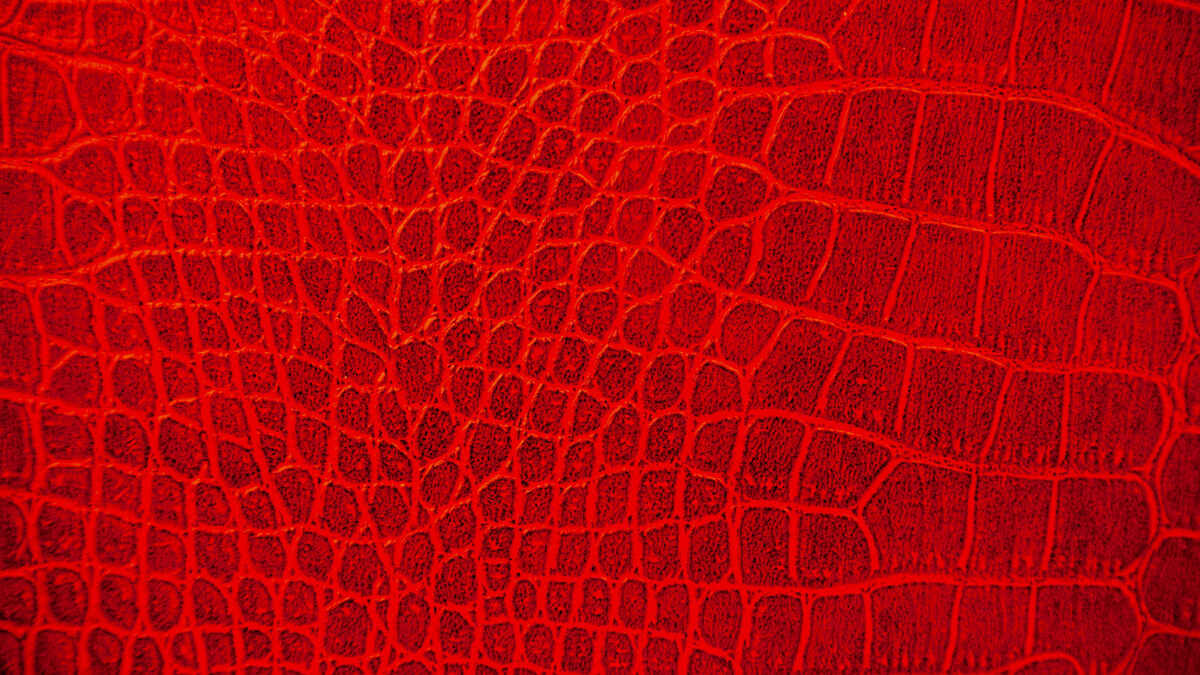
The scale pattern on a crocodile or alligator hide is not uniform across the full animal — it transitions from the regular, geometric belly scales (used for Hermès production) through increasingly irregular flank and dorsal scale patterns that are not suitable for the bag construction's aesthetic requirements. Within even the belly section, scale geometry varies: scale rows are slightly wider near the animal's centre axis and taper slightly toward the flanks; individual scales have minor size variations that accumulate across rows; the spacing between scale rows is consistent in the centre of the belly but varies toward the edges of the usable section.
Achieving scale continuity across a panel seam requires the craftsperson to find a hide section whose scale geometry, at the planned cut line, matches the adjacent panel's geometry closely enough that when the two panels are joined, the scale rows appear to continue without significant disruption. This is not a purely geometric problem — it requires the craftsperson to select panels from compatible sections of the hide, or from two hides that happen to share compatible geometry at their usable edges, and to position each panel so that the scale row angular relationship is maintained across the seam. The more seams a bag has — and the Birkin has seams at the front-to-gusset, gusset-to-back, and front-to-base junctions — the more hide positioning decisions must be made and maintained simultaneously.
Counterfeit exotic skin bags skip this process entirely. Panel positioning in counterfeit production is driven by material yield maximisation — fitting the maximum number of panels from the available hide — rather than by scale row alignment across seams. The result is visible: scale rows on adjacent panels are offset at the seam line by whatever amount the yield-optimised cutting happened to produce, with no consideration of the visual continuity of the pattern. For the full authentication framework, the Authentication Guide hub covers all markers alongside scale matching.
"Scale matching is not about perfection — it is about intention. The authentic craftsperson tries to align the scales across every seam. The counterfeit producer never tries at all."
The Three-Check Expert Method: Belly Symmetry, Seam Continuity, and Density Consistency
The expert scale matching assessment uses three sequential checks that together build a complete picture of the bag's construction quality and authenticity. Each check is executable with the naked eye and good directional lighting in under sixty seconds per check.
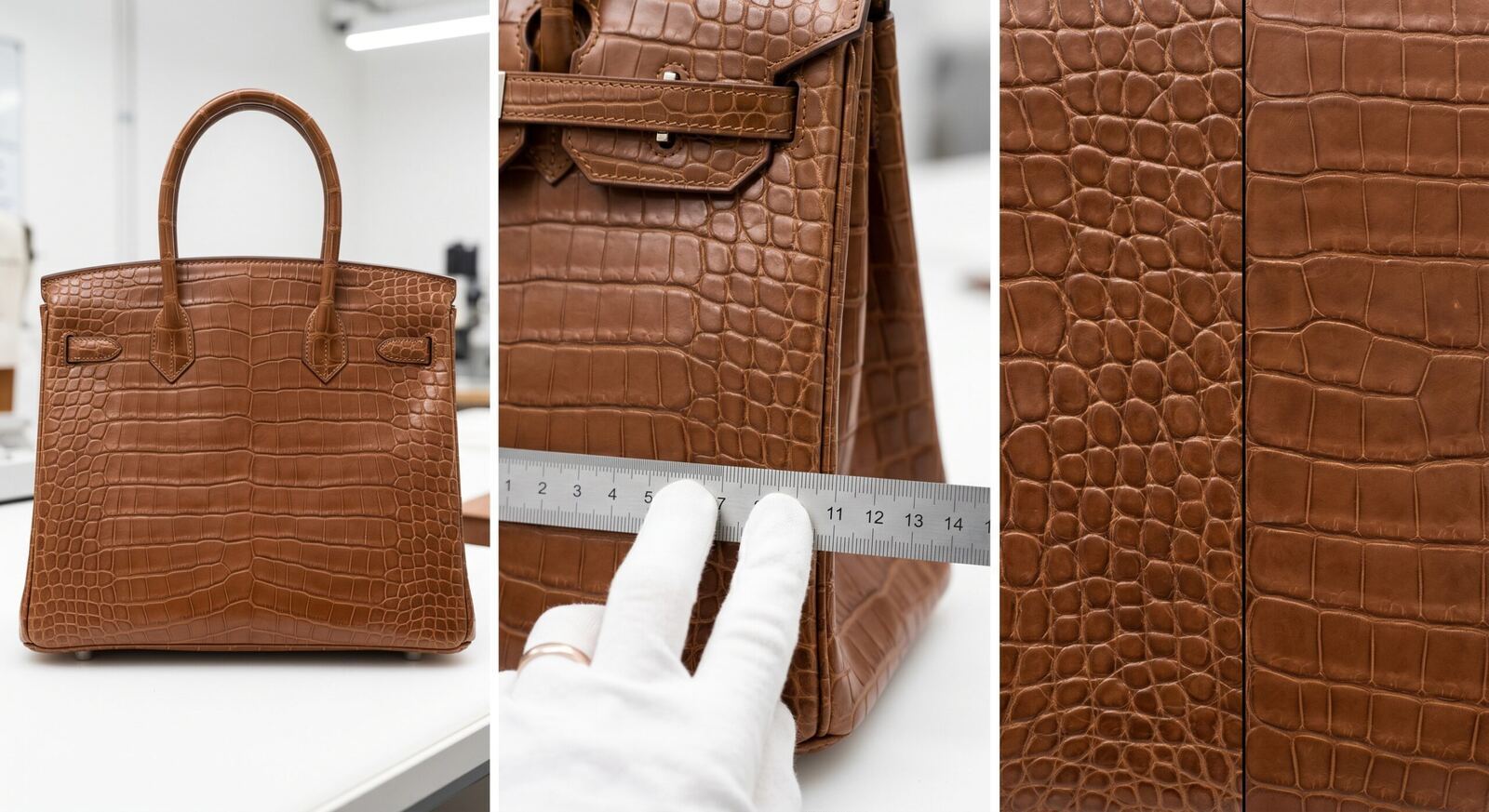
Stand the bag upright on a flat surface and view the front panel from directly in front. Identify the belly scale pattern's central axis — the column of scales running vertically through the bag's centre. This column should bisect the bag's horizontal midpoint. On authentic pieces, the craftsperson positions the belly hide so that the central scale column aligns with the bag's vertical centre axis, producing left-right symmetry across the full front panel.
Move to the bag's side and examine the seam where the front panel meets the gusset. Trace a scale row on the front panel as it approaches the seam — then find the corresponding row on the gusset panel after the seam. On authentic pieces, the rows continue across the seam with a small, consistent offset that maintains the alternating row pattern. The visual rhythm of the scale grid is uninterrupted at the seam.
Compare the scale size and density on the front panel to the back panel and, where visible, to the gussets. On authentic pieces, all exterior panels use hide sections from the same belly zone — producing consistent scale geometry throughout. Scale size should be visually uniform across the full exterior. Any panel that shows noticeably larger or smaller scales than adjacent panels suggests a hide section mismatch.
- Belly centre axis alignment — the most visible single scale matching marker; stand directly in front and draw an imaginary vertical line from the bag's top to base through its centre; the belly scale pattern should be symmetrical across this line
- Seam row continuity — trace a scale row across the front-to-gusset seam and confirm the same alternating offset pattern continues on the gusset; any random break in the row pattern indicates counterfeit panel positioning
- Inter-panel density matching — compare scale footprint (width × height) between the front panel's mid-zone and the back panel's mid-zone; these should be visually equivalent if all panels were cut from the same belly section
- Scale row angular relationship — authentic belly scales produce near-horizontal rows that maintain their angle across panel seams; any significant change in row angle between adjacent panels indicates mismatched hide sections
- Seam quality at scale boundaries — examine under ×10 loupe where the scale edge meets the seam; authentic Hermès construction shows clean, precise saddle stitch that respects the scale geometry; counterfeit stitching often bisects scales or runs through scale centres
Scale Matching Across Species: How Crocodile, Alligator, and Lizard Differ
Scale matching discipline applies across all geometric-pattern exotic skins in the Hermès range, but the specific markers and their visibility differ by species. Understanding these species-specific differences prevents both false passes (accepting a mismatched piece because the species's scale character made the mismatch less visible) and false failures (rejecting an authentic piece because the species's natural variation was misread as counterfeit positioning error).
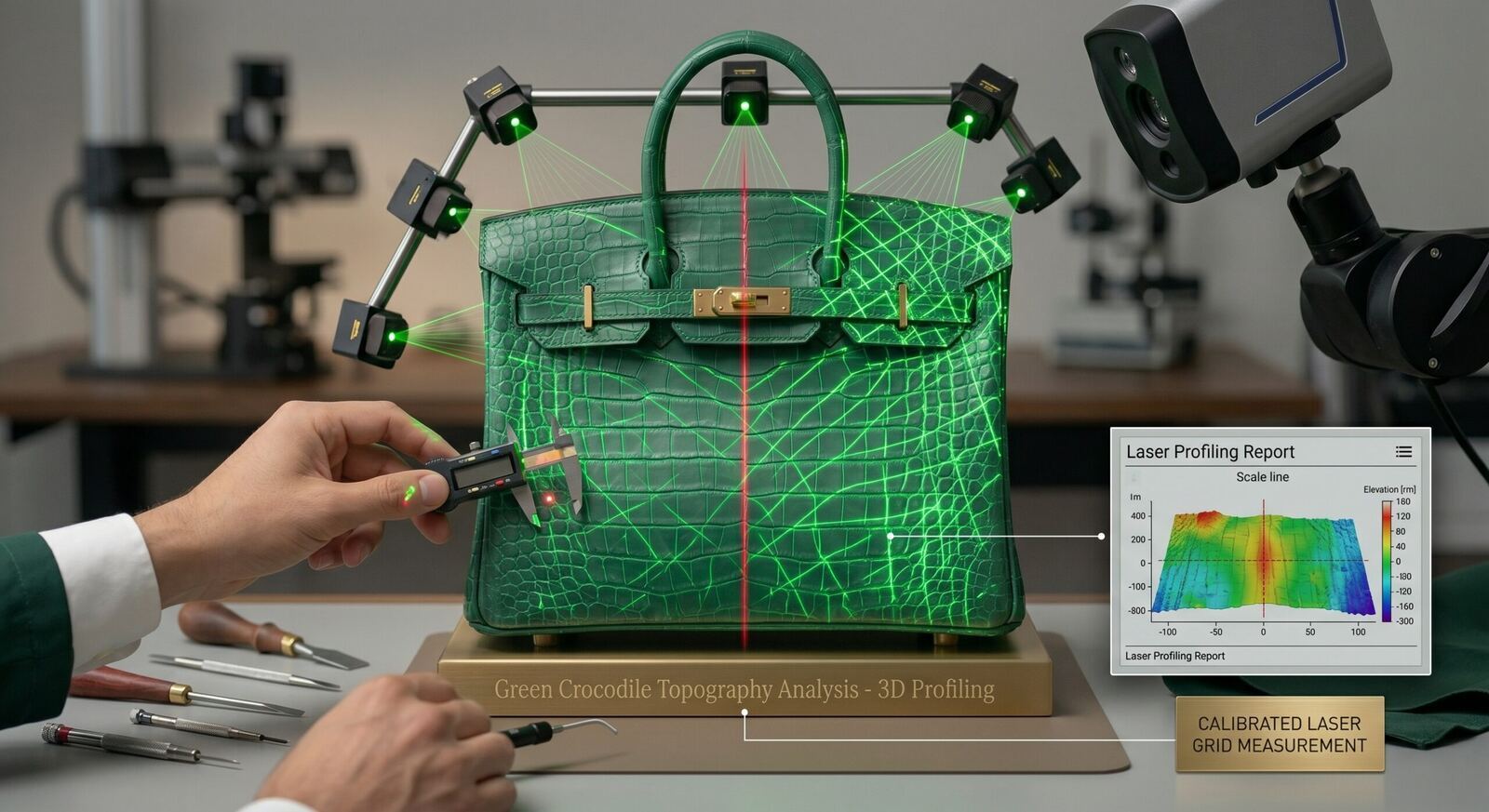
Porosus crocodile (Crocodylus porosus) — used for Hermès's most prestigious exotic skin pieces — has a highly regular, precisely geometric belly scale pattern with a consistent rectangular scale footprint and a small, clearly defined umbilical scar at the hide's centre. The regularity of the Porosus pattern makes scale misalignment immediately visible: the rectangular scale grid has no ambiguity, and any rotation or offset of adjacent panels produces an obvious break in the grid. This is why Porosus pieces are both the most demanding to construct correctly and the most legible to authenticate — the geometric precision of the authentic pattern is unmistakable, and any deviation from it is equally unmistakable.
Alligator Mississippiensis vs Porosus Crocodile: How Their Scale Differences Affect Authentication
Alligator Mississippiensis has a slightly less regular belly scale pattern than Porosus crocodile — the rectangular scales are similar in character but show marginally more natural variation in size and spacing across the belly zone. This marginally greater natural variation means that some scale offset at panel seams is more forgivable in alligator than in Porosus crocodile without being a counterfeit indicator — the craftsperson is working with a naturally slightly less uniform substrate. The authentication standard therefore adjusts: on a Porosus piece, scale continuity across seams should be very close to perfect; on an alligator piece, a small consistent offset is acceptable. What remains unacceptable on both species is random, unconsidered panel positioning that shows no alignment attempt.
Lizard skin — used for Hermès's lizard-skin Kelly and other small leather goods — has a much finer scale pattern than crocodile or alligator, with individual scales approximately 1–3mm in diameter. The scale matching discipline applies at this finer scale, with the same three-check method, but the smaller scale footprint means that misalignment is less visually prominent at normal viewing distance and requires closer examination — typically ×5–10 magnification — to assess accurately. The row continuity check is most useful for lizard: the fine scale rows form a visible directional pattern that either continues across seams or breaks at them.
For the matte versus shiny alligator maintenance context that complements this scale matching guide, see Matte vs Shiny Alligator Hermès Bags: Maintenance Differences. For the clochette substrate authentication that provides a complementary small-component test on exotic skin bags, see Hermès Clochette Leather Splitting: Fake vs Authentic Signs.
Integrating Scale Assessment into a Full Exotic Skin Authentication
Scale matching assessment is one layer in a complete exotic skin authentication — it provides construction-quality evidence that, when combined with the hardware markers, stitching quality, and substrate checks covered elsewhere in the authentication guide, produces a robust multi-factor conclusion. Understanding how scale assessment integrates with these other layers prevents both over-reliance on a single marker and the error of accepting a piece that passes on scales but fails on hardware or stitching.
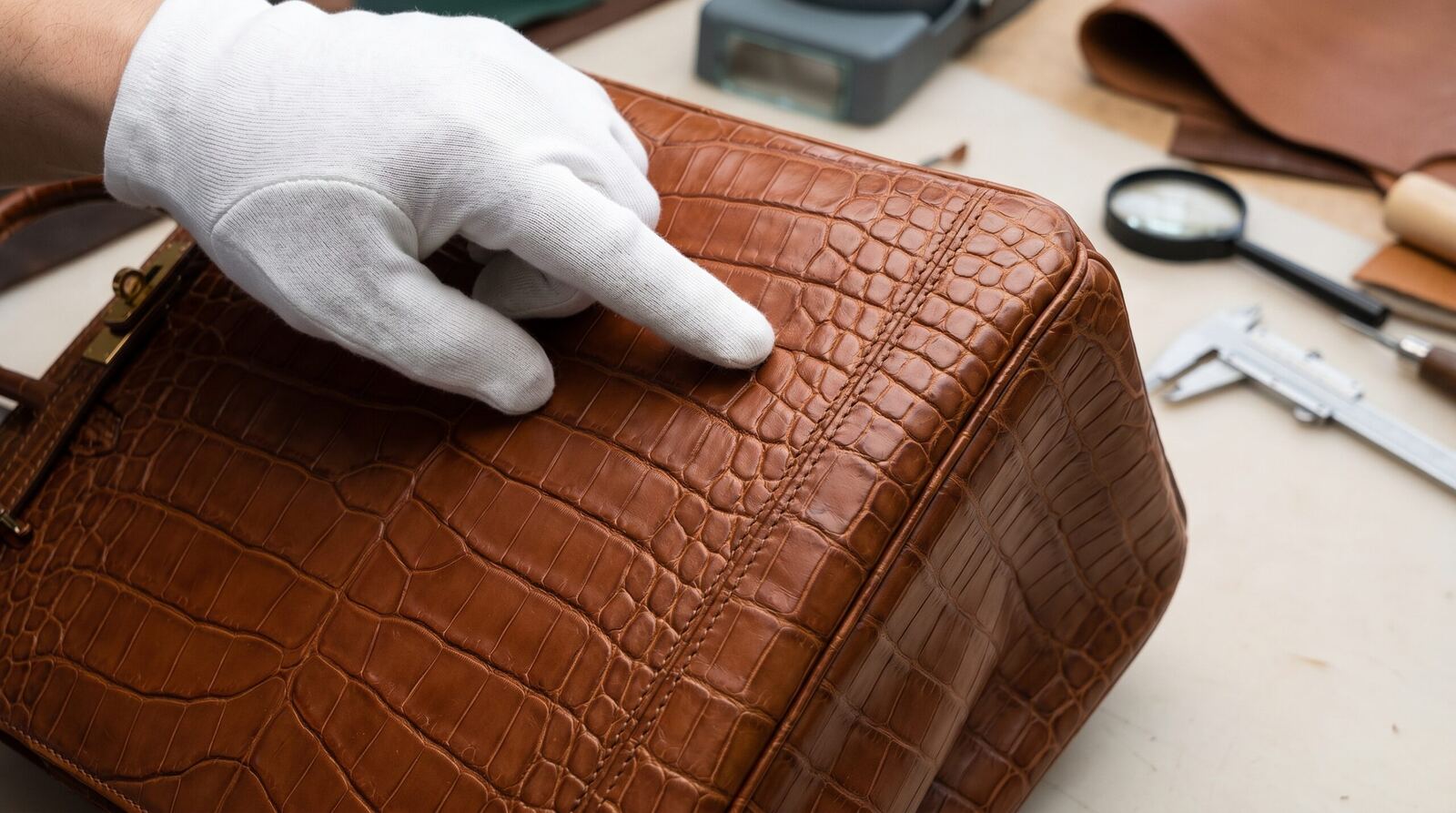
The scale assessment sequence within a full authentication workflow begins after the exterior is confirmed as genuine exotic skin rather than embossed leather — a foundational check that precedes all scale reading. Embossed bovine leather that mimics crocodile or alligator scale patterns is visually distinct from genuine exotic skin: the embossed pattern lacks the three-dimensional scale geometry of genuine hide, the scale edges are flat impressions rather than raised tile-like surfaces, and the inter-scale groove channels lack the depth and organic irregularity of genuine animal hide. Once genuine exotic skin is confirmed, the three-check scale matching assessment provides the construction quality layer.
On pieces where scale matching passes all three checks, the authentication continues to hardware pearling (see our hardware guide), stitching angle and density, and the CITES documentation that is required for all crocodile and alligator pieces. For the CITES certificate authentication and resale implications, see Hermès Exotic Skin CITES Certificate: What It Means for Resale. Browse the full authentication category at Authentication.
| Assessment Check | Authentic Hermès Exotic | Counterfeit Exotic | Inspection Method |
|---|---|---|---|
| Belly centre axis alignment | Central scale column aligned with bag's vertical centre axis — symmetrical left-right across front panel | Belly pattern offset to one side — random cut placement with no axis alignment | View front panel from directly in front; draw imaginary vertical centreline and assess scale symmetry |
| Front-to-gusset seam continuity | Scale rows continue across seam with small, consistent offset — alternating row pattern maintained | Scale rows break randomly at seam — rows on adjacent panels show no angular relationship | View bag from side; trace scale rows as they approach and cross the seam line |
| Front-to-back density match | Same scale footprint (width × height) across front and back — all exterior panels from same belly zone | Scale size varies between panels — front belly scales alongside larger flank or dorsal scales elsewhere | Compare front panel mid-zone scale size to back panel mid-zone scale size visually |
| Scale row angular relationship | Near-horizontal rows maintain their angle across panel seams — consistent geometric orientation throughout | Row angle changes at panel seams — adjacent panels positioned without regard for row orientation | Follow scale row angle direction across multiple panels; any significant angular shift at a seam is a failure |
| Stitch-to-scale relationship | Saddle stitch runs along scale boundaries — stitching respects the scale geometry at seam edges | Stitching bisects scales or runs through scale centres — stitch line positioned for yield, not scale respect | ×10 loupe at seam line; examine whether stitching follows scale edge or cuts across scales |
| Embossed vs genuine scale test | Three-dimensional scale surface — scales are raised tiles with genuine depth and organic inter-scale grooves | Flat impression — scale pattern is pressed into flat leather surface without true scale tile geometry | Oblique light; run fingertip across surface — genuine scales have tactile height; embossed patterns feel flat |
| Porosus vs alligator scale offset tolerance | Porosus: very close alignment; alligator: small consistent offset acceptable due to naturally greater variation | Both species: random offset with no alignment attempt — offset varies along the seam length | Assess offset consistency along the full seam length — authentic offset is uniform; counterfeit offset is random |
Scale Matching Reveals Construction Intent — and Intention Is What Separates Authentic Hermès Exotic Craftsmanship From Every Counterfeit
The three-check scale matching method is effective not because it demands perfection from authentic pieces — the natural geometry of alligator and crocodile hides ensures that some scale offset at panel seams exists even on the most carefully constructed authentic bags. It is effective because it assesses intention: did the craftsperson position each panel with scale alignment as the primary criterion, or did they position for yield with no regard for scale continuity? The answer to that question is legible on every exotic skin bag ever produced, authentic or counterfeit, in the relationship between adjacent panels at every seam line.
Authentic Hermès exotic bag construction shows this intention clearly: the belly centre is aligned, the seam rows continue, and the density is consistent across all exterior panels. Counterfeit production shows its absence just as clearly: belly patterns offset randomly, seam rows broken without pattern, and scale sizes varying between panels from incompatible hide sections. No other authentication marker on an exotic skin bag is as directly connected to the production decision-making that separates authentic from counterfeit craftsmanship.
Bottom Line: Run the three-check scale matching method on every exotic skin Hermès piece — belly centre axis alignment, seam row continuity, and density consistency — and you are reading the craftsperson's intention directly in the hide. Authentic Hermès exotic construction always shows that intention; counterfeits never do.
Popular Searches
Explore our most searched scale matching and exotic skin authentication combinations
Porosus crocodile in the compact Birkin 25 format provides the clearest scale matching assessment opportunity — the rectangular scale geometry and smaller panel area make belly centre axis and seam continuity checks exceptionally legible.
⬆ TrendingThe sellier Kelly's sharp construction geometry makes scale alignment at the seam lines particularly prominent — scale row continuity at the front-to-gusset seam is the most visible check on this construction.
★ Collector FavouriteThe Porosus umbilical scar — the small circular marking at the hide's centre belly — should appear near the bag's base centre on authentic belly-cut pieces; its position confirms the belly section origin of the hide.
◆ Ultra RareDensity consistency across front and back panels is most legible on matte alligator — the unglazed surface shows scale footprint variation more clearly than the gloss finish, making counterfeit flank-section panels immediately identifiable.
⬆ Rising DemandThe embossed versus genuine crocodile foundational check — running a fingertip across the scale surface to feel the tile-like three-dimensional height of genuine scales versus the flat impression of embossed bovine leather.
🔥 Most SearchedSeam row continuity on secondary market alligator Birkins is the most consistently failed scale matching check — counterfeit panels show random row breaks at every seam that authentic construction never produces.
Frequently Asked Questions
Scale matching on Hermès exotic skin bags refers to the precise alignment of the scale pattern across panel seams — ensuring that scale rows on adjacent panels meet at the seam line in a visually continuous pattern. On authentic Hermès crocodile and alligator bags, the craftsperson selects and positions each panel so that scale rows continue across the seam with minimal offset. This is among the most labour-intensive aspects of exotic skin construction and one of the clearest authenticity markers, because counterfeit producers rarely invest the selection and positioning time required to achieve scale continuity. See the full authentication guide at the Authentication Guide hub.
Scale symmetry assessment uses three checks: first, examine the scale rows on either side of the bag's central vertical axis — on authentic pieces, the belly scale pattern is centred with the central scale column bisecting the bag's midpoint. Second, check scale row continuity across the major panel seams — authentic Hermès construction positions panels so that scale rows meet at the seam with minimal misalignment. Third, compare scale size between the front and back panels — authentic bags use hide panels from the same belly section, producing consistent scale geometry throughout. For matte vs shiny alligator maintenance context see Matte vs Shiny Alligator Hermès Bags.
Perfect scale alignment across every seam is not always achievable — the natural variation in scale geometry means that some degree of scale offset at panel seams exists even on the most carefully constructed authentic pieces. What distinguishes authentic from counterfeit is not the absence of any offset but the quality of the alignment attempt: authentic bags show close, considered alignment that minimises the offset with a consistent offset pattern; counterfeits show random, unconsidered positioning where alignment has not been attempted. For CITES resale context see Hermès Exotic Skin CITES Certificate: What It Means for Resale.
Scale matching applies to all crocodile and alligator skin bags at Hermès — Porosus crocodile and Mississippiensis alligator both require the same panel positioning discipline. Ostrich leather does not require scale matching in the same geometric sense — its circular follicle pattern is naturally irregular and does not create a grid-like row structure that must align across seams. Lizard skin requires scale row consideration at a finer scale than crocodile. Python skin requires directional consideration but not the same grid alignment as crocodile. Browse all authentication guidance at Authentication.
