
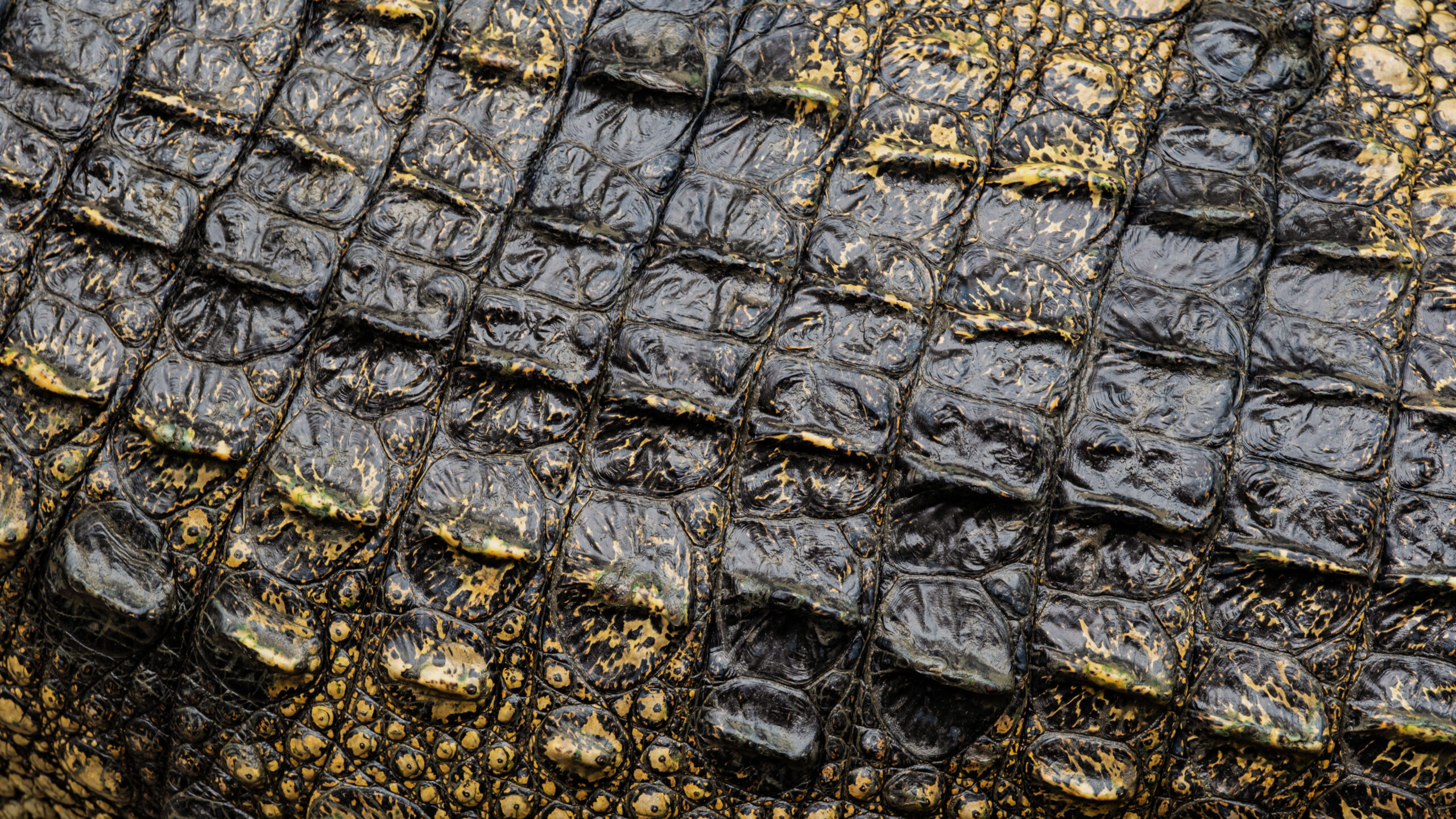
Matte vs Shiny Alligator Hermes Bags: Maintenance Differences
A forensic comparison of how alligator's two finish states — glazed polished and natural matte — respond differently to moisture, handling, and long-term care, and what that means for ownership across a decade.
The choice between matte and shiny alligator at Hermès is almost always made on aesthetic grounds — and almost never on maintenance grounds. This is a sequencing error. Both finish states originate from the same hide species, the same Hermès production standards, and the same exceptional scale quality. What differs — fundamentally and consequentially — is the finishing process applied to the scale surface, and those finishing differences produce maintenance requirements that diverge as sharply as the two finishes' visual characters. An owner who discovers post-purchase that their shiny alligator demands daily dry-cloth wiping after every handling event, while their friend's matte equivalent requires no such routine, has learned this lesson at significant cost. Understanding the material distinction before acquisition converts a potentially frustrating ownership experience into a fully informed one.
This article maps the finishing process difference between matte and shiny alligator at the scale surface level, examines how each responds to the primary stress events of ownership — moisture, handling oils, abrasion, and storage — and provides a complete care framework covering both the shared protocols and the finish-specific differences that matter most for long-term condition preservation.
What Creates the Difference Between Matte and Shiny Alligator at the Scale Surface Level
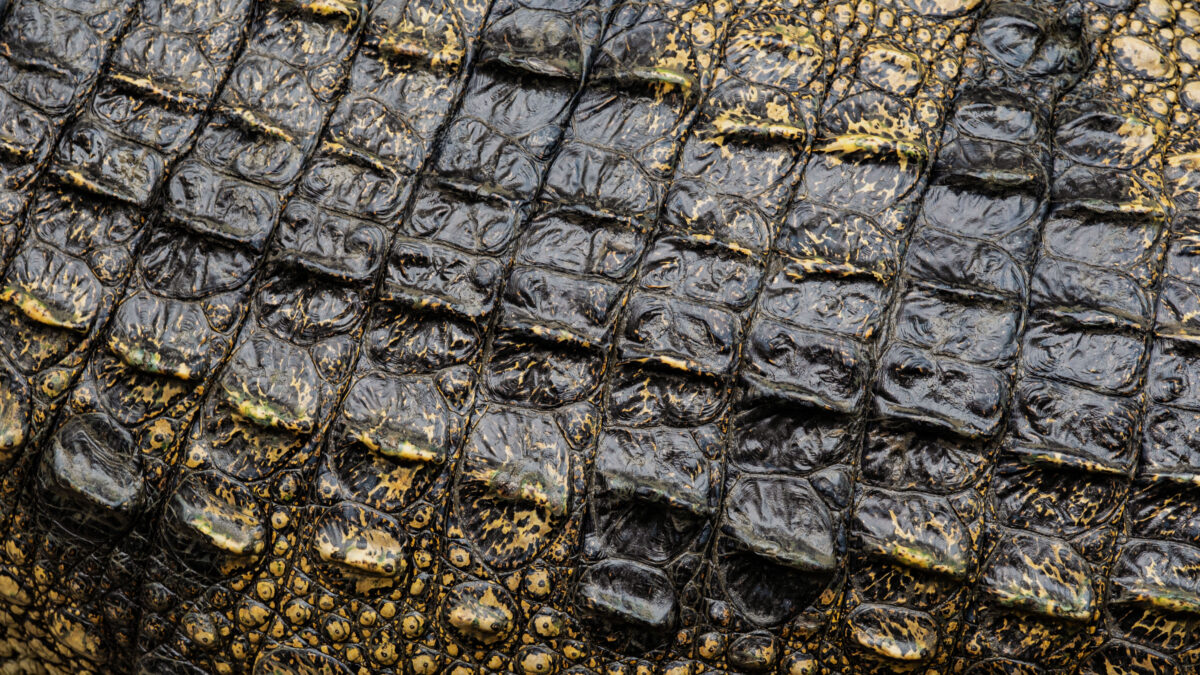
Both matte and shiny Hermès alligator originate from Alligator mississippiensis hide processed to Hermès's exacting quality standards. The species, the hide selection criteria, the tanning process, and the structural quality of the leather are identical. The divergence occurs entirely at the finishing stage, after tanning is complete.
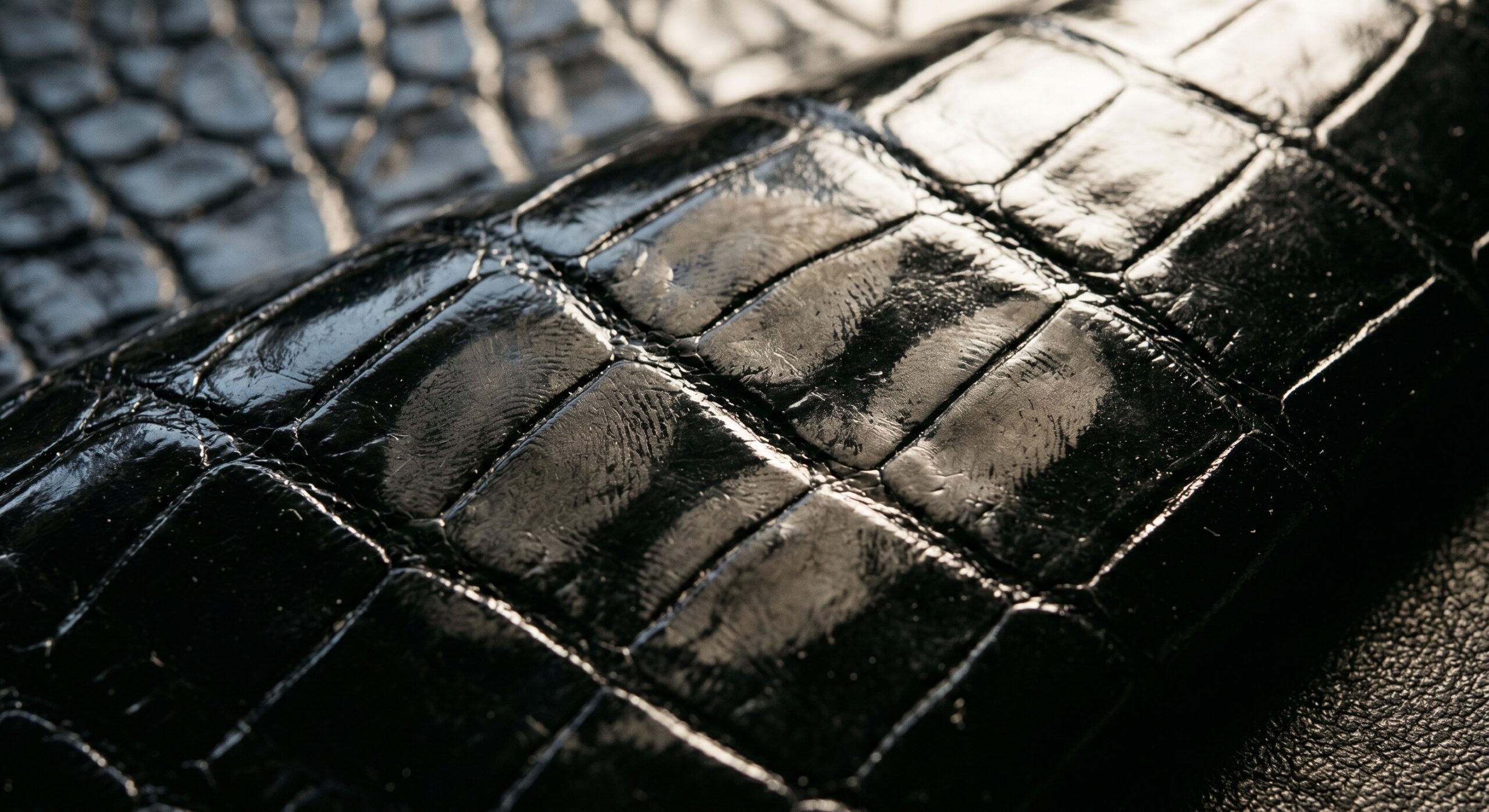
Shiny alligator — designated brillant in French — undergoes a glazing process in which the scale surface is polished to a high gloss under heat and pressure. This glazing compresses the outer surface of each scale, densifying the keratin layer at the scale tip and creating the mirror-bright reflection that defines the shiny finish. The glazing process is closely analogous to Box Calf's box-pressing: it produces its gloss by physically reorganising the surface material under controlled compression rather than by applying a topcoat. The gloss is therefore a property of the compressed scale surface itself — and like Box Calf's compressed fibril gloss, it cannot be restored locally once damaged.
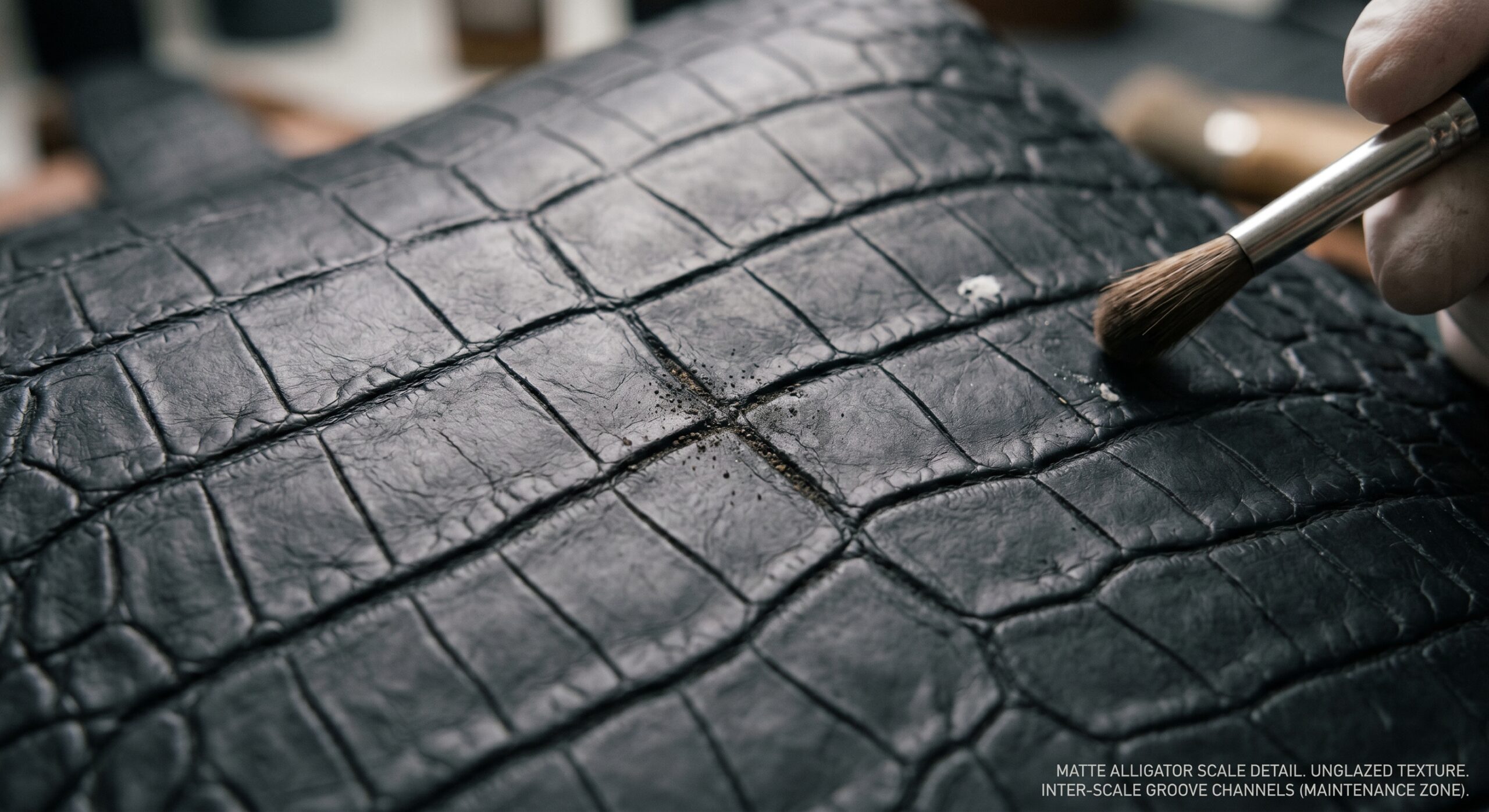
Matte alligator retains the natural, unglazed scale surface — a semi-matte or flat finish that shows the natural scale texture, the inter-scale groove detail, and the organic character of the unmodified keratin layer. The absence of glazing means the matte surface has not undergone the compression that seals the shiny finish: it is marginally more porous, slightly more susceptible to oil absorption, but significantly more forgiving of minor surface events because there is no high-gloss differential between intact and disturbed zones. For the full exotic skin context and how both alligator finishes compare against the other exotic skins in the Hermès range, the Leathers & Materials Guide covers crocodile, ostrich, lizard, and the full exotic skin spectrum.
Brillant (Shiny)
Matte
"The alligator is identical beneath both finishes. What you are choosing is not the hide — it is the maintenance covenant. Shiny demands daily discipline; matte asks for informed care. Know which you are choosing."
Shiny Alligator: The Glazed Scale Surface and Its Specific Maintenance Demands
Shiny alligator's maintenance demands are inseparable from its visual authority. The same compressed scale surface that produces the mirror-bright gloss also produces maximum visual contrast between intact and disturbed zones — a property that makes every handling event, moisture contact, and surface abrasion immediately and prominently visible. Owners who carry shiny alligator without understanding this dynamic are consistently surprised by how quickly the gloss shows wear. Owners who understand it carry the piece with appropriate discipline and maintain it with a routine that is simple but non-negotiable.
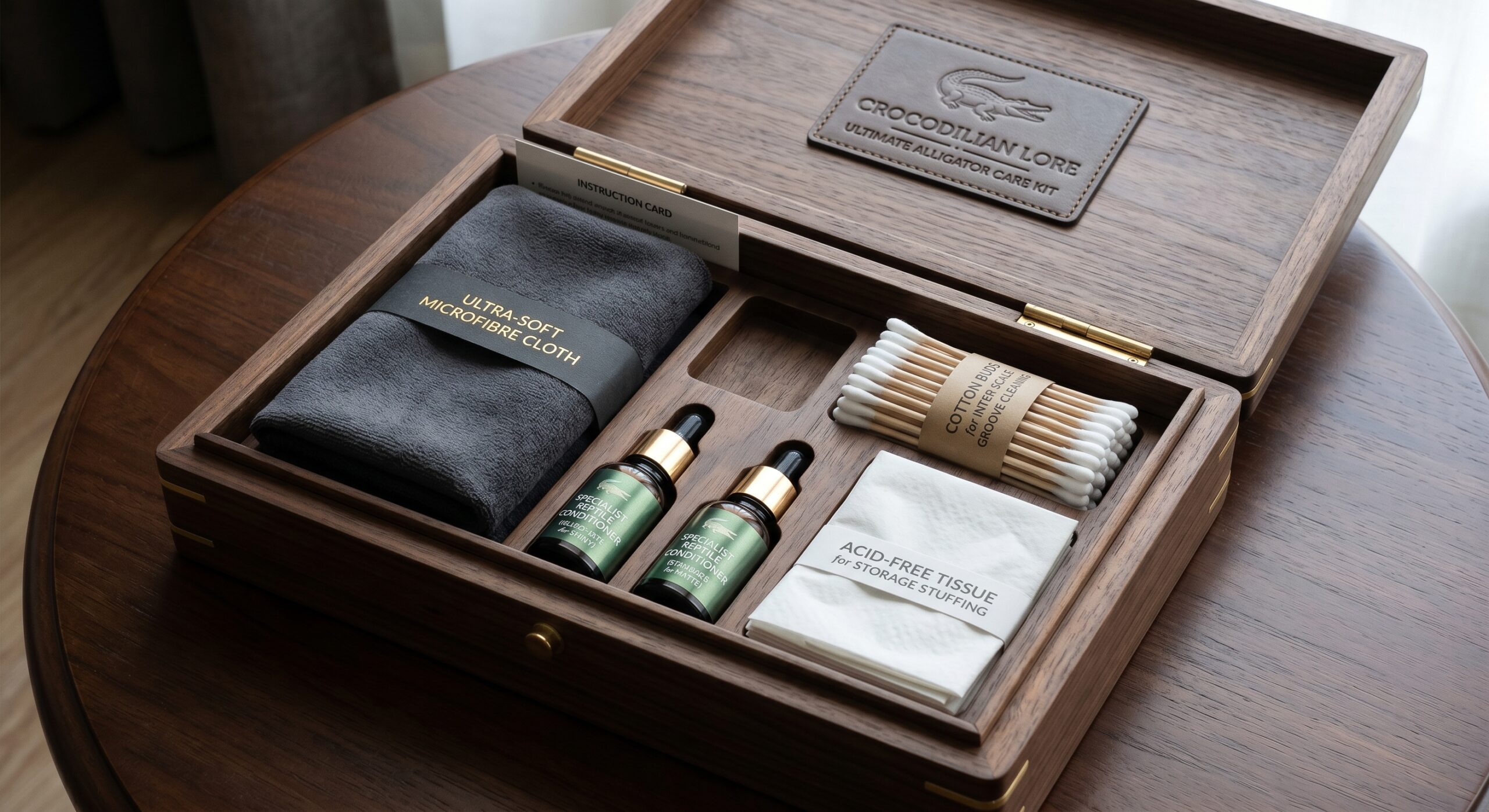
Fingerprint oils are the most frequent maintenance challenge on shiny alligator. Skin contact deposits a thin lipid film on the glazed scale surface — usually from handling the bag's exterior during carry or from the natural oils transferred at the handle zones. On shiny alligator, this film creates localised dulling at the deposit sites: the oil reduces the specular reflection of the glazed surface in those zones, producing a matte patch visible under angled light. After a single carry session without wiping, several such patches may be present across the most-handled surface zones. The maintenance response is a clean, dry, ultra-soft microfibre cloth wiped very gently across the affected scale surfaces after each carry — not a damp cloth, not a conditioning product, just a dry buff that redistributes the surface oil film without adding to it.
- Dry microfibre wipe after every carry — the single most important shiny alligator maintenance habit; prevents fingerprint oil accumulation from dulling the glazed scale surface
- Never apply standard leather conditioner to shiny alligator — product chemistry incompatible with glazed scale surface; risk of permanent gloss dulling from product residue
- Moisture contact — any water contact must be immediately and very gently blotted with a dry cloth; never rubbed; moisture marks on glazed alligator are difficult to address without professional treatment
- Direct sunlight exposure accelerates the glazed surface's ageing — store away from windows and UV sources to maintain gloss integrity
- Scale edge wear at the most-handled zones is the primary long-term maintenance concern — the gloss at the highest-contact scale tips gradually reduces from friction; this is a natural progression but can be slowed by minimising surface abrasion contact
- Professional specialist treatment for significant gloss loss — Hermès spa service uses glazed reptile-specific products not available retail; do not attempt to restore significant gloss loss with home products
Matte Alligator: Natural Scale Surface and the Maintenance Forgiveness It Provides
Matte alligator's unglazed scale surface is significantly more forgiving than shiny for minor handling events, but it is not maintenance-free — and the specific vulnerabilities it does carry require informed management. The difference from shiny is one of degree and visibility rather than fundamental care category.
The matte surface's primary advantage is the absence of high-gloss differential. When a fingerprint oil deposit lands on matte alligator, the reduction in surface reflectivity that it produces is barely detectable against the surrounding semi-matte surface — there is no mirror contrast zone to make the deposit visually prominent. This means matte alligator can sustain significantly more incidental handling without requiring immediate maintenance intervention. A wipe-down after each use is still best practice but not the non-negotiable it is for shiny.
Why Matte Alligator Has a Different Moisture Response From Shiny
The unglazed keratin surface of matte alligator is marginally more porous than the compressed glazed surface of shiny, meaning moisture penetrates slightly more quickly into the inter-scale zone on matte pieces. However, because the matte surface has no high-gloss differential to amplify moisture marks, the visual result of minor moisture contact is considerably less prominent on matte — typically a subtle tonal darkening in the affected zone that fades as the moisture evaporates, rather than the prominent dull ring that moisture produces on the shiny surface. Significant moisture exposure remains a concern for both finishes: the inter-scale groove areas on both matte and shiny alligator can accumulate moisture and, if the piece is not dried correctly, develop mould growth in the groove channels over extended wet periods.
The long-term maintenance concern on matte alligator is the gradual dulling and slight darkening of the inter-scale groove areas from accumulated environmental particulate and skin oil. These narrow channels between scales collect material that cannot easily be removed by surface wiping — a cotton bud dampened with distilled water, used very carefully along the groove lines, is the appropriate periodic cleaning method. This should be done every three to four months of active carry rather than as a reactive measure. For the scale symmetry and authentication markers that apply to both matte and shiny alligator at the secondary market, see our detailed guide at Symmetrical Scale Matching on Hermès Exotic Skins: Expert Method. For the CITES certificate requirements that affect international resale of both alligator finishes, see Hermès Exotic Skin CITES Certificate: What It Means for Resale.
Shared Protocols and Finish-Specific Differences: The Complete Alligator Care Framework
Both matte and shiny alligator share a set of core care protocols that apply regardless of finish. Both finishes require: immediate moisture blotting (never rubbing) on any water contact; storage away from direct sunlight and UV exposure; storage in the dust bag in a temperature and humidity-stable environment; and avoidance of standard leather conditioning products that are not formulated for reptile skin chemistry. The finish-specific differences layer on top of these shared protocols.
Post-Carry Surface Management (Both Finishes)
After every carry, wipe the exterior scale surfaces with a clean, dry, ultra-soft microfibre cloth. For shiny alligator, this is non-negotiable — do it immediately after removing the bag from carry. For matte alligator, it is best practice but can be less frequent (every second or third carry) without significant consequence. Never use a damp cloth, cleaning spray, or any product on the scale surface as part of routine maintenance — dry wiping only.
Inter-Scale Groove Cleaning (Both Finishes, Quarterly)
Every three to four months of active carry, clean the inter-scale groove channels using a cotton bud very lightly dampened with distilled water. Work along each groove line with gentle pressure, rotating the cotton bud to expose a clean surface as it picks up particulate. Allow the grooves to dry fully in still room air before storage. This prevents the accumulation of material in the grooves that eventually darkens the inter-scale zones and alters the visual character of the scale pattern.
Specialist Product Application (Both Finishes, Twice Yearly)
Twice yearly, apply a specialist reptile leather conditioner — formulated specifically for exotic skin — to the full scale surface using a soft cloth or cotton pad in very light, even strokes following the scale direction. This product replenishes the natural oils in the scale keratin layer that gradually deplete over carry and UV exposure. Standard leather conditioners contain solvents and wax compounds that are incompatible with alligator scale chemistry and must never be used. Shiny alligator: ensure the product is specifically rated for glazed reptile — some reptile conditioners are formulated for matte only and will dull a glazed surface.
Moisture Response Protocol (Both Finishes)
Any moisture contact — rain, condensation, liquid spill — should be responded to immediately. Gently blot (never rub) the wet zone with a clean dry cloth, working from the outer edge of the wet area inward to avoid spreading. Allow to dry flat in still room air at room temperature — no heat sources, no fan. For shiny alligator: after drying, inspect under angled light for moisture mark residue; if present, proceed to step 1 post-carry wipe. For matte alligator: moisture marks are typically less prominent and often fade fully on natural drying without additional intervention.
Storage Protocol (Both Finishes)
Store stuffed with acid-free tissue inside the dust bag, in a stable-temperature, low-humidity environment away from all UV sources. Humidity extremes are the most damaging storage condition for both alligator finishes: high humidity promotes mould in the inter-scale grooves; low humidity desiccates the scale keratin layer, causing brittleness and inter-scale cracking over time. A humidity range of 45–55% relative humidity is optimal. Browse all Hermès care and storage guidance at Care & Storage Guide hub and the full Leather Science category.
| Maintenance Factor | Shiny (Brillant) Alligator | Matte Alligator |
|---|---|---|
| Post-carry wipe frequency | After every carry — non-negotiable to prevent fingerprint oil gloss dulling | Every 2–3 carries — less urgent due to absence of high-gloss differential |
| Fingerprint oil visibility | Immediately prominent — creates localised dull patches on glazed surface | Barely detectable — semi-matte surface absorbs visual oil differential |
| Moisture mark severity | Very prominent — ~5× more visible than matte; professional treatment often needed | Moderate — typically fades on natural drying; less intervention required |
| Conditioner type | Specialist glazed reptile conditioner only — standard product dulls gloss permanently | Specialist reptile conditioner — standard matte formulation acceptable |
| Scratch visibility | High — gloss differential makes scratches immediately visible | Moderate — semi-matte surface reduces scratch contrast |
| Long-term gloss maintenance | Requires consistent dry-wipe discipline; gloss gradually reduces at highest-friction scale tips over years | N/A — matte surface has no gloss to maintain; inter-scale groove condition is the primary long-term focus |
| Inter-scale groove care | Quarterly cotton bud cleaning — same as matte; groove darkening less visible due to gloss dominating visual | Quarterly cotton bud cleaning — groove condition more visually prominent on matte due to absence of competing gloss |
| Storage discipline | Dust bag + stable humidity — same as matte; UV storage more critical to preserve gloss | Dust bag + stable humidity — UV storage less critical but still important for scale keratin hydration |
| Secondary market grade sensitivity | Very high — gloss loss and moisture marks produce steep grade drops; pristine premium substantial | Moderate — condition issues less visually dramatic; grade drops less steep at equivalent damage level |
Shiny Alligator Demands More — and Delivers More When Those Demands Are Met. Matte Is the Right Choice for Owners Who Want Alligator Without the Daily Discipline.
The maintenance difference between matte and shiny alligator is not subtle — it is the difference between a daily care routine and an occasional one, and between a surface that amplifies every handling event and one that absorbs most of them. Shiny alligator, when maintained correctly, is among the most visually commanding objects in the Hermès range: the glazed scale surface at peak condition is extraordinary. The covenant is that maintaining this condition requires a post-carry wipe after every use, specialist glazed-reptile products exclusively, and meticulous moisture management. Miss any element of this routine consistently and the gloss deteriorates toward a condition that Hermès spa service can improve but rarely fully restore.
Matte alligator delivers the same species, the same scale quality, and the same structural properties with a more forgiving maintenance profile. For owners who want alligator's aesthetic authority without the daily discipline commitment, matte is the rational specification. The secondary market premium for shiny does not reflect a superior leather — it reflects a superior maintenance challenge met, and the rarity of pristine examples on the used market that demonstrates how frequently that challenge is not met.
Bottom Line: Choose shiny alligator only if you will commit to daily dry-cloth maintenance and specialist glazed reptile products; choose matte if you want alligator quality with a more forgiving care profile — the leather itself is identical, the finish covenant is not.
Popular Searches
Explore our most searched matte and shiny alligator combinations
The most sought-after shiny alligator specification — Noir's deep black amplifies the glazed scale's reflective quality to its maximum, producing a visual authority that commands the highest secondary market premiums.
⬆ TrendingMatte alligator's warm, organic scale character is particularly appealing in gold tones — the natural scale surface develops a subtle richness that complements the sellier construction's geometric precision.
★ Collector FavouriteRouge H in shiny alligator is among the most collectible Hermès specifications in existence — the glazed scale surface brings the deep bordeaux to a saturation level that no bovine leather can approach.
◆ Ultra RareBleu Saphir in shiny alligator reaches a depth of saturated blue that the glazed compression amplifies further — one of the rarest colour-finish combinations in the Hermès secondary market.
⬆ Rising DemandMatte alligator in the larger Birkin 30 format is among the most practical exotic skin Birkin specifications — the matte finish's forgiveness is more meaningful in the format most actively carried.
🔥 Most SearchedThe foundational alligator decision query — buyers who understand the maintenance difference before purchase make a fully informed specification choice rather than discovering the care covenant after acquisition.
Frequently Asked Questions
Both matte and shiny Hermès alligator use the same hide species processed to the same quality standards, but the finishing process applied after tanning differs fundamentally. Shiny alligator undergoes a glazing process in which the scale surface is polished to a high gloss under heat and pressure, compressing the scale tips to a mirror-bright finish. Matte alligator retains the natural, un-polished scale surface — a semi-matte finish that shows natural scale texture more clearly and feels warmer in hand. The glazing process that creates the shiny version fundamentally changes the scale surface's response to moisture, handling, and care products. See the full leather types reference at the Leathers & Materials Guide.
Shiny alligator is harder to maintain in pristine condition than matte alligator. The high-gloss finish maximises the visual contrast of any surface disturbance — a moisture spot, fingerprint, or light mark that would be largely invisible on matte alligator is immediately prominent on the polished scale surface. Shiny alligator requires dry-cloth wiping after every handling event to prevent fingerprint oil dulling the gloss. Matte alligator is more forgiving of minor contact events and requires less frequent active maintenance. For exotic skin care context see Symmetrical Scale Matching on Hermès Exotic Skins.
Minor gloss dulling from fingerprint oil accumulation can often be partially addressed at home using a very soft, clean microfibre cloth buffed gently across the affected scale surfaces. However, significant gloss reduction from moisture marks, scale surface scratches, or prolonged dry conditions requires professional restoration. Applying standard leather conditioners to shiny alligator risks permanently dulling the gloss by introducing incompatible product chemistry to the glazed scale surface. Hermès spa service uses specialist glazed reptile products that are not available retail. For resale impact context see Hermès Exotic Skin CITES Certificate: What It Means for Resale.
Shiny alligator pieces consistently command higher secondary market prices than matte equivalents in the same specification — typically a premium of 15–25% at pristine condition grade. However, matte alligator's relative maintenance forgiveness means well-maintained matte pieces can reach a higher effective condition grade than equivalent-age shiny pieces, partially or fully closing the premium gap at used-condition tiers. The CITES certificate is equally required for international resale of both finishes. For full leather condition and resale context see Does Leather Condition Affect Hermès Resale Price?
