Hermès Size & Lifestyle Matching Guide: Leather Weight, Ergonomics & Size Selection
Size selection has a leather science dimension that is almost never discussed. The weight difference between a Togo Birkin 30 and an Epsom Birkin 30 is not negligible — it is a structural consequence of grain density and fibril mass per unit area.
Size selection has a leather science dimension that is almost never discussed in conventional buying guides. The weight difference between a Togo Birkin 30 and an Epsom Birkin 30 is not negligible — it is a structural consequence of grain density and fibril mass per unit area. For a daily-carry bag used over multiple years, that weight differential accumulates into a meaningful ergonomic variable. Understanding the material weight of different leather grades is a legitimate input into size selection.
This hub covers Hermès size selection through a materials and structural lens — how leather weight varies across grades, how that affects daily carry ergonomics, and what a leather-literate buyer should factor into size decisions beyond pure capacity. The question is not only what fits inside the bag. It is what the bag does to your body over years of daily carry.
4
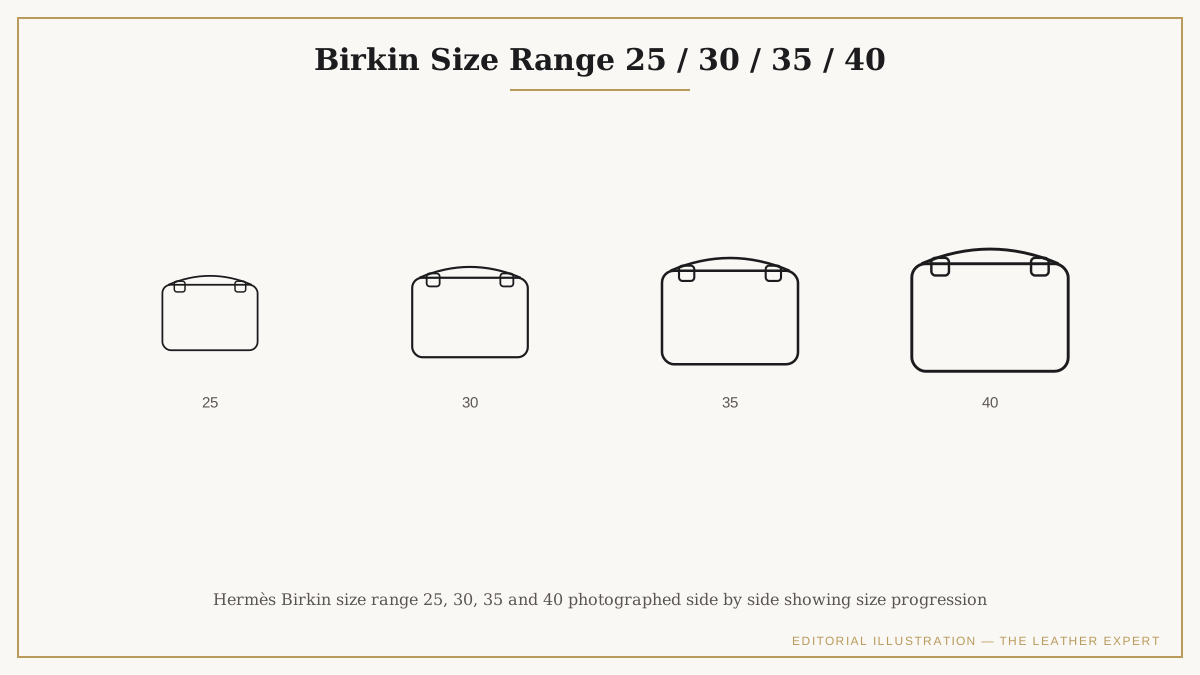
Core Birkin sizes: 25, 30, 35, 40 — each with distinct leather weight and structural implications
Clemence
Heaviest major production leather in the Hermès range — weight compounds significantly with size
Epsom
Lightest major production leather per unit area — compressed embossing reduces effective fibril mass
The Leather Weight Dimension of Size Selection: What Conventional Guides Miss
Conventional Hermès size guides address capacity, proportion, and occasion — how much fits inside, how the bag looks relative to body frame, and which size suits formal versus casual use. These are legitimate inputs into size selection. But they omit the variable that compounds most significantly over years of daily carry: leather weight.
Every Hermès production leather has a different weight per unit area — a consequence of its tannage method, fibril density, and grain architecture. Clemence, the heaviest major production leather, has a high fibril mass per unit area due to its dense tannage and loose, heavy grain. Epsom, the lightest, has a significantly lower effective fibril mass because the embossing process compresses the surface fibrils, reducing the mass per panel area. Togo sits between these extremes. As bag size increases, these weight differentials scale proportionally with the panel area — meaning that the leather weight premium of Clemence over Epsom is larger in absolute terms in a Birkin 40 than in a Birkin 25.
“The weight difference between a Togo Birkin 30 and an Epsom Birkin 30 is a structural consequence of grain density and fibril mass per unit area. For a daily-carry bag used over multiple years, that differential accumulates into a meaningful ergonomic variable.”
- Leather weight per unit area: Clemence (heaviest) > Togo > Veau Swift > Epsom (lightest of major production leathers)
- Weight differential scales with size — the Clemence-to-Epsom gap is larger in the Birkin 40 than the Birkin 25
- Empty bag weight matters for daily carry — the leather weight is the constant; contents weight is variable
- Wrist and shoulder load accumulates over hours of carry — leather weight is a daily ergonomic variable, not a one-time lift
- For buyers choosing between sizes: consider the leather weight before the capacity — capacity can be managed, leather weight cannot
Togo vs Epsom Birkin 30: The Measured Weight Differential
The Birkin 30 is the most commonly purchased size in the Birkin range, and the Togo-versus-Epsom question is the most common leather selection question within that size. Understanding the weight differential between these two leathers in the Birkin 30 format is the most practically useful entry point into the broader leather weight question.
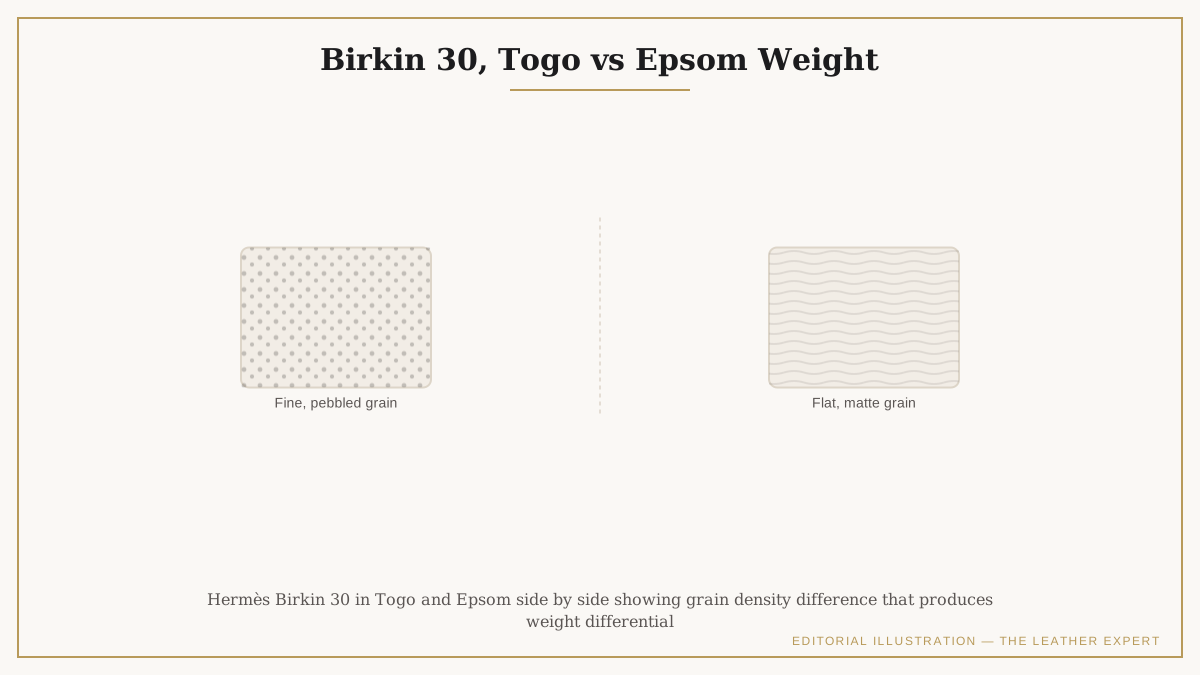
Togo leather’s loose pebbled grain is the consequence of a chrome tannage applied to a hide with relatively low fibril compaction — the pebbles are formed by the natural surface relief of the hide rather than by an embossing process, and the leather retains its full fibril mass per unit area. Epsom leather’s cross-hatch grain is an embossed pattern applied under a heated press, which compresses the surface fibrils and removes some of the effective surface texture mass. The result is a leather that is measurably lighter per panel than Togo at equivalent thickness.
Leather Expert Note — The Measured Differential
The precise weight differential between Togo and Epsom Birkin 30 has been measured and documented in our dedicated article. The finding: the weight difference is real and measurable, and it becomes a significant ergonomic variable for buyers who carry for more than four hours daily. For the measured data and methodology, see weight difference between Togo and Epsom Birkin 30.
- Togo Birkin 30: heavier than Epsom at equivalent size — loose pebbled grain retains full fibril mass
- Epsom Birkin 30: lighter — compressed embossed surface reduces effective fibril mass per panel
- The differential is measurable and grows proportionally with each size step
- For buyers who carry 4+ hours daily: Epsom’s lighter weight is a legitimate ergonomic advantage at any size
- For buyers who carry occasionally: the weight differential is less relevant than structural suitability for intended use pattern
How Leather Grade Affects Daily Carry Ergonomics Across the Size Range
Ergonomics in handbag carry is a function of two variables: the weight of the bag and its contents, and the carry duration. A bag that is perfectly comfortable for a two-hour shopping trip may become fatiguing after six hours of daily carry if the leather weight is high enough relative to the carry mode. For Hermès buyers who wear their bags as primary everyday carriers — wrist carry for Birkins and Kellys, shoulder carry for Lindys and Garden Parties — leather weight is an ergonomic design decision that conventional size guides consistently ignore.
The carry mode amplifies the ergonomic effect of leather weight differently for different bag constructions. Wrist carry — the primary mode for Birkins and Kellys — concentrates the full bag weight at the wrist joint. At carry durations of four hours or more, the cumulative effect of leather weight becomes meaningful at the wrist and radiates into the forearm and shoulder. Shoulder carry — the primary mode for the Lindy and Garden Party — distributes weight across the shoulder joint and trapezius muscle, which can sustain higher load for longer durations. This means that leather weight matters more for wrist-carried bags than for shoulder-carried bags at equivalent daily use durations.
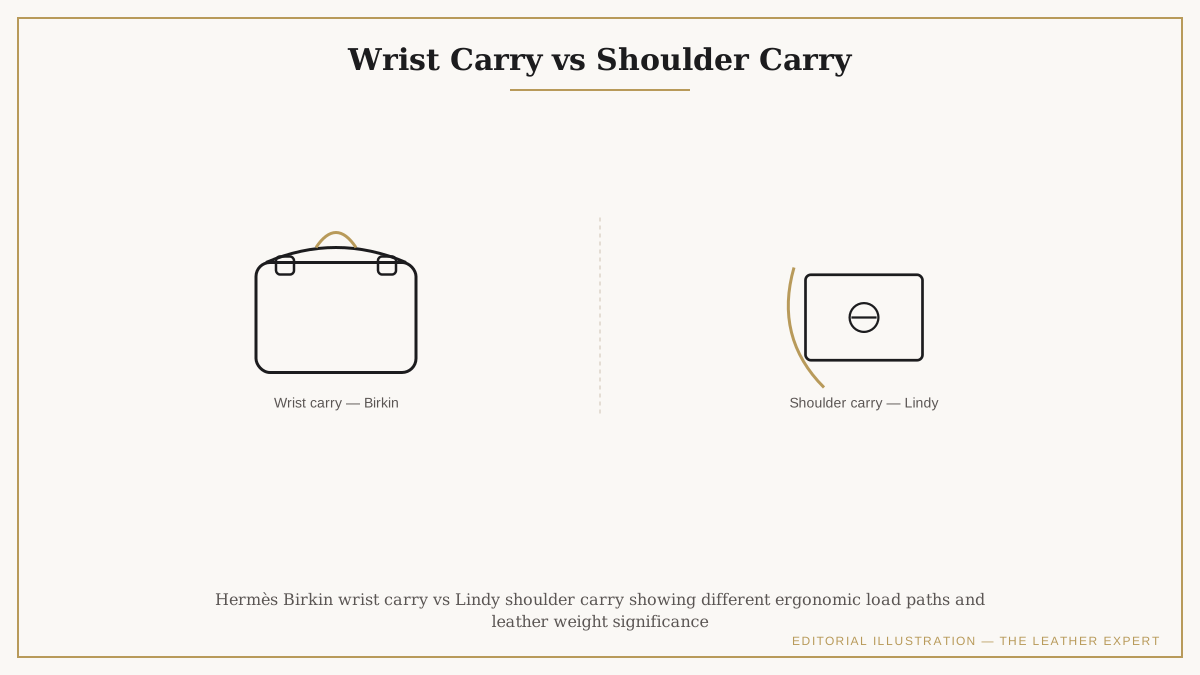
- Wrist-carried bags (Birkin, Kelly): leather weight is the most direct ergonomic variable — Epsom lightest, Clemence heaviest
- Shoulder-carried bags (Lindy, Garden Party): leather weight matters but is distributed more sustainably across carry duration
- Daily carry 4+ hours: choose the lightest leather appropriate to the construction — Epsom for Birkin and Kelly wrist carry
- Occasional carry: leather weight is secondary to structural compatibility and patina character preference
- Cumulative effect: leather weight compounds with contents weight — a light leather choice leaves more ergonomic budget for what goes inside
Size-to-Leather Pairing Logic: Which Sizes Suit Which Leather Grades Structurally
Beyond the ergonomic dimension, there is a structural dimension to size-to-leather pairing that is equally important for long-term performance. Different leather grades have different structural responses to the mechanical demands of larger bag formats — and these responses become more pronounced as size increases.
Birkin 25: the smallest standard size, with a proportionally small base panel and gusset area. At this size, all major production leathers perform well structurally — the reduced panel area means that even the heavier leathers like Clemence do not create significant base panel stress. Leather selection at the Birkin 25 is primarily about aesthetic preference and patina character rather than structural compatibility.
Birkin 30: the ergonomic sweet spot. At this size, the structural differences between leathers begin to matter — Togo’s elasticity handles gusset flex comfortably, while Clemence may show base panel softening earlier than Togo at equivalent use intensity due to its heavier temper. Epsom maintains shape most reliably at the Birkin 30 size, but its lower flex tolerance means gusset fold lines can develop more sharply than in Togo over time.
Birkin 35 and 40: at these sizes, leather weight and structural performance become the dominant selection criteria. The larger panel area amplifies both the weight differential between leathers and the structural demands on the base panel. Clemence in the Birkin 40 is a significantly heavy carry and creates substantial base panel compression under any meaningful load. Togo is the most balanced choice at these larger sizes — its elasticity handles the increased gusset flex demands, and its weight is manageable relative to Clemence. Epsom at the Birkin 35 and 40 is structurally sound but produces a very firm, rigid silhouette that some buyers find less sympathetic to the larger format.
| Size | Best Leather (Daily Carry) | Best Leather (Occasional) | Avoid for This Size | Weight Profile | Key Structural Note |
|---|---|---|---|---|---|
| Birkin 25 | Epsom, Togo, Veau Swift | Box Calf, Barenia, Exotic | No significant avoids at this size | Lightest of the range — leather weight difference minimal | All leathers perform well structurally at this size — choose for aesthetics |
| Birkin 30 | Togo, Epsom | Box Calf, Clemence | Clemence for 4+ hour daily wrist carry | Moderate — Togo notably heavier than Epsom at this size | Ergonomic sweet spot — structural differences between leathers become relevant |
| Birkin 35 | Togo, Epsom | Box Calf (careful use) | Clemence for daily wrist carry | Heavy — Clemence creates significant wrist load at this size | Togo’s elasticity handles larger gusset flex; Epsom maintains shape but is rigid |
| Birkin 40 | Togo, Epsom | Togo only — other leathers too heavy | Clemence, Fjord — weight becomes prohibitive for wrist carry | Heaviest — leather weight is the dominant size variable | Togo is the structural and ergonomic benchmark at this size |
| Kelly 25/28 | Epsom (sellier), Togo (retourné) | Box Calf sellier | Clemence at any size for daily wrist carry | Frame construction amplifies leather weight at wrist | Kelly frame transfers full weight to handle — leather weight matters more than in Birkin |
| Kelly 32/35 | Epsom (lightest at this size) | Box Calf sellier (occasional only) | Clemence, Fjord — wrist load becomes significant | Heavy at larger sizes — Epsom is preferred for daily carry | At these sizes, Epsom’s weight advantage over Togo is most ergonomically significant |
| Lindy 26/30 | Clemence, Togo, Veau Swift | All major leathers | No significant avoids — shoulder carry distributes weight | Shoulder carry tolerates heavier leathers better than wrist carry | Hobo construction suits Clemence and Togo — their elasticity suits the flex format |
Size and Leather Are One Decision, Not Two.
The most consequential error in Hermès size selection is treating size and leather as independent decisions — choosing the size first based on capacity or proportion, then choosing the leather based on aesthetics or availability. They are a single structural decision, and the leather must be selected in the context of the size and the carry pattern simultaneously.
A Birkin 40 in Clemence is not simply a larger version of a Birkin 30 in Clemence. It is a fundamentally heavier bag — the leather weight scales with the panel area, and the wrist carry load at the end of a full day of carry is a different ergonomic experience entirely. A buyer who selects a Birkin 35 in Togo because they want the capacity, and then finds the bag fatiguing to carry daily, has made a size decision without accounting for the leather weight variable that is the most direct cause of that fatigue.
The size-to-leather pairing logic in this guide is the framework for making this decision correctly: Epsom where weight is the primary concern, Togo where structural flex is the primary requirement, and both where daily carry at larger sizes is the context. Apply it before committing to any size-leather combination, and your bag will be as comfortable in year five as it was in year one.
Bottom Line: Choose size for capacity. Choose leather for weight and structural compatibility. Make both decisions simultaneously — and make the leather decision with your carry duration and mode in mind, not just your aesthetic preference.
Popular Searches
Most searched Hermès size and leather pairing topics
🔥 Most Searched
Weight Difference Between Togo and Epsom Birkin 30
The measured weight differential between Togo and Epsom in the Birkin 30 — with methodology, ergonomic implications, and carry duration analysis.
★ Foundation Reference
Hermès Leathers & Materials Guide
Every major Hermès production leather by fibril density, tannage, temper, and weight profile — the reference companion for size-to-leather pairing decisions.
⬆ Trending
Hermès Bag Styles Guide
Construction logic for each core silhouette — understanding how gusseted, framed, and hobo constructions interact with leather weight at different sizes.
◆ Construction
Sellier vs Retourne: Construction Guide
How construction method affects the ergonomic weight experience — the Kelly’s rigid frame transfers leather weight directly to the handle in a way the Birkin’s gussets do not.
⬆ Rising
Hermès Care & Storage Guide
Care protocols by leather type — because the leather you choose for ergonomic reasons also determines the care protocol you need to maintain its condition.
🔥 Most Searched
Hermès Investment Guide
How leather selection affects condition retention and resale value — the investment dimension of the size-to-leather pairing decision.
Frequently Asked Questions
Togo leather is heavier per unit area than Epsom due to its loose pebbled grain structure and higher fibril mass. A Birkin 30 in Togo weighs measurably more than the same size in Epsom, whose compressed cross-hatch embossing reduces the effective fibril mass per panel. The differential becomes more significant as bag size increases. For the measured data, see weight difference between Togo and Epsom Birkin 30.
The Birkin 30 is the most ergonomically balanced size for daily carry across the range of typical use patterns. It provides sufficient capacity for daily essentials without the base panel stress that heavier loading in a Birkin 35 or 40 creates over time. For minimal carry (phone, wallet, keys), the Birkin 25 is structurally preferable. For heavy daily carry (full daily load, significant contents), the Birkin 40 in Togo distributes load more sustainably than a Birkin 35 under equivalent stress — but the leather weight at that size is significant and must be factored into the decision.
Yes — the Kelly’s rigid frame construction amplifies the effect of leather weight relative to the Birkin’s gusseted system. The frame transfers the combined weight of bag and contents directly to the carry handle at the wrist, making leather weight a more direct ergonomic variable than in the Birkin. A Kelly 32 in Clemence is significantly heavier to wrist-carry than a Kelly 28 in Epsom, even before accounting for contents. For daily carry buyers, the Kelly 28 in Epsom or Togo is the more ergonomically sustainable choice.
Frame proportion and leather weight are both relevant for petite buyers. Proportionally, the Birkin 25 and Kelly 25 are the most balanced sizes for petite frames. Within those sizes, leather selection has real ergonomic consequences: a Birkin 25 in Togo weighs more than a Birkin 25 in Epsom, which is a meaningful difference at the wrist over a full day of carry. For petite buyers who carry daily, Epsom or Veau Swift at the 25 size is the most ergonomically appropriate combination of proportion and weight.