
How Leather Knowledge Gives Hermes Buyers a Boutique Advantage
Why understanding tannage, temper, and grain is not just academic — it is the most practical advantage available to any Hermès buyer at the boutique counter and on the secondary market.
Leather knowledge gives Hermès buyers a boutique advantage that operates on two levels simultaneously — and most buyers are aware of neither until they experience the difference firsthand. At the boutique, it shapes how sales associates read you as a client: a buyer who can articulate why they want Togo over Clemence in terms of fibril density and temper stability signals a depth of product commitment that distinguishes serious collectors from casual enquirers. On the secondary market, it determines whether you pay the right price for the right piece — or overpay for a bag whose condition tells a story that only material knowledge can read. The knowledge itself is not complicated. What it requires is investment: the willingness to understand the science behind the surface before you invest five figures in a decision you will live with for decades.
This article maps precisely where leather knowledge generates buying advantage — at the boutique counter, in the secondary market inspection, and in the long-term satisfaction calculus of owning a bag whose leather behaviour you anticipated correctly from the outset. It also identifies the five knowledge areas that deliver the most practical buying value, with direct links to the detailed analyses that cover each one.
Why Leather Knowledge Is a Buying Advantage, Not Just Academic Interest
The conventional wisdom about Hermès purchasing focuses on access: which boutiques to visit, how often to appear, which items to purchase to build a client relationship. This advice is not wrong, but it addresses only the access layer of the buying equation. It says nothing about what happens once you are standing in front of a sales associate with the opportunity to specify a bag — and nothing about whether the bag you specify will perform in the way you want over the years of ownership that follow.
Leather knowledge operates at both stages. At the specification stage, it converts what could be a passive transaction — "I'll take whatever you have available" — into an informed, purposeful dialogue about material properties that reveals buyer seriousness. Hermès sales associates are trained observers of client engagement; they spend their working days in conversation with people who range from deeply knowledgeable collectors to first-time visitors motivated primarily by brand recognition. The difference between these two buyer profiles is legible within a few exchanges, and it affects how the relationship develops. A buyer who asks whether a current allocation is in Togo or Clemence — and who can explain why they prefer Togo's denser fibril network for their daily carry pattern — demonstrates the kind of product engagement that characterises the long-term collector.
At the ownership stage, leather knowledge converts into long-term satisfaction. The buyers who regret their Hermès purchases almost universally fall into one of two categories: those who chose a leather aesthetic without understanding its behavioural implications (selecting Clemence for its look without anticipating its slouch trajectory), or those who chose a specification without understanding its care requirements (selecting Barenia without knowing what vegetable tannage demands in terms of conditioning frequency and water protection). Both regrets are entirely preventable with the knowledge available in our Buying Hermès Without the Wait hub.
"The best Hermès purchase is not the one you waited longest for. It is the one whose leather you understood before you bought it — and whose performance matched your expectations at every stage of ownership."
The Four Pillars of Leather Knowledge That Matter Most at the Boutique Counter
Four knowledge domains generate the most practical advantage in the boutique encounter. Each one maps to a specific conversational topic that arises naturally in the specification dialogue — and each signals a different dimension of buyer seriousness to the associate.
Being able to articulate the difference between vegetable-tanned and chrome-tanned leathers — and what that difference means for patina development, moisture sensitivity, and care requirements — is the knowledge marker that most reliably signals collector-level engagement to boutique associates. It demonstrates that you have moved beyond surface aesthetics into material science, and it positions your specification request as the outcome of genuine research rather than impulse. A buyer who asks whether a current Barenia allocation needs beeswax conditioning and UV-protective storage is a different prospect from one who simply says they like the natural colour.
Understanding leather temper — the stiffness or suppleness that determines how a bag holds its shape under load — demonstrates that you have thought about how you will actually carry the bag. A buyer who mentions that they carry approximately 1kg daily and wants a leather that will maintain the Birkin's base geometry over five years of active use has revealed carry-pattern self-awareness that associates recognise as the hallmark of an owner rather than a collector-for-resale. This also positions Togo, Epsom, or a firm leather as a specification request with rationale, rather than a random preference.
Knowing the difference between sellier and retourne construction at the leather-behaviour level — not just the aesthetic difference — and being able to explain why you prefer one construction for your leather choice and carry style demonstrates respect for Hermès craftsmanship that goes beyond brand appreciation. A buyer who says they prefer retourne because they want the leather to develop distributed patina across the full panel surface, rather than the zone-concentrated character of a sellier, has demonstrated understanding of construction as a material outcome rather than a style preference.
Asking about the correct care approach for a specific leather — conditioning frequency, storage method, water protection — signals to the associate that you intend to own this bag for years and care for it properly, rather than treating it as an investment piece to be resold at the earliest opportunity. This matters to boutique associates because their atelier relationship with clients is not purely transactional: they take a professional interest in seeing the pieces they facilitate reach owners who will steward them properly. A buyer who already knows that Barenia needs conditioning every six to eight weeks and that Epsom needs corner protection demonstrates the kind of ownership commitment that associates respect and reward with ongoing relationship investment.
- Know your tannage: be able to state whether your target leather is vegetable-tanned or chrome-tanned and what that means for its patina and care — this is the single highest-value knowledge signal at the boutique counter
- Know your carry weight: carry patterns directly determine which leather temper is appropriate for your bag, and articulating this shows the associate you have thought through the specification beyond aesthetics
- Know your construction preference and why: sellier vs retourne is a leather-behaviour decision as much as a style decision — being able to explain the material rationale places you in the collector category immediately
- Know your care capacity: different leathers make different demands on their owners — demonstrating awareness of what your chosen leather will require shows you are ready for long-term stewardship
- Know your colour-leather patina pairing: understanding how your colour choice will age within your chosen leather type — whether you are selecting for transformation or stability — shows a level of long-term thinking that characterises serious buyers
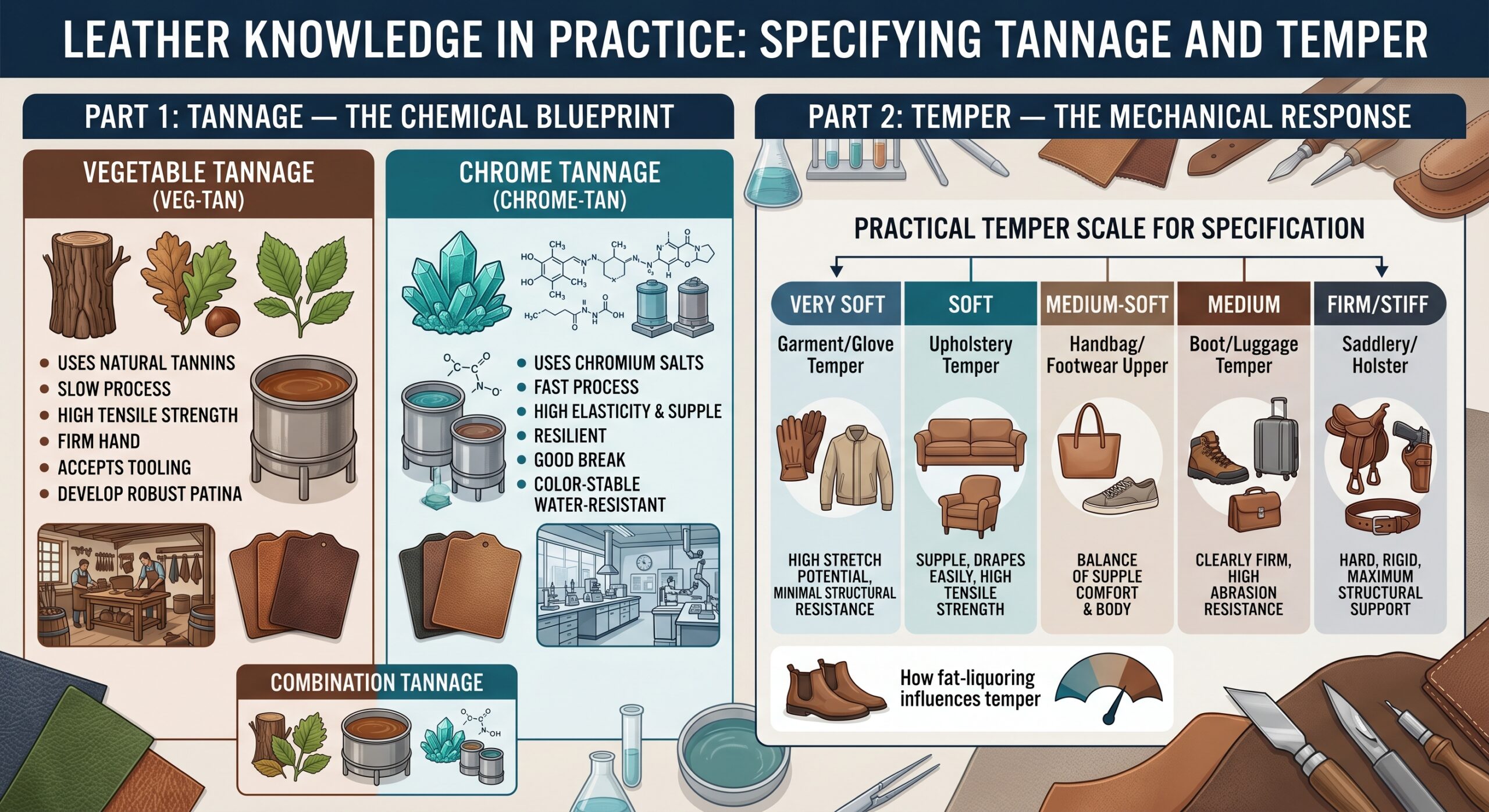
How Material Knowledge Translates to Secondary Market Advantage
The secondary market advantage of leather knowledge is more directly financial than the boutique advantage, and it operates in both directions: it allows buyers to identify undervalued pieces and avoid overvalued ones, and it allows sellers to present their pieces accurately and price them confidently.
On the buyer side, condition literacy is the most immediately valuable skill. Understanding the difference between desirable even patina and problematic water-tide staining — and being able to read which is present on a specific piece — directly affects the price you should pay. A Togo Birkin 30 in Gold listed at a discount because the seller has described the handle-zone darkening as "damage" is a potential opportunity for a buyer who recognises the darkening as Stage 2 patina development. Conversely, a Barenia piece listed at a premium that shows blotchy, uneven darkening that the seller describes as "beautiful natural aging" is a pricing error that only material knowledge allows you to identify. Our ten-year leather wear ranking at Which Hermès Birkin Leather Wears Best Over 10 Years provides the framework for reading these condition questions at the material level.
What the Uninformed Buyer Experiences
What the Informed Buyer Achieves
The Most Consistently Mispriced Secondary Market Condition: Even Togo Patina
Of all the condition misreadings in the secondary market, well-developed even patina on warm-tone Togo is the most consistently mispriced in favour of the informed buyer. Sellers who do not understand patina science routinely list these pieces at a discount relative to their true market value, describing the tonal deepening as "signs of use" and applying a Grade C label to pieces that specialist buyers would grade as B or even B+ with a patina premium. The inverse applies to Epsom: sellers who do not understand condition grading sometimes over-price lightly marked Epsom pieces on the strength of their nearly-new flat panels, without accounting for corner chipping that a specialist buyer will immediately identify as a significant Grade D factor. Both mispricing patterns are only legible to buyers with material knowledge.
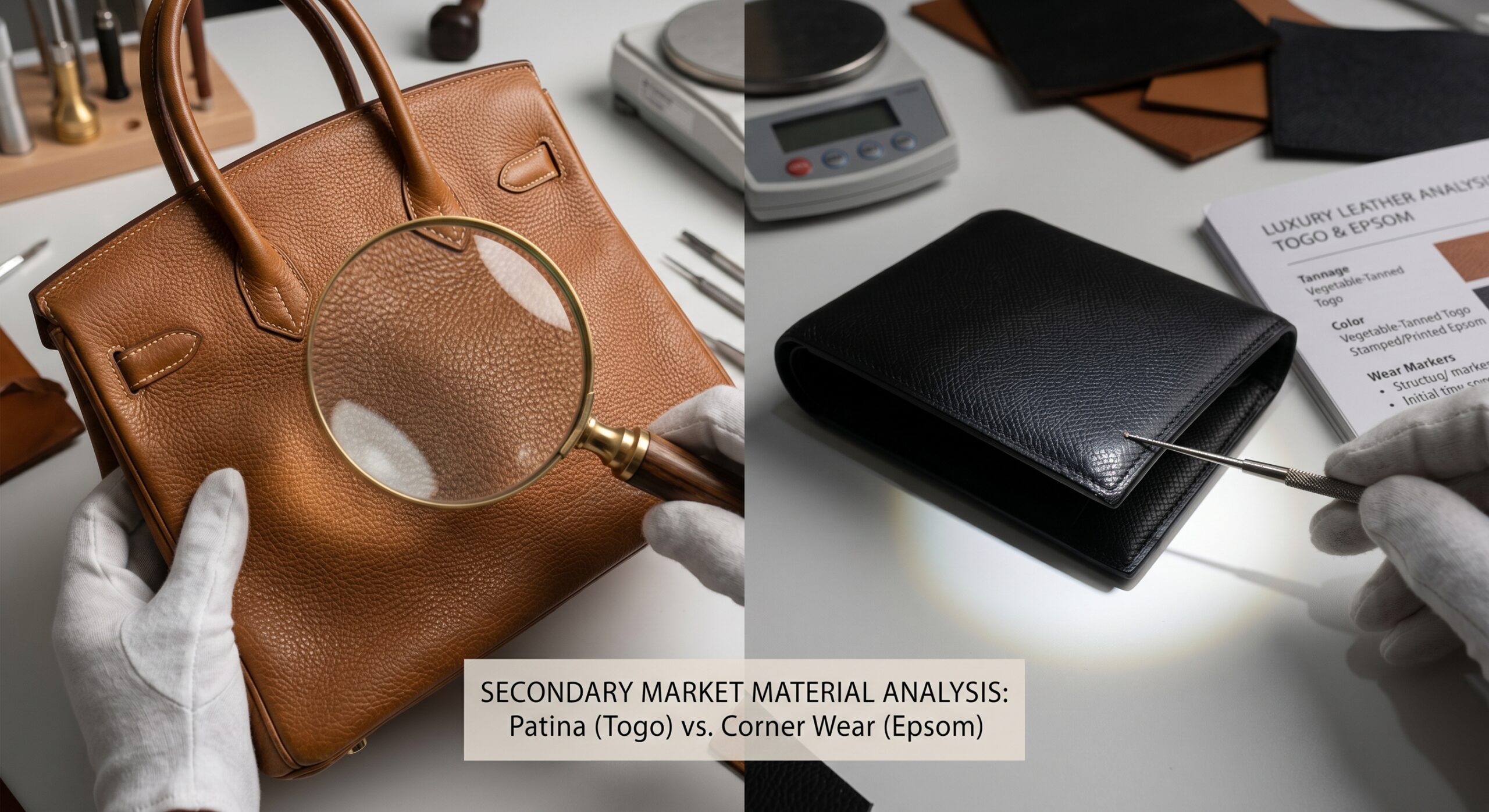
Building Your Knowledge Base: The Five Articles That Deliver the Most Practical Buying Value
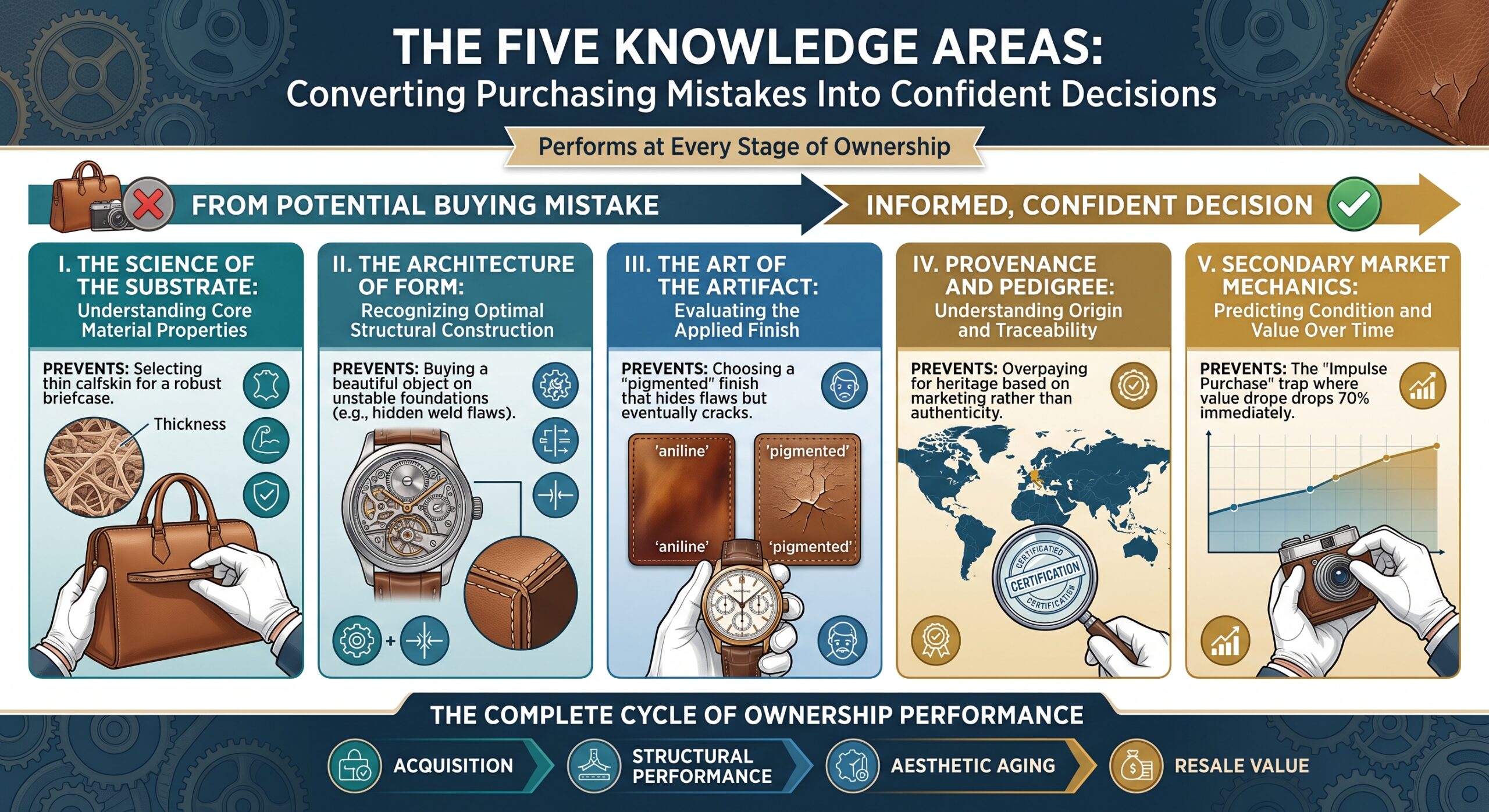
Building a working knowledge base for Hermès leather purchasing does not require reading everything. It requires reading the right things — the five knowledge areas that generate the most practical advantage across both the boutique encounter and the secondary market assessment. Each of the five links below represents the deepest available analysis in its category on this site.
1. Leather slouch and shape retention: Understanding which leathers hold their shape under your specific carry pattern is the most practically consequential knowledge a buyer can possess. Our detailed fibril-level comparison of Togo and Clemence in Hermès Togo vs Clemence Leather: Which Slouches More Over Time provides the exact framework for matching leather temper to carry habits — the single most preventable source of buyer regret in the category.
2. Ten-year leather performance: The long-term wear ranking in Which Hermès Birkin Leather Wears Best Over 10 Years maps every major Birkin leather across shape retention, patina quality, surface resilience, and resale presentation over a decade. Reading it before purchasing converts the ten-year ownership horizon from an abstraction into a set of specific, material-science-based expectations.
3. Leather tanning terminology: The foundational vocabulary of Hermès leather science — tannage, temper, fibril, pellicule, grain, finish — is the toolkit for every conversation about leather in the boutique and the secondary market. Our glossary at Hermès Leather Tanning Terms Every Buyer Should Know provides precise definitions for every term that matters, with buying-context annotations that convert terminology into actionable knowledge.
4. Barenia patina progression: If you are considering Barenia Faubourg, understanding the month-by-month patina progression before purchase is essential. The full timeline in our Barenia patina guide transforms what would be an alarming series of surface changes in the first year of ownership into an anticipated, understood material journey. Without this knowledge, most first-time Barenia owners experience unnecessary anxiety about their bag's surface changes in the critical first six months.
5. Leather condition and resale value: The condition grading framework and its price implications in our resale piece provide the financial literacy that makes secondary market buying and selling rational rather than intuitive. Understanding the five-grade scale and which specific condition failures produce the steepest price drops is the knowledge that most directly translates into money saved or earned at the secondary market level. Browse all leather buying resources at All Topics.
| Buying Decision | Without Leather Knowledge | With Leather Knowledge | Knowledge Required |
|---|---|---|---|
| Leather selection for daily heavy carry | Random — may select Clemence based on aesthetics; discovers slouch issue within 18 months | Correct — selects Togo or Epsom based on fibril density and temper; experiences expected performance | Temper and shape retention — A03, A04 |
| Boutique specification conversation | Aesthetic only — "I like the look of this one"; associate reads as casual browser | Material rationale — articulates temper, carry pattern, and care commitment; associate reads as serious collector | All four knowledge pillars — A03, A06, A08, A09 |
| Secondary market Gold Togo with handle darkening | Pays discounted price OR avoids piece entirely — misreads patina as damage in both cases | Correctly identifies Stage 2 patina; buys at correct price for condition with full knowledge of the piece's trajectory | Patina science — A02, A09 |
| Secondary market Epsom with corner chip | May overlook chip as minor cosmetic issue; pays too much for a Grade D piece | Identifies corner chip as a significant, irreversible Grade D condition event; negotiates correctly or avoids | Condition grading — A04, A10 |
| First Barenia purchase | Month 2 handle darkening causes alarm; owner considers the bag damaged; may sell prematurely at a loss | Month 2 darkening recognised as Stage 2 patina; owner conditions consistently; piece develops extraordinary surface by Year 1 | Barenia patina timeline — A06 |
| Selling a used Togo piece | Self-grades as worn; accepts lower-tier offer; leaves value on the table for a piece the market would have priced higher | Self-grades correctly; identifies even patina as value-supporting; lists at appropriate price with accurate condition description | Condition grading and patina value — A02, A10 |
| Long-term ownership satisfaction at Year 10 | Variable — 40–60% of buyers report the leather behaved differently from expectation; regret rate high in Clemence and Barenia without preparation | High — leather selected with full knowledge of its ten-year trajectory; performance at Year 10 matches what buyer anticipated at purchase | Ten-year wear ranking — A09 |
Leather Knowledge Is the Highest-Return Investment Any Hermès Buyer Can Make Before Spending a Single Pound
The boutique advantage that leather knowledge provides is real, measurable, and entirely within reach of any buyer willing to invest the time to understand the material behind the bag. It does not require years of study — it requires reading the five knowledge areas that matter, understanding the vocabulary that makes boutique conversations fluent, and approaching the purchase with the material curiosity that distinguishes collectors from consumers. The knowledge costs nothing. The decisions it improves can be worth thousands.
On the secondary market, the advantage is even more directly financial. Condition literacy — the ability to read patina, grain integrity, structural soundness, and finish quality at the material level — is the skill that allows informed buyers to negotiate from knowledge rather than trust, to identify underpriced pieces that the market has misread, and to avoid overpriced pieces whose condition tells a story only material science can translate. Every pound invested in building this knowledge base before a secondary market purchase is a pound that earns its return in the quality of the decision it enables.
Bottom Line: Leather knowledge is the single highest-return pre-purchase investment available to any Hermès buyer — it improves boutique conversations, secondary market decisions, and long-term ownership satisfaction, and it costs nothing but the time to acquire it.
Popular Searches
Explore our most searched Hermès buying knowledge combinations
The most common first Birkin specification — and the one whose leather science is most worth understanding before purchase, given Togo Gold's ten-year patina trajectory and secondary market behaviour.
⬆ TrendingReading Togo patina correctly on the secondary market is the most consistently profitable single knowledge skill for buyers — even patina is a value signal, not a discount trigger.
★ Collector FavouriteDemonstrating vegetable tannage vs chrome tannage understanding in a boutique conversation is the single highest-value knowledge signal available to any buyer — it signals material commitment immediately.
◆ Ultra RareFirst-time Barenia owners who understand the month-by-month patina timeline before purchase experience the transformation as an anticipated reward rather than an alarming series of surface changes.
⬆ Rising DemandSpecifying Epsom correctly — matching its structural rigidity to carry patterns that benefit from it, and committing to corner protection — is the knowledge package that makes Epsom a decade-long success.
🔥 Most SearchedIdentifying Epsom corner chipping as a Grade D condition event — rather than minor cosmetic wear — is the most commonly missed secondary market condition assessment among buyers without material knowledge.
Frequently Asked Questions
Yes, significantly. Boutique sales associates are trained to assess whether a buyer understands the product they are asking for. A buyer who can articulate why they want Togo over Clemence in terms of temper and fibril density signals a depth of product commitment that distinguishes serious collectors from casual enquirers. This is a genuine factor in how boutique relationships develop over time — associates invest more in clients who demonstrate material knowledge because it signals long-term stewardship intent rather than immediate resale motivation. See the full buying guide at Buying Hermès Without the Wait.
The four questions that most reveal leather knowledge in a boutique context are: why you prefer a specific leather for your carry style (temper and shape retention rationale); how you intend to care for the leather (conditioning frequency and storage); whether you prefer a patina-developing leather or a maintenance-stable one (vegetable vs chrome tannage understanding); and what construction you prefer and why (sellier vs retourne in terms of leather behaviour). Buyers who can answer these four questions fluently demonstrate the material commitment that distinguishes serious collectors. See the leather tanning terms glossary at Hermès Leather Tanning Terms Every Buyer Should Know.
On the secondary market, leather knowledge directly affects the price you pay and the quality of what you receive. Buyers who understand condition grading at the material level can identify incorrectly priced pieces in both directions — authentically beautiful pieces undergraded due to patina misread as damage, and damaged pieces over-graded by sellers who don't understand condition. The 30–50% price variance between correctly and incorrectly graded pieces of the same specification makes condition literacy the most directly financial leather knowledge skill available. For the full condition and resale framework see Which Hermès Birkin Leather Wears Best Over 10 Years.
For a first Hermès bag purchase, Togo is generally the more forgiving specification choice for most carry patterns. Its pebbled grain masks minor surface wear effectively, its patina develops in a way that most owners find satisfying rather than alarming, and its shape retention under moderate daily carry is strong without Epsom's corner-chipping vulnerability. Epsom is an excellent choice for buyers who carry very carefully and want maximum structural stability and pale-colour longevity. The choice depends on how you carry and what outcome you want at Years 3, 5, and 10. Browse all leather comparisons at All Topics.
