Hermès Bag Comparisons Hub: Leather Science Head-to-Head
Every comparison framed through construction mechanics and leather material science — not aesthetics or market positioning. The answers that actually help you choose.
The most revealing leather-science comparison between two Hermès models is the one that examines how each bag’s construction logic interacts with the same leather grade under the same conditions of use. A Chevre Mysore Birkin and a Chevre Coromandel Birkin are not simply two versions of the same bag in different leathers — they are two different structural experiments in how goat leather fibril density affects long-term bag performance. A Birkin vs Kelly comparison in construction and leather is a structural engineering question with measurable answers.
This hub is the central comparison reference for hermesinsightshub.com — every head-to-head article is framed through construction mechanics and leather material science rather than aesthetics or market positioning. If you want to know which bag looks more elegant, this is not the reference. If you want to know which leather will outlast the other in a specific construction under a specific use pattern, you are in the right place.
2
Core comparisons in this hub: Chevre Mysore vs Coromandel, and Birkin vs Kelly
1
Comparison framework that applies to all matchups: construction logic + leather fibril science
0
Comparisons based on aesthetics or market positioning — every matchup here is structural
The Leather Science Comparison Framework: How We Approach Every Matchup
Most Hermès comparison guides answer the wrong question. “Which bag is more popular?” and “which holds value better?” are market questions, not material questions. They tell you what other buyers have decided — not what you should decide based on your specific use pattern, leather preference, and long-term ownership goals.
The leather science comparison framework starts from a different premise: every meaningful comparison between Hermès leathers or models is a structural question. The right question is not “which is better” but “better for what?” — and the answer depends on construction logic, fibril density, tannage chemistry, and the specific mechanical demands of your intended use pattern. This framework produces comparisons with measurable, actionable conclusions rather than aesthetic preferences dressed up as expert opinion.
“A Birkin vs Kelly comparison in construction and leather is a structural engineering question with measurable answers. The comparison that matters is not which bag is more popular — it is how each bag’s construction logic interacts with the specific leather grade under the conditions you intend to use it.”
- Every comparison starts with construction logic — what does each bag’s structure demand from its leather?
- Fibril density is the primary leather variable — it determines surface hardness, patina capacity, and construction compatibility
- Use pattern is the primary buyer variable — daily carry vs occasional, wrist vs shoulder, humid vs dry climate
- Aesthetic preference is addressed last — after structural compatibility is confirmed
- Market positioning is never a comparison criterion — popularity and value retention are outcomes of the structural decisions, not inputs to them
Chevre Mysore vs Chevre Coromandel: Fibril Structure & Performance
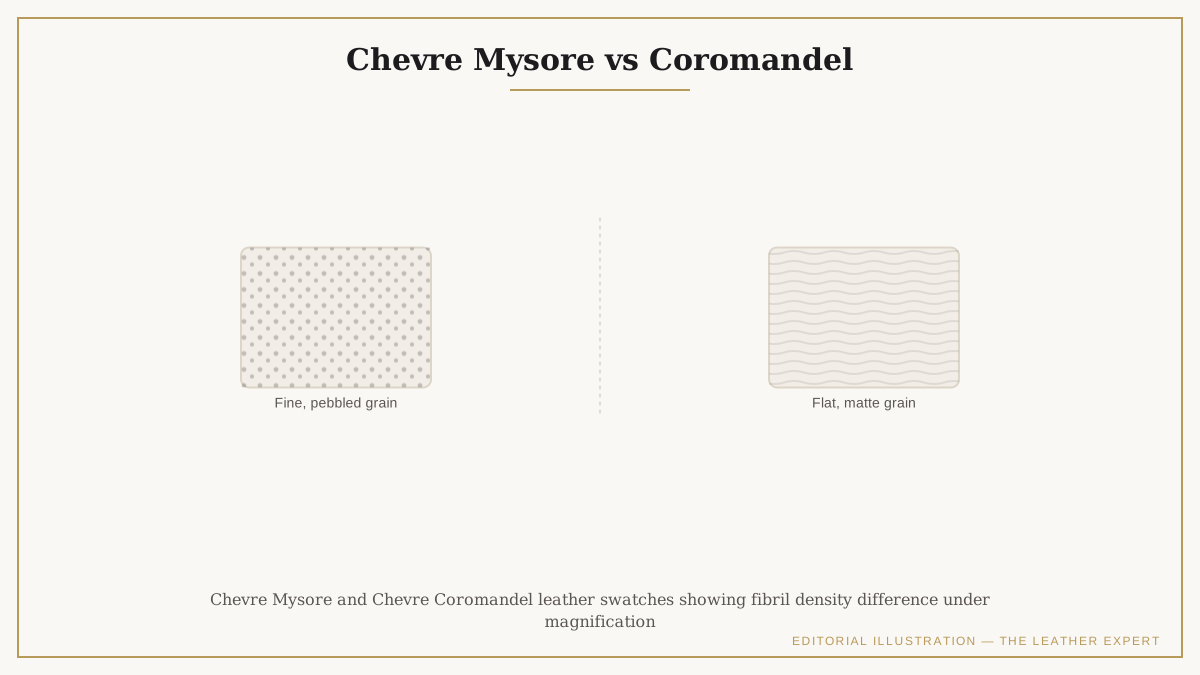
Both Chevre Mysore and Chevre Coromandel are goat leathers produced by Hermès — and both are among the most durable production leathers in the range due to goat hide’s naturally tight fibril packing and high surface hardness relative to calf leathers. The comparison between them is subtle rather than categorical, but it has real consequences for construction compatibility and long-term patina character.
Goat Leather · Tighter Grain
Chevre Mysore
- Finer, tighter grain with higher surface hardness
- Slightly stiffer temper — suits structured constructions
- Lower surface porosity — more resistant to moisture ingress
- Patina develops evenly across the fine grain surface
- Best construction: Kelly sellier, Constance, Bolide
- Long-term: very slow grade degradation — durable choice
VS
Goat Leather · Pronounced Grain
Chevre Coromandel
- Slightly more pronounced natural grain — marginally looser fibril
- Marginally softer hand — slightly more construction flexibility
- Fractionally higher surface porosity than Mysore
- Patina follows the pronounced grain — more textured character
- Best construction: Kelly retourné, Constance, smaller bags
- Long-term: comparable durability to Mysore — grain texture more visible
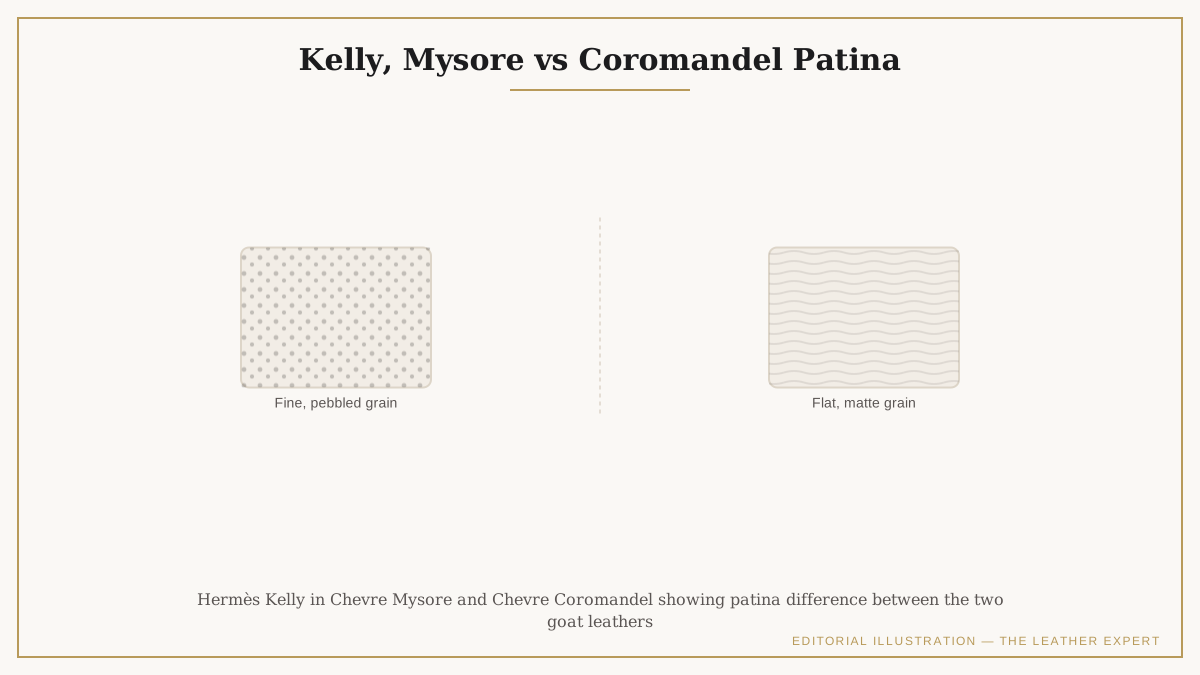
In practice, the performance difference between Mysore and Coromandel in the same construction under the same use conditions is small — both are excellent leathers that outperform most calf leathers in surface hardness and durability. The construction compatibility difference is more meaningful than the durability difference: Mysore’s stiffer temper is a better match for sellier construction, where the exterior seam demands a leather that resists angular stress without softening; Coromandel’s marginally softer hand is a fractionally better match for retourné construction, where the leather must survive the turning process.
Leather Expert Note — Choosing Between Mysore and Coromandel
If you are choosing between Chevre Mysore and Chevre Coromandel for a Kelly sellier, choose Mysore — its stiffer temper is the better structural match for exterior seam stress. If you are choosing for a Kelly retourné or a smaller bag like the Constance, either is appropriate — choose based on patina character preference. For the full comparison analysis, see Hermès Chevre Mysore vs Coromandel: which is right for you?
Birkin vs Kelly: Construction Logic & Leather Behaviour — A Structural Comparison
The Birkin vs Kelly comparison is the most searched head-to-head in the Hermès universe — and the most frequently answered with the wrong framework. Popularity comparisons, resale value comparisons, and style comparisons all miss the structural logic that makes each bag what it is. The correct comparison is a construction engineering question: what does each bag’s structure demand from its leather, and how does that demand shape the long-term ownership experience?
Gusseted Trapezoid · Retourné
Birkin
- Gusseted construction distributes load across base + four panels
- Designed for daily carry under significant load
- Best leathers: Togo, Epsom, Clemence — flex-tolerant
- Stress zone: gusset fold lines + base panel under load
- Patina: even grain softening, gusset flex lines over time
- Silhouette: relaxes and softens with use — organic ageing
- Maintenance: lower — retourné seam protected from abrasion
VS
Rigid Frame · Sellier or Retourné
Kelly
- Rigid frame holds silhouette under compression — structured
- Designed for occasional to moderate formal carry
- Best leathers: Box Calf (sellier), Togo (retourné)
- Stress zone: corner stitching + turnlock contact zone
- Patina: deep corner patina (sellier), turnlock impression
- Silhouette: maintains geometric precision — architectural ageing
- Maintenance: higher (sellier) — exterior stitch requires monitoring
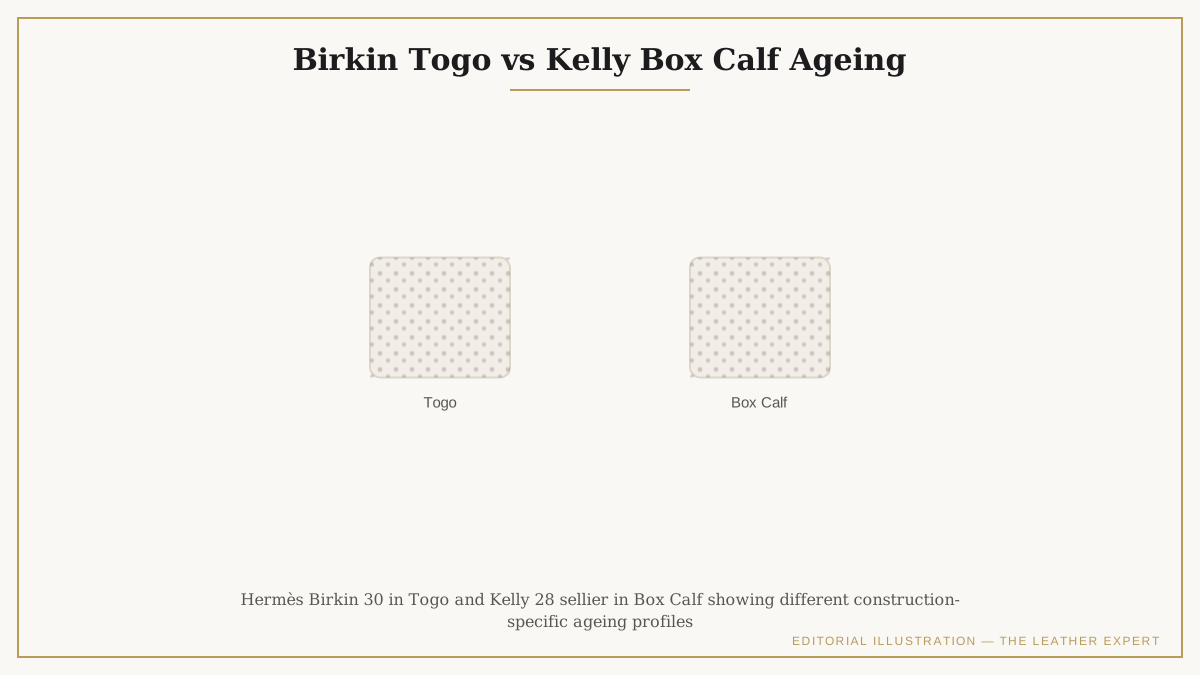
- Birkin: choose for daily load-bearing carry — gusseted construction designed for this purpose
- Kelly: choose for structured occasional carry — rigid frame designed to hold silhouette, not bear heavy load
- Birkin leather: Togo or Epsom for daily carry — flex-tolerant tannage matches gusseted construction demands
- Kelly leather: Box Calf sellier for collector patina; Togo retourné for practical occasional carry
- Ageing style: Birkin ages organically — softens and develops even character. Kelly ages architecturally — corner patina deepens while silhouette holds
- For the full structural comparison: Hermès Birkin vs Kelly: construction and leather comparison
How Leather Grade Selection Changes the Relative Performance of Each Silhouette
One of the most underappreciated dimensions of the Birkin vs Kelly comparison is how leather grade selection can shift the relative performance profile of each bag significantly. A leather choice that is correct for one bag in one context may be entirely wrong for the same bag in a different use pattern — and a leather choice that closes the gap between Birkin and Kelly in one dimension may widen it in another.
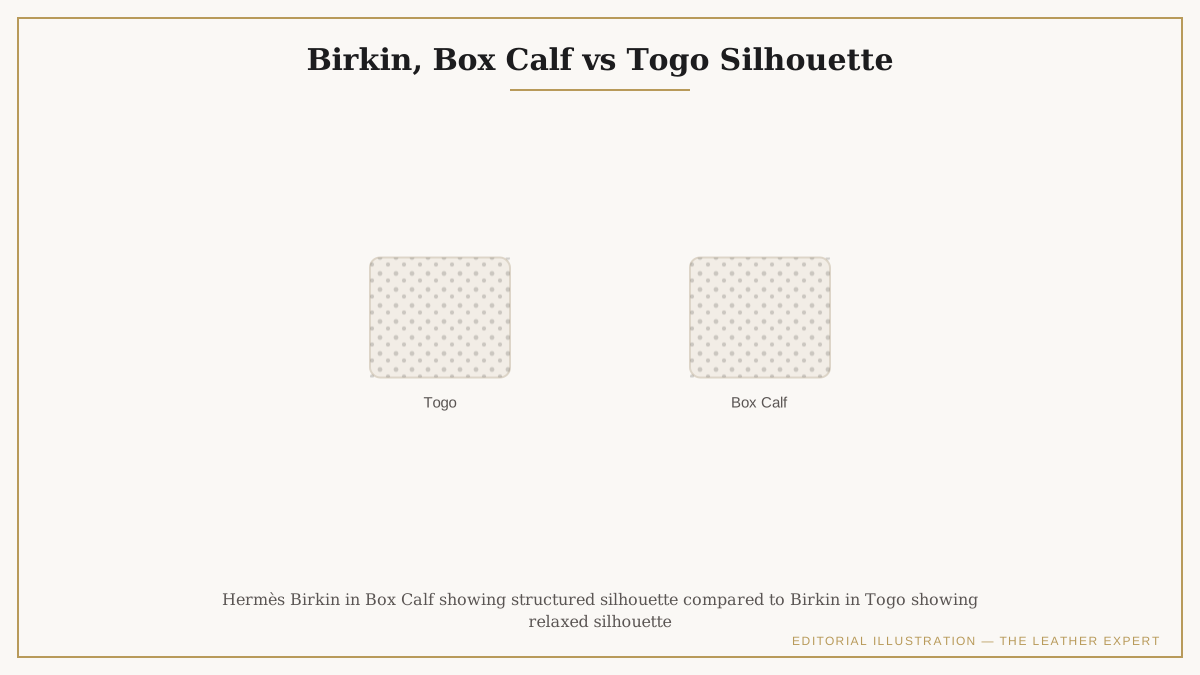
A Birkin in Box Calf approaches the formal character of a Kelly sellier — its tight grain and vegetable tannage produce a more structured silhouette than Togo or Clemence, narrowing the stylistic gap between the two models. But structurally, it remains a gusseted bag — the Box Calf must handle cyclical gusset flex that it was not designed for, and under daily carry this produces more rapid patina development at the gusset fold lines than a Kelly sellier would show at equivalent use intensity.
A Kelly retourné in Clemence is a surprisingly practical daily bag — the rigid frame holds shape despite the heavy leather, the concealed seam protects the stitching, and Clemence’s heavy temper absorbs the compression demands of the frame without cracking. But the combined weight of frame and Clemence leather at the Kelly 32 and 35 sizes makes wrist carry fatiguing over extended periods — a structural consequence of the mismatch between frame construction and heavy leather at larger sizes.
| Comparison | Winner for Daily Carry | Winner for Patina Character | Winner for Durability | Winner for Formal Occasions | Overall — Choose Based On |
|---|---|---|---|---|---|
| Chevre Mysore vs Coromandel | Mysore (stiffer temper, sellier compatibility) | Coromandel (textured grain patina character) | Equivalent — both excellent goat leathers | Mysore (surface hardness suits formal use) | Construction: Mysore for sellier, Coromandel for retourné |
| Birkin vs Kelly (daily carry) | Birkin (gusseted construction designed for load) | Kelly sellier Box Calf (deepest corner patina) | Birkin in Togo (flex-tolerant under daily load) | Kelly sellier (geometric precision, formal silhouette) | Use pattern: Birkin for load-bearing daily; Kelly for formal occasional |
| Birkin Togo vs Epsom | Togo (elasticity, moisture resistance) | Togo (grain softening over time) | Equivalent — both excellent under daily carry | Epsom (shape retention, lighter weight) | Weight: Epsom if carry duration is 4+ hours; Togo if flex is primary concern |
| Kelly Sellier vs Retourné | Retourné (lower maintenance, protected seam) | Sellier (dramatic corner patina in Box Calf) | Retourné (concealed seam, less environmental exposure) | Sellier (architectural precision, formal silhouette) | Patina preference: sellier for drama; retourné for practical carry |
| Birkin vs Kelly (investment) | Birkin (more forgiving condition retention under use) | Kelly Box Calf Grade A (highest resale premium) | Birkin Togo/Epsom (most stable condition grade under use) | Kelly (formal context commands premium at equivalent condition) | Condition tolerance: Birkin for buyers who use daily; Kelly for careful collectors |
The Right Comparison Asks the Right Question.
Every comparison in this hub starts from the same premise: there is no universally better bag, no universally better leather, and no universally better construction. There is only the combination that is most structurally appropriate for your specific use pattern, your leather preference, and your long-term ownership goals.
Chevre Mysore and Coromandel are both excellent goat leathers — the comparison between them is a construction compatibility question, not a quality question. Birkin and Kelly are both exceptional bags — the comparison between them is a use pattern question, not a prestige question. Every head-to-head comparison in this hub is framed to answer the question that actually matters to the buyer making the decision: which combination is structurally right for the way I intend to use this bag?
As new comparison articles are published, they will be added to this hub. Each will follow the same framework: construction logic first, leather fibril science second, practical implications third. Aesthetics and market positioning last — if at all.
Bottom Line: Ask the structural question first. The aesthetic answer will follow — and it will be more satisfying because it rests on a foundation that will hold up over years of use, not just at the point of purchase.
Popular Searches
Most searched Hermès head-to-head comparison topics
🔥 Most Searched
Chevre Mysore vs Coromandel: Which Is Right for You?
Fibril structure comparison, construction compatibility, patina character difference, and the definitive framework for choosing between Hermès’s two goat leathers.
★ Expert Reference
Hermès Birkin vs Kelly: Construction & Leather Comparison
The definitive structural comparison — gusseted trapezoid vs rigid frame, leather demands for each, and how to choose based on use pattern rather than market positioning.
⬆ Trending
Hermès Leathers & Materials Guide
The foundational reference — every major Hermès production leather by fibril density, tannage, and construction compatibility. Essential reading before any comparison.
◆ Construction
Sellier vs Retourne: Construction Guide
The most important comparison within the Kelly range — how seam placement changes leather behaviour, patina character, and long-term maintenance requirements.
⬆ Rising
Hermès Bag Styles Guide
Structural analysis of every core silhouette — the construction logic context that makes all leather comparison decisions make sense.
🔥 Most Searched
Hermès Investment Guide
How the comparison decisions you make at purchase — model, construction, leather — translate into condition retention and resale value over the ownership period.
Frequently Asked Questions
Both are goat leathers with naturally tight fibril packing, but Chevre Mysore has a finer, tighter grain with higher surface hardness and a stiffer temper that suits sellier construction. Chevre Coromandel has a slightly more pronounced natural grain and marginally softer hand that suits retourné construction or smaller bags like the Constance. The practical durability difference is small — both are excellent leathers. Construction compatibility is the more meaningful selection criterion. For the full comparison, see Hermès Chevre Mysore vs Coromandel.
They are not competing alternatives — they are different structural solutions for different use profiles. The Birkin’s gusseted trapezoid is designed for load-bearing daily carry; the Kelly’s rigid frame is designed for structured occasional use. Choose a Birkin in Togo or Epsom for daily carry. Choose a Kelly sellier in Box Calf for collector patina and formal carry. Choosing between them on popularity or resale value misses the structural logic that makes each bag what it is. For the full analysis, see Hermès Birkin vs Kelly: construction and leather comparison.
Leather grade can shift the performance profile significantly. A Birkin in Box Calf approaches Kelly’s formal character — its tight grain produces a more structured silhouette — but must handle gusset flex it was not designed for, producing accelerated fold line patina. A Kelly retourné in Clemence is a surprisingly practical daily bag — the frame holds shape despite the heavy leather — but the combined weight at larger sizes makes wrist carry fatiguing. Leather grade is not independent of construction; each combination must be evaluated as a single structural decision.
Both are excellent long-term leathers — goat leather’s naturally tight fibril packing gives it higher surface hardness than most calf leathers. Chevre Mysore has marginally higher surface hardness due to its tighter fibril structure, making it very slightly more resistant to surface abrasion. But the practical difference under equivalent use in equivalent construction is small. Construction compatibility — Mysore for sellier, Coromandel for retourné — is a more meaningful selection criterion than the small durability differential. For the detailed comparison, see Hermès Chevre Mysore vs Coromandel.